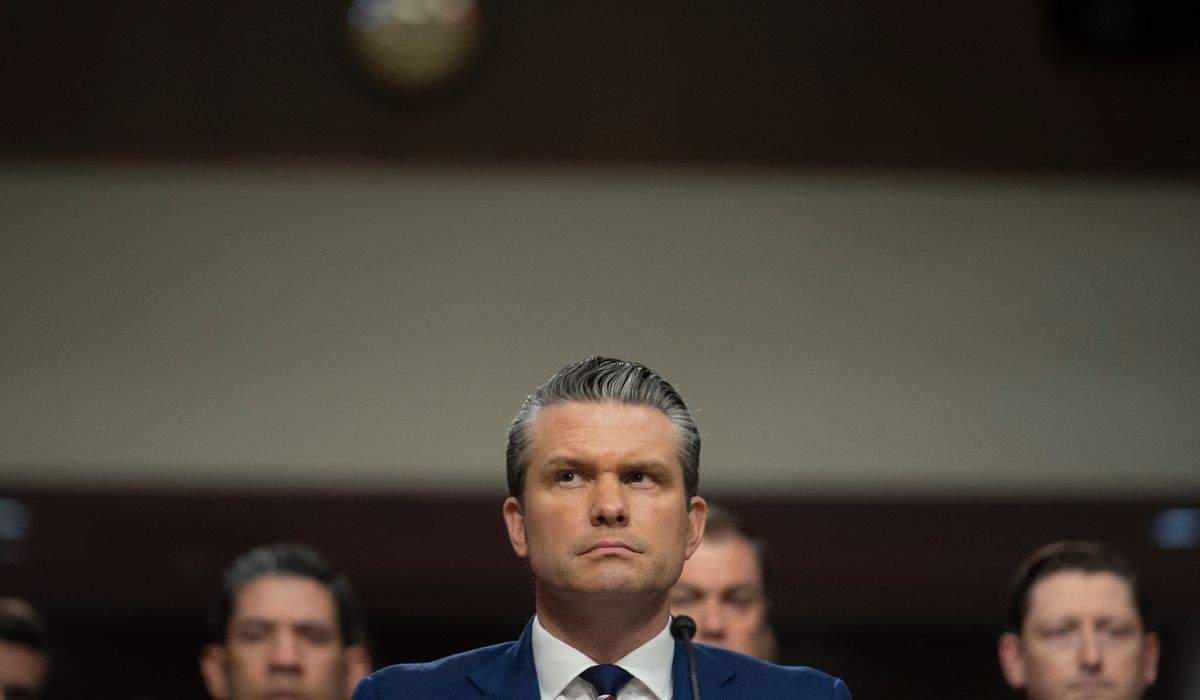
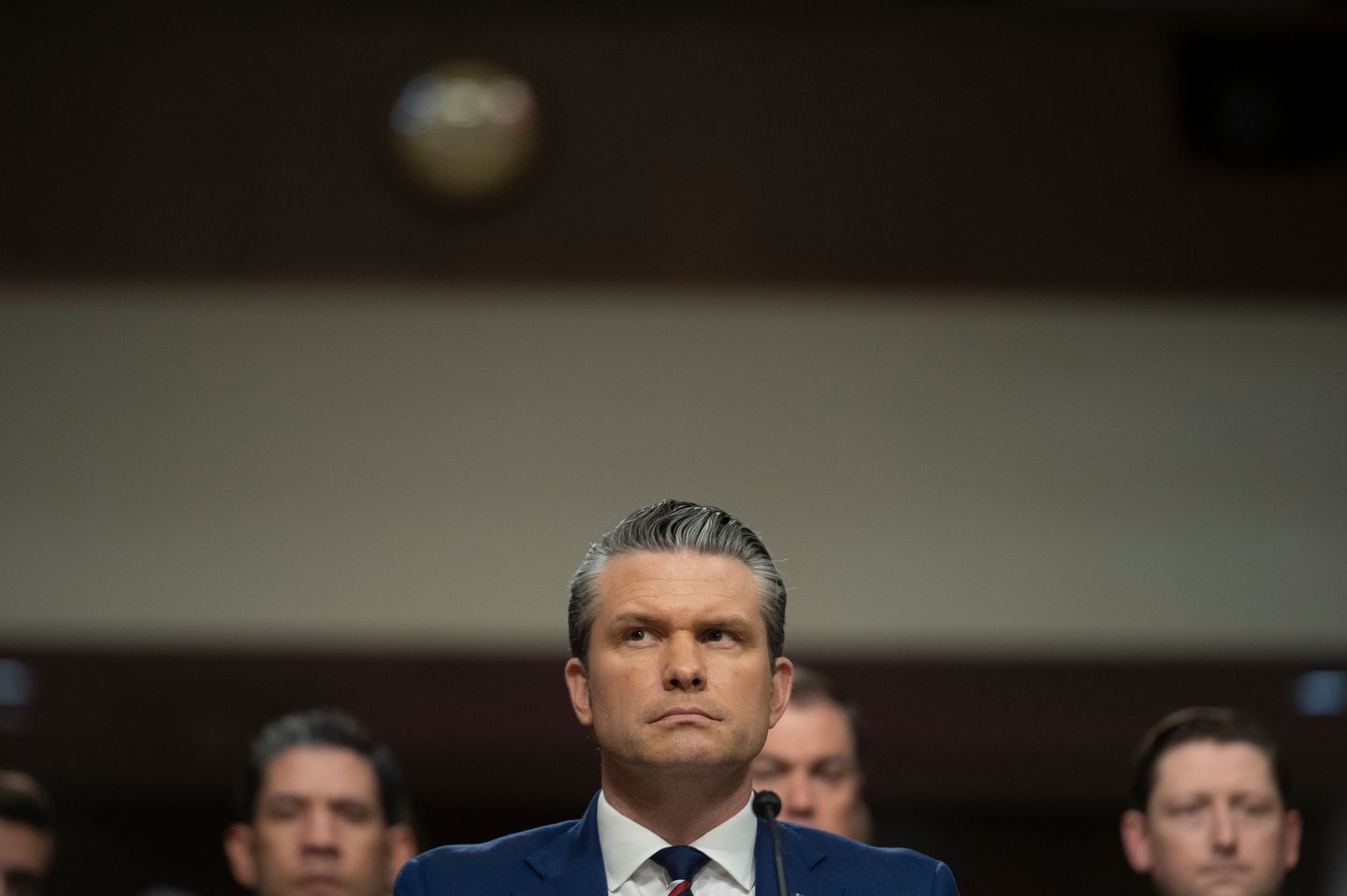
Defense Secretary Pete Hegseth told the Senate Armed Services Committee on Thursday that the conflict in Iran was seen by President Trump as a historic “opportunity” — and tap-danced away from his previous statements that he sought $200 billion in supplemental funding for the war.
During a March 19 briefing at the Pentagon, Mr. Hegseth confirmed that the Defense Department had asked Congress for upward of $200 billion to support ongoing military operations in Iran.
But when asked Thursday about the supplemental funding request before Congress, Mr. Hegseth balked.
“We didn’t ask for $200 billion. I don’t know where you got that number, senator,” Mr. Hegseth said when asked about the figure by Sen. Kirsten Gillibrand, New York Democrat. “I think you got it from the news, which you should be careful what you read in the news.”
Back in March, Mr. Hegseth told reporters at the Pentagon that the funding is intended to cover the escalating costs of Operation Epic Fury and to replenish stockpiles of munitions that are being depleted.
“As far as $200 billion, I think, that number could move. Obviously, it takes a lot of money to kill bad guys,” he said then. “We’re going back to Congress and our folks there to ensure that we’re properly funded for what’s been done, for what we may have to do in the future.”
Selective framing of just how much the conflict would cost was not limited to Mr. Hegseth. The supplemental request has been submitted in detail to Congress, sources told The Washington Times.
But Sen. Roger Wicker, Mississippi Republican and committee chairman, said he wasn’t aware of it.
“I assume questions will be asked about the second round of the request, but I haven’t seen that,” Mr. Wicker told The Times when pressed about the $200 billion request. “I have not seen that.”
The conflict in Iran has cost $25 billion thus far, according to Wednesday testimony to a House panel by Jules Hurst, the acting department comptroller.
But Mr. Hurst acknowledged Thursday in the Senate hearing that this cost did not include the damage estimates to U.S. bases in the region.
The U.S.-Israeli campaign isn’t popular, as polls from Ipsos show just over half of Americans say the U.S. military action in Iran has not been worth the costs.
As the campaign wears on, the impetus for the conflict has also been called into question.
In June of last year, the administration said the stealth bomber mission to destroy Iranian nuclear weapons capability, Operation Midnight Hammer, had been successful.
“Obliteration is an accurate term!” Mr. Trump posted on Truth Social.
“We devastated the Iranian nuclear program,” Mr. Hegseth said from the Pentagon podium the next morning, June 22, 2025. “Iran’s nuclear ambitions have been obliterated.”
Possible indications of a viable nuclear program, such as the stockpiles of enriched uranium that remain in Iran, brought that characterization into question.
In Thursday’s hearing, Mr. Hegseth called the moments after Operation Midnight Hammer “an opportunity” to reengage against that nuclear program, pushing forward the idea that Operation Epic Fury was a follow-on operation, not an independent moment.
“President Trump saw an opportunity,” Mr. Hegseth told the committee. “Because their ambitions continued, to ensure that umbrella of nuclear blackmail did not allow them to get a nuclear weapon.”
Now, even the timeline of how long the U.S. will be at war in Iran is a moving target, as Mr. Hegseth claimed both that the recent ceasefire in the conflict and its timeline are not the purview of Congressional oversight.
“We’re two months into an effort,” Mr. Hegseth said when asked about the timeline. “Iraq took how many years? Afghanistan took how many years?”
During that June briefing last year, Mr. Hegseth struck a very different tone.
“This is most certainly not open-ended,” he said from the Pentagon podium. “The president gave us a focused, powerful and clear mission on the destruction of Iranian nuclear capabilities.”