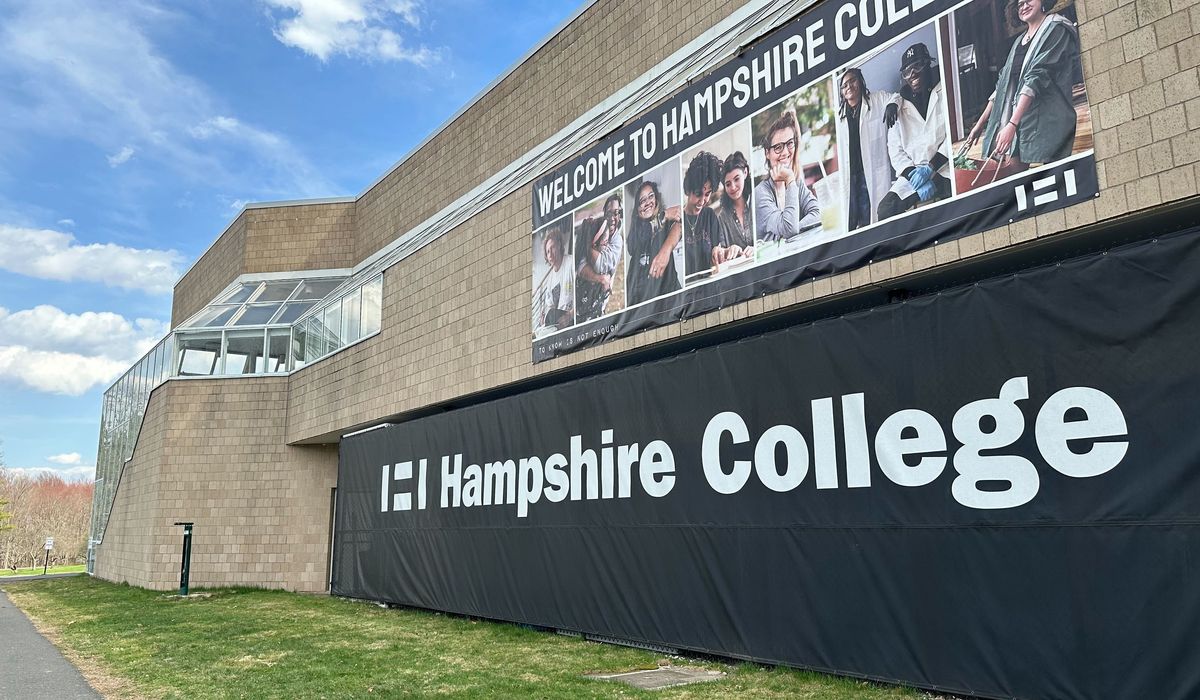
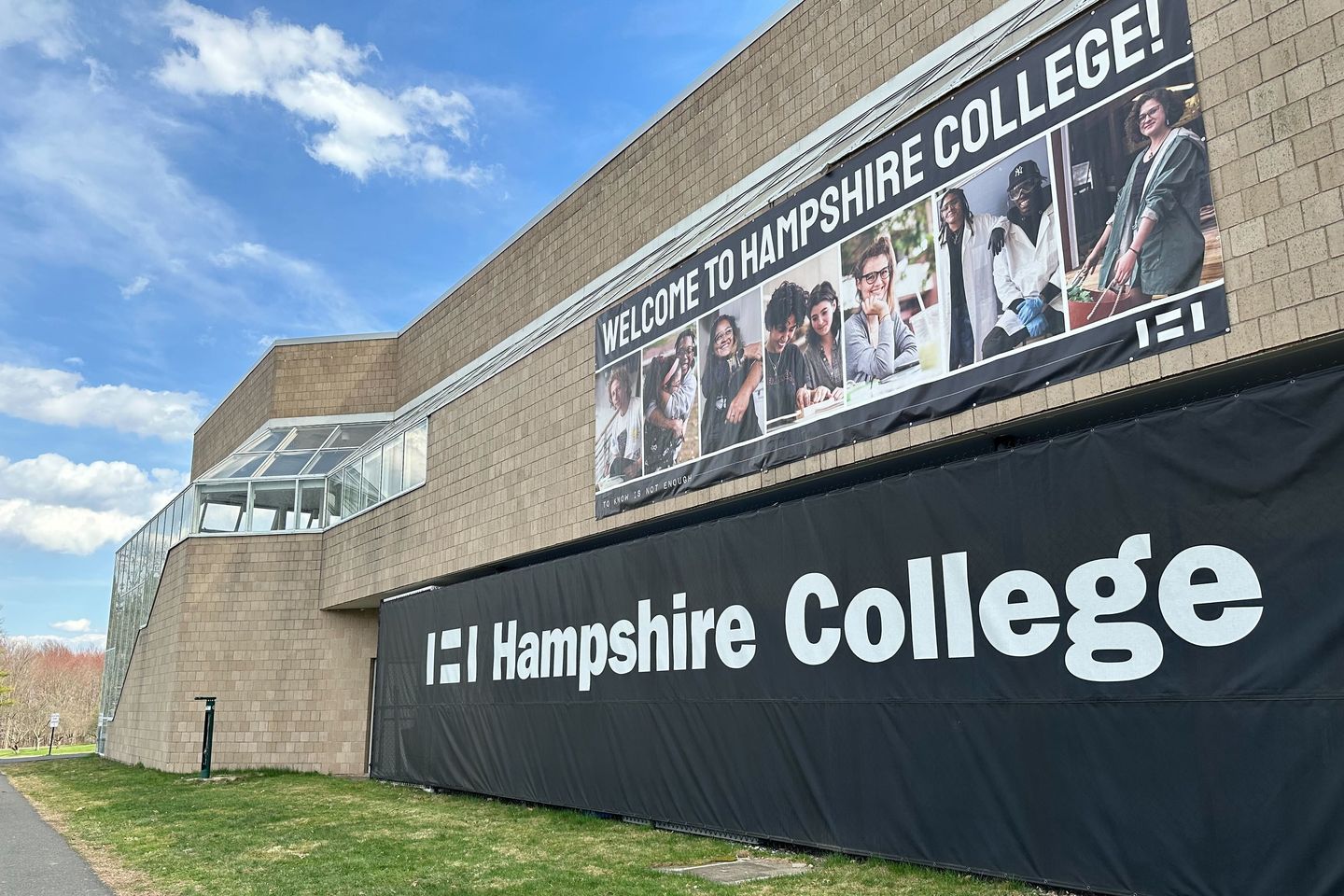
Hampshire College in Massachusetts will close at the end of this year due to declining enrollment and revenue, foreshadowing accelerated downsizing in higher education under the Trump administration.
Administrators this week cited the failure of “years of sustained effort to secure the college’s financial future” at the Amherst campus, which fell well short of the 300 freshmen it sought to enroll last fall.
Founded in 1965 as a progressive liberal arts college where students self-designed their studies, Hampshire later established a “cultural village” of nonprofits, including an environmental center and picture-book museum. Its closure after the fall semester will affect over 600 students and a couple of hundred employees.
“Hampshire College presented bad financials for a long time,” Gary Stocker, a former private college administrator who founded College Viability to evaluate campuses’ financial health, said in an email. “Their closure is almost certainly to be followed by many other private colleges.”
Hampshire’s announcement comes after the Huron Consulting Group recently projected that nearly 450 of the nation’s 1,700 private, nonprofit four-year campuses could shutter or merge within the next decade.
Others announcing closure plans in recent months include Sterling College in Vermont, Lourdes University in Ohio and Laboure College of Healthcare in Massachusetts.
Several higher education insiders interviewed by The Washington Times cited declining birth rates and AI’s automation of jobs previously filled by liberal arts graduates as growing pressure on the sector. They also pointed to the Trump administration’s decision to end federal student aid for low-paying degree paths.
Roughly 19 million students are enrolled in U.S. colleges and universities, down from a peak of 21 million in the 2010-11 academic year.
Admissions officers have prepared for 15% fewer eligible college applicants this spring, a demographic cliff tied to birth rates falling since 2008. At the same time, rising education costs and falling confidence in the value of a four-year degree have driven a surge in trade school applications.
“The enrollment cliff presents a challenge to traditional residential-based higher education, especially as the public has been told they should distrust higher education,” said Timothy Cain, a University of Georgia higher education professor.
“Still, in previous eras, higher education has responded by reaching out to and serving populations not previously well served, including by educating women and adult students,” Mr. Cain added in an email. “That could happen again.”
The Trump administration’s funding curb has affected low-enrollment humanities, liberal arts and general social science degrees.
The Education Department proposed a new rule on Friday that would end federal aid for undergraduates in programs that don’t lead to jobs paying more than what a high school graduate earns. The federal agency cited $1.7 trillion in unpaid federal student loan debt.
The rule includes Pell Grants for low-income students. It also specifies that graduate programs must demonstrate that their alumni earn more than the average bachelor’s degree holder to continue receiving federal aid.
“The Trump Administration’s proposed accountability framework is grounded in common sense: if postsecondary education programs do not leave graduates better off, taxpayers should not subsidize them,” Undersecretary of Education Nicholas Kent said in a statement.
Besides small private colleges closing, public systems such as Penn State University have merged campuses in recent years, effectively shuttering small regional satellites where enrollment dried up.
Other factors in the downsizing include AI reshaping the job market and a follow to the Biden administration’s distribution of billions of dollars of pandemic stimulus money that kept struggling campuses open a bit longer.
“These closings are part of a structural realignment that was postponed by the pandemic stimulus money,” said Nora Demleitner, the immediate past president of private St. John’s College, a liberal arts college in Annapolis, Maryland.
The Bipartisan Policy Center reported last month that half of all bachelor’s program graduates between 2012 and 2021 were underemployed a year later, working off their school debt in low-paying jobs that did not require their degrees.
Of that group, nearly 3 in 4 remained underemployed a decade after graduation. And just 61% of those who started four-year degrees in 2019 completed them within six years, adding to the more than 37 million college dropouts.
Peter Wood, president of the conservative National Association of Scholars, said Hampshire College’s closure likely heralds an increased pruning of low-performing colleges under the Trump administration for “more than a dozen reasons.”
“AI is a major factor, mostly because it has created enormous uncertainty among potential students over what they could study that will be proof against the way AI is shredding and rearranging the job market,” said Mr. Wood, a former associate provost at private Boston University.