A desire among a handful of Senate Republicans to codify the death of the Trump administration’s $1.8 billion Anti-Weaponization Fund is threatening the party’s ability to pass a $70 billion immigration enforcement funding package.
The Senate is using the filibuster-proof budget reconciliation process to overcome Democrats’ objections to funding President Trump’s deportation force, but that has created some tricky procedural and political hurdles for Republicans.
Reconciliation allows senators to offer unlimited motions and amendments to the bill in a marathon voting session known as “vote-a-rama.”
It provides the minority party a rare opportunity to force votes that can be used for political messaging purposes.
The Senate began the vote-a-rama on the immigration enforcement funding bill around 10:30 a.m. Thursday but took more than three hours to dispense with the first vote.
The vote was on a motion from Senate Minority Leader Charles E. Schumer to refer the bill back to committee with instructions to add language ensuring the Anti-Weaponization Fund cannot be revived.
“My very first amendment offers Republicans a choice: Do you support Donald Trump’s two-billion-dollar, taxpayer-funded slush fund, or do you want to protect the American people and their paychecks by outlawing this criminal, crony cash-back program permanently,” the New York Democrat said.
Republican Sens. Susan Collins of Maine, Jon Husted of Ohio and Dan Sullivan of Arkansas voted with Democrats on the motion — effectively a vote to kill the bill — but it was defeated, 49-50.
All three are up for reelection this fall in states Democrats are targeting.
Sen. Bill Cassidy, Louisiana Republican, held off on voting for three hours as he and Sen. Thom Tillis, North Carolina Republican, pushed for a vote on their own amendments to address the Anti-Weaponization Fund.
Mr. Cassidy said the time was needed to fine-tune the language and “optimize the chance of success.”
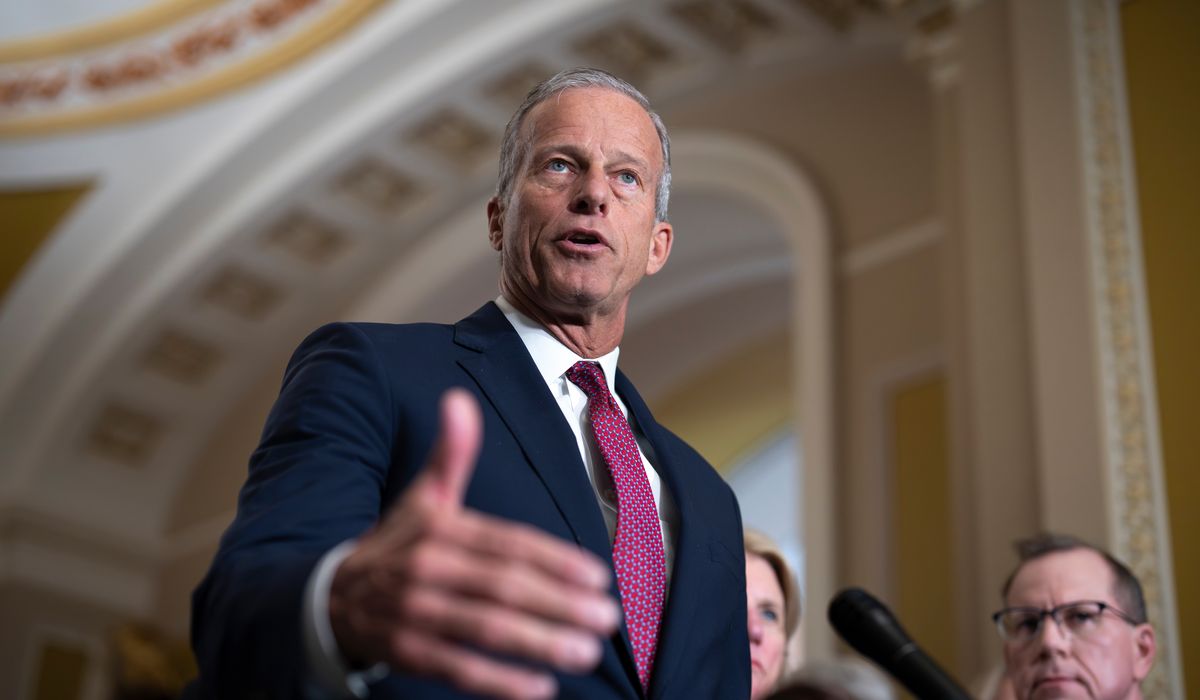
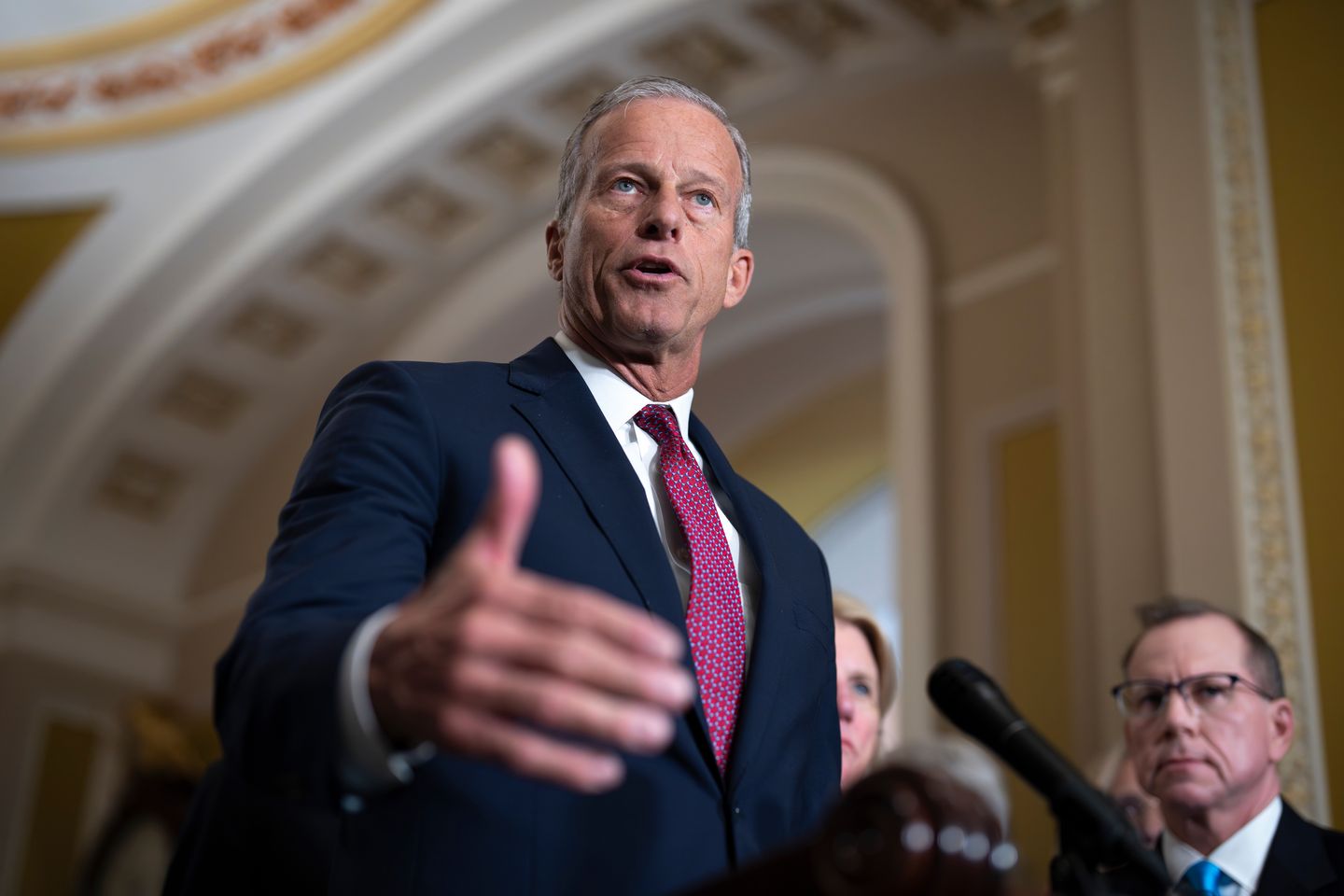
Senate Majority Leader John Thune, South Dakota Republican, said there will be a vote or two on the issue.
“I can’t predict how it comes out,” he said.
A vote on Mr. Tillis’ amendment soon followed. It had the support of 12 Republicans but failed because all but three Democrats voted against it.
The amendment banned the Anti-Weaponization Fund but instead authorized the Justice Department to spend roughly the same amount of money, $1.7 billion, on fraud prevention and enforcement.
Democrats argued the Justice Department could still use that money to target political enemies.
“Taking one slush fund and eliminating it and then creating a new slush fund, still under the control of the attorney general, is not the way to go,” said Sen. Jeff Merkley, Oregon Democrat. “The way to go is to get rid of these slush funds altogether.”
The GOP initially provided $1.5 billion for the Justice Department’s new anti-fraud division in the bill but dropped it after it became procedurally intertwined with the Anti-Weaponization Fund issue.
It was not immediately clear if Mr. Cassidy would still offer his own amendment to ban the Anti-Weaponization Fund as the vote-a-rama proceeded.
Mr. Tillis said he would vote against the bill on final passage unless some language permanently nixing the fund was adopted.
“I don’t know any rational basis for letting this stay on the books,” he said. “Otherwise, you’re exposing every one of our members who are in cycle to having to deal with this between today and election day, and that makes no sense for something that the DOJ says they’re not moving forward.”
Acting Attorney General Todd Blanche testified during a House hearing on Tuesday that the Justice Department was permanently abandoning plans to stand up the Anti-Weaponization Fund.
Mr. Trump later equivocated on that in a podcast interview and comments to reporters at the White House, calling the Anti-Weaponization Fund “a beautiful thing.”
The president specifically defended his desire to compensate people whom the Biden administration prosecuted over the Jan. 6, 2021, Capitol riot — something most GOP senators who were present during the violent break-in oppose.