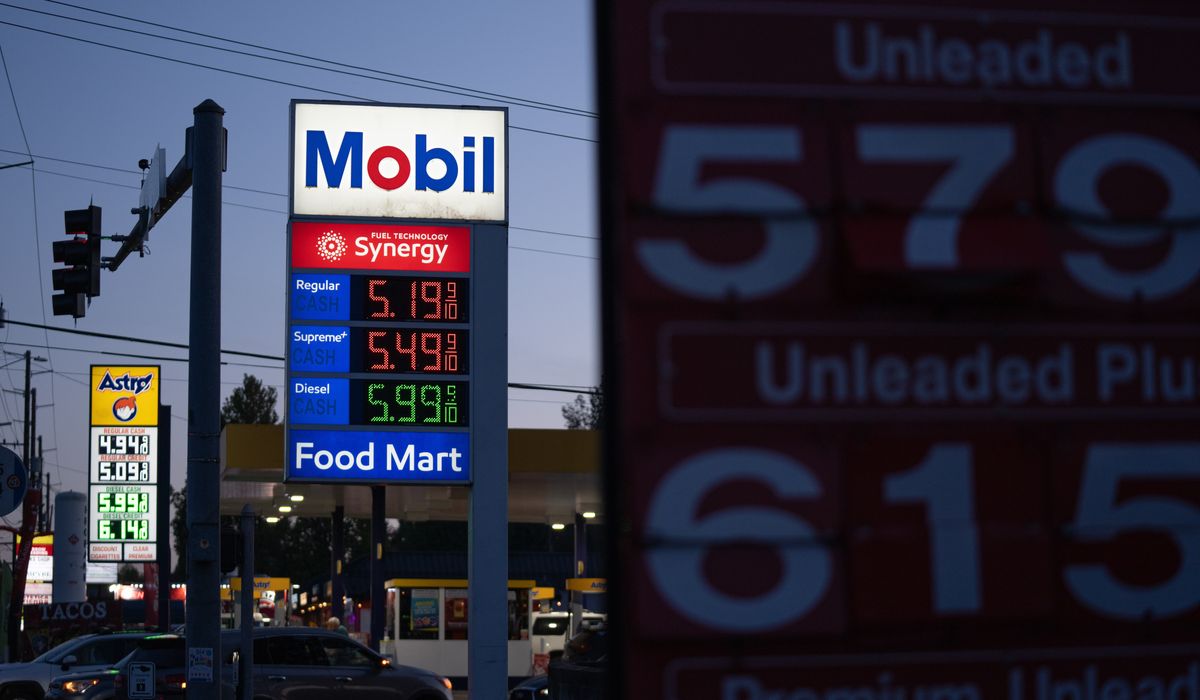
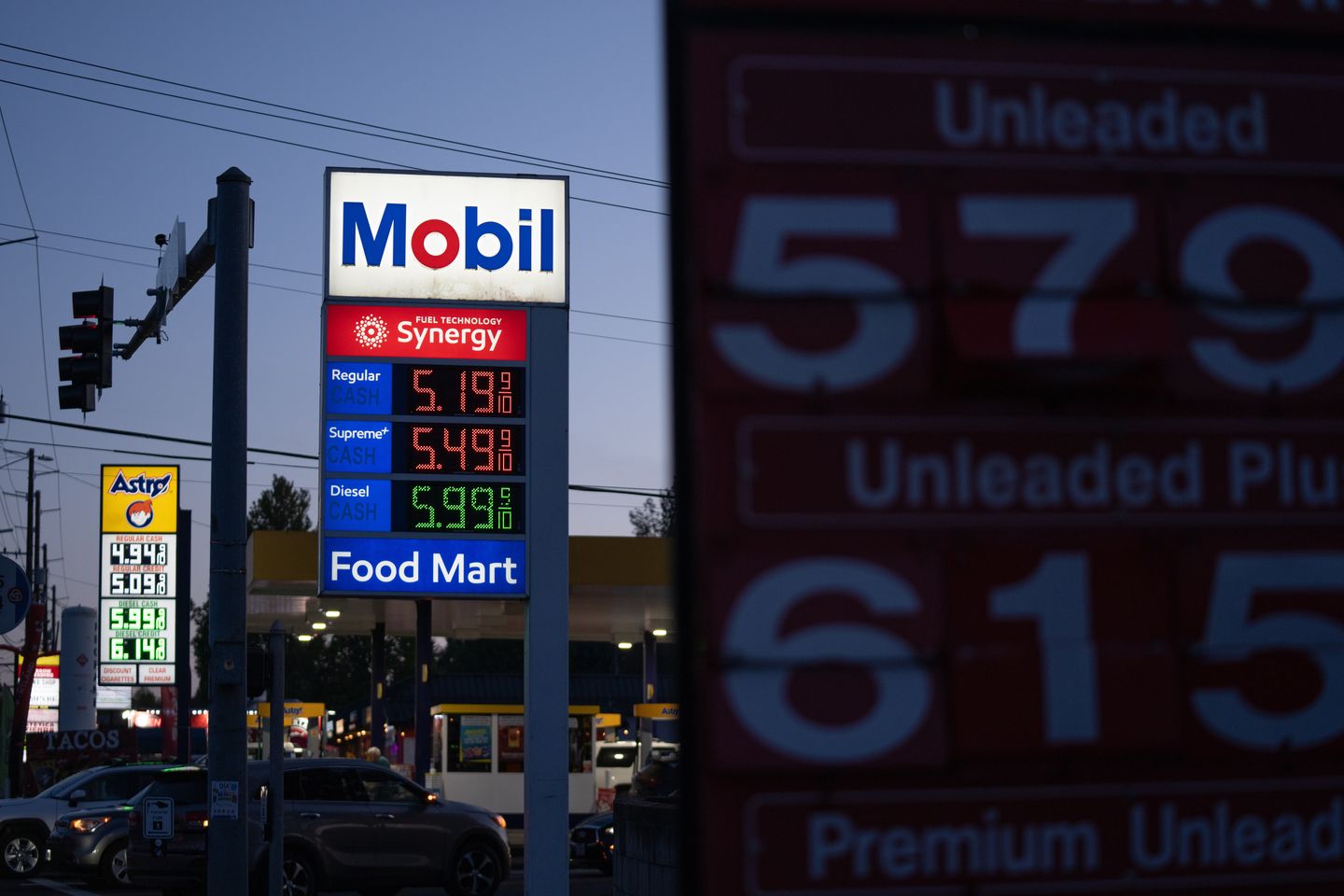
Gas prices in California have climbed to among the highest levels in the country, with one remote rural county reaching an average of $7 per gallon as the ongoing conflict over the Strait of Hormuz compounds longstanding structural pressures on the state’s fuel supply.
Mono County, a sparsely populated area in eastern California just west of Yosemite National Park, recorded a county average of $7.002 per gallon as of Sunday, according to AAA data — the highest in the nation. The statewide average for regular gasoline stood at $6.114, itself about 47 cents above Hawaii, which had the second-highest state average in the country at $5.639 per gallon. The national average was $4.457.
Other California markets were also among the nation’s most expensive. San Francisco averaged roughly $6.30 per gallon, while San Diego and the Los Angeles-Long Beach area were both near $6.10. Mid-grade averaged $6.332 statewide, premium $6.530, and diesel $7.502.
California has long faced higher fuel costs than the rest of the country due to a combination of taxes and regulatory requirements. The state levies a 71-cent-per-gallon tax on gasoline and imposes strict environmental standards that require a more costly fuel blend, including rules limiting the use of methanol in standard gasoline in favor of ethanol as the primary oxygenate. An additional carbon tax adds roughly 20 to 25 cents per gallon, with cleaner-burning fuel requirements tacking on another 25 cents.
The state’s supply situation has tightened further following the closure of two major refineries. Phillips 66 ceased fuel production at its Los Angeles-area Wilmington facility by the end of 2025, and Valero closed its 145,000-barrel-per-day Benicia refinery by early 2026 — together eliminating roughly 17 percent of California’s in-state refining capacity, according to the U.S. Energy Information Administration. The closures have increased the state’s reliance on imported gasoline to meet demand.
Those domestic pressures have been amplified by global disruption stemming from the war with Iran and the effective closure of the Strait of Hormuz, a critical transit point for an estimated 25 percent of the world’s seaborne oil trade. Iran has largely blocked the waterway since late February, following the launch of U.S. and Israeli military operations against the country.
On Sunday, President Trump announced “Project Freedom,” an initiative under which the U.S. Navy would begin guiding commercial ships through the strait starting Monday. Mr. Trump described the effort as a humanitarian gesture on behalf of neutral vessels stranded in the waterway.
“The Ship movement is merely meant to free up people, companies, and Countries that have done absolutely nothing wrong — They are victims of circumstance,” he wrote on Truth Social.
According to Axios, U.S. officials said there was no plan for full-fledged naval escorts; instead, Navy ships would be positioned nearby and ready to intervene, while advising commercial vessels on how to avoid mines. The operation’s support assets include guided-missile destroyers, more than 100 land and sea-based aircraft, and 15,000 service members, according to U.S. Central Command. The rules of engagement for U.S. forces in the region were also changed, authorizing strikes against immediate threats to ships crossing the strait, including Iranian Revolutionary Guard Corps fast boats and Iranian missile positions, Axios reported.
Iranian lawmakers warned that any U.S. interference in the strait would constitute a ceasefire violation.
“The Strait of Hormuz and the Persian Gulf would not be managed by Trump’s delusional posts!” Ebrahim Azizi, chairman of the Iranian parliament’s national security committee, wrote on X. On Monday, Iran fired cruise missiles at Navy ships and drones at commercial vessels, according to CENTCOM commander Adm. Brad Cooper, who said all were engaged and no U.S. or U.S.-flagged ships were struck. U.S. forces destroyed six Iranian small boats during the operation.
Mr. Trump said Saturday he was reviewing a 14-point peace proposal sent by Iran, while expressing skepticism that it would lead to a deal. “I’ll let you know about it later,” he told reporters before boarding Air Force One.
This article was constructed with the assistance of artificial intelligence and published by a member of The Washington Times’ AI News Desk team. The contents of this report are based solely on The Washington Times’ original reporting, wire services, and/or other sources cited within the report. For more information, please read our AI policy or contact Steve Fink, Director of Artificial Intelligence, at sfink@washingtontimes.com
The Washington Times AI Ethics Newsroom Committee can be reached at aispotlight@washingtontimes.com.