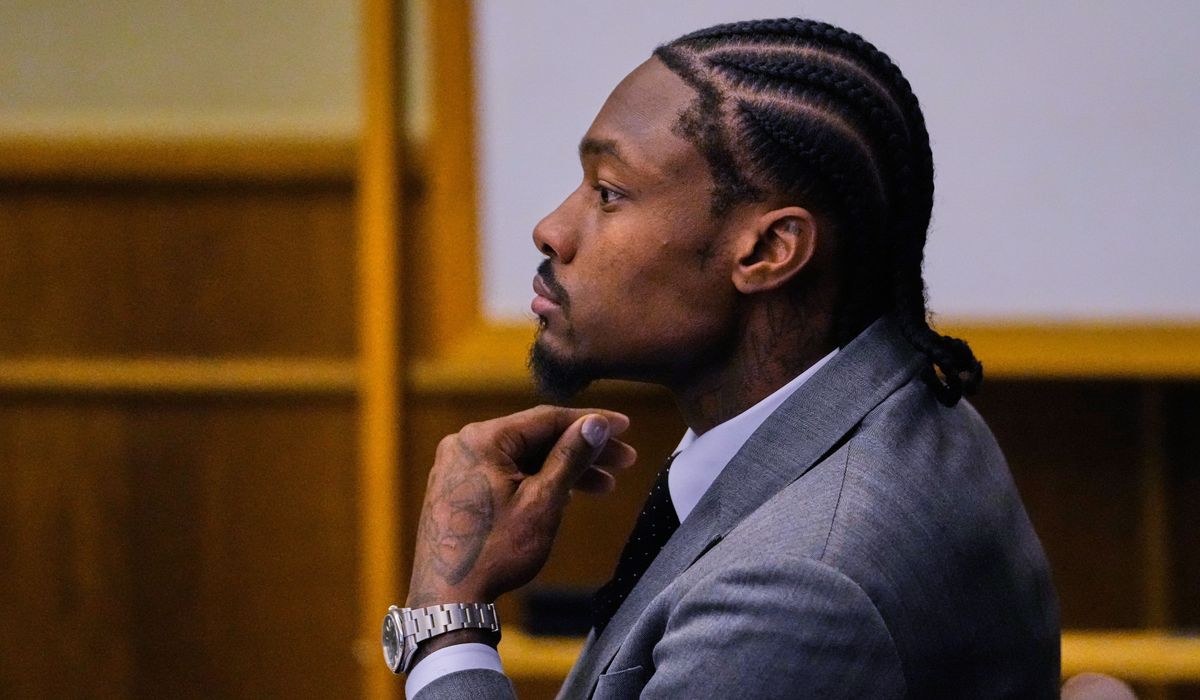
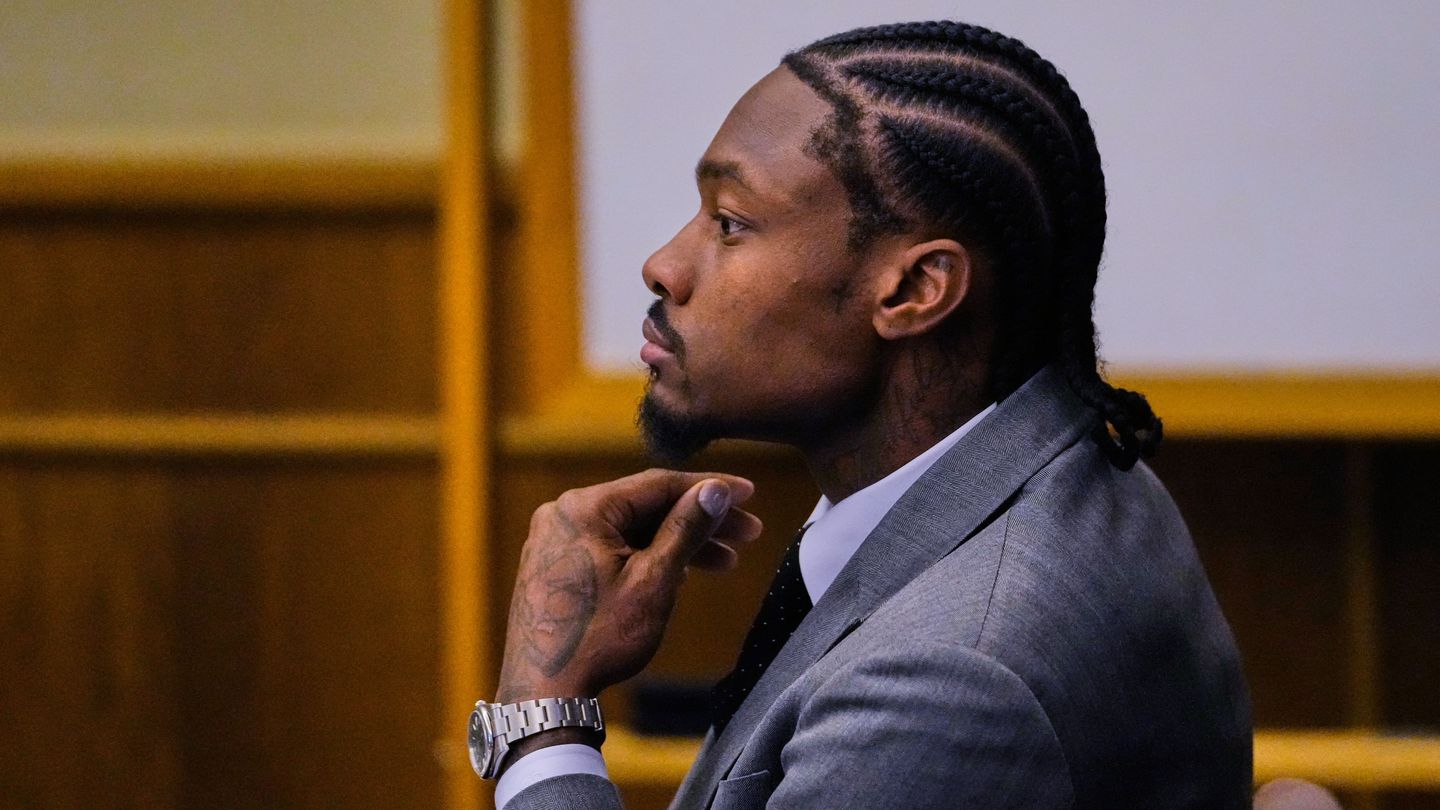
BOSTON — Former New England Patriots receiver Stefon Diggs was found not guilty Tuesday of assaulting his personal chef in a case marked by conflicting accounts of what happened inside his home after disputes over money and their relationship.
His trial lasted two days and the jury deliberated for less than two hours.
The charges stemmed from a Dec. 2 incident at his house in Dedham, where Jamila Adams, a former live-in personal chef known as Mila, testified that Diggs slapped and choked her during an argument. He had pleaded not guilty to a felony strangulation charge and a misdemeanor assault and battery charge.
Diggs’ attorneys said the alleged assault never happened and challenged his accuser’s’ credibility, arguing the dispute was about money or relationship tensions — including a disagreement over a planned trip to Miami — rather than a violent attack.
They pointed to financial demands she made and testimony from friends and employees who said she did not appear injured in the days after the encounter, while prosecutors argued the case rests on her account of what happened inside the home.
Defense attorney Andrew Kettlewell told jurors during closing arguments that prosecutors had not presented “a single shred of credible evidence” that an assault occurred. He said the woman made the accusation to “leverage and humiliate and to punish” Diggs.
“There was no assault, no strangulation, no incident at all on that day or any other day,” he said.
Assistant District Attorney Drew Virtue said the accuser’s behavior should be viewed in the context of her relationship with Diggs, whom he described as “a sometimes lover, a boss, landlord,” pointing to the imbalance in that relationship as a factor in how she responded afterward.
“He was an athlete, a celebrity, financially powerful, surrounded by people that were all on his payroll that liked him,” the prosecutor said. “And when you put that all in consideration, her behavior does make sense.”
He urged jurors not to dismiss the woman’s testimony because she was not “a perfect witness.”
“She was argumentative, avoidant, difficult. But does that mean you should throw away everything she said? No,” he said, adding that jurors should give her testimony “the attention, the scrutiny, the weight it deserves.”
Earlier in the trial, Ms.Adams became emotional on the stand while describing an alleged encounter with Diggs on in which she said he entered her room following an argument over text.
She said she lived in the NFL star’s home and prepared all of his meals, testifying that Diggs “smacked me with an open hand” before wrapping his arm around her neck and choking her, leaving her struggling to breathe. She described what she called a “complicated” relationship, saying it had previously been sexual but was not at the time of the alleged assault.
Defense attorneys pressed her about money she said she was owed after working as a live-in chef. She testified she was paid about $2,000 a week and believed she had not been fully compensated after being sent home. They pointed to a $19,000 demand and said the amount increased over time, with her attorney later seeking $5.5 million.
Asked about the $5.5 million claim, she said, “I can’t speak on that,” and at other points told jurors, “I don’t understand the question” and “I don’t know how to answer the question.”
Defense attorneys also showed jurors cellphone videos of Ms. Adams socializing, including clips of her in a car listening to music and dancing, which they suggested showed her demeanor in the days following the incident.
Jeanelle Sales, Diggs’ chief of staff, who also goes by “Sunni,” testified she saw Ms. Adams at the home on the day she alleged she was assaulted and did not see visible marks, redness or swelling on her neck or face. She said the woman appeared to be in normal spirits.
“She was walking around looking for a piece of paper and a pen to write a card – I guess, write a note to him for his birthday gift,” Ms. Sales said.
Prosecutors pushed back on that testimony, suggesting the witnesses’ livelihoods were tied to Diggs and that they had a financial interest in the outcome of the case.