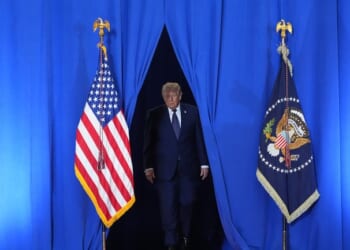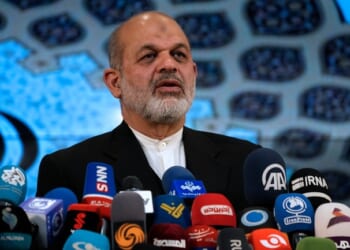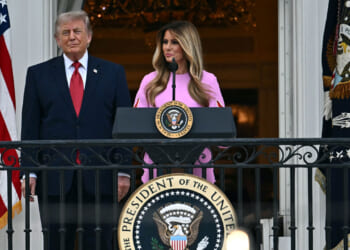
Events at the White House Correspondents Dinner overtook developments in the war over the last 36 hours or so, at least in the US. In Tehran, however, Donald Trump’s abrupt cancellation of the trip to Islamabad by Steven Witkoff and Jared Kushner clearly dominated the thinking of those in the regime. Ahmad Vahidi may not want to publicly acknowledge that the US and Israel have defeated his IRGC, but he also understands what another round of shock-and-awe military operations will do to his regime.
When Trump cancelled the flight, remarking that he wouldn’t bother to waste 18 hours in air travel just to talk to nobodies, everyone understood that to mean that the war would shortly resume. The assassination attempt at the WHCD might have prompted Trump to escalate even more quickly. Even before the shooting, Abbas Araghchi had changed his plans and returned to Islamabad again in an attempt to get the Pakistanis to intervene. Late yesterday, word got out that the Iranians offered a deal which looks suspiciously similar – if not identical – to the current “ceasefire”:
Iran gave the U.S. a new proposal to reopen the Strait of Hormuz and end the war, with nuclear negotiations postponed for a later stage, according to a U.S. official and two sources with knowledge.
Why it matters: The diplomacy is in a stalemate, and the Iranian leadership is divided about what nuclear concessions should be on the table. The Iranian proposal would bypass that issue en route to a faster deal.
- But lifting the blockade and ending the war would remove President Trump’s leverage in any future talks to remove Iran’s stockpile of enriched uranium and convince Tehran to suspend enrichment — two primary war objectives for Trump.
Er … isn’t this the current deal that Trump has already extended once? The original ceasefire agreement halted military operations on both sides, with Iran guaranteeing free operation through the Strait of Hormuz, while Pakistan brokered negotiations on all issues. What happened to that agreement? Well …
Iran never did honor its end of the agreement. It kept attacking shipping in the Strait of Hormuz and insisted that it wouldn’t comply with the terms of the ceasefire until it extended to Lebanon. Trump and Marco Rubio then brokered a ceasefire in Lebanon, and Iran still refused to comply. They opened fire on Indian tankers attempting to pass, then publicly rebuked Araghchi as an ‘idiot’ for claiming he had the authority to make the agreement in the first place.
Araghchi once told a friendly media outlet that he learned negotiation from his father, a carpet merchant, and that Iranians knew how to drag out a deal for the best advantage. This, however, is selling the same rug twice and not delivering either time.
Iran is wasting time, and everyone knows it. He told Fox News and other reporters that he won’t send negotiators to Islamabad again, because it’s just not worth the effort:
President Trump said he isn’t sending U.S. envoys to Pakistan for peace talks with Iran and that negotiations could happen over the phone instead. “If they want to talk, they can come to us or they can call us,” he said Sunday on Fox News.
On Saturday he said he wouldn’t send his negotiators Steve Witkoff and Jared Kushner to Pakistan after Tehran’s foreign minister, Abbas Araghchi, departed Islamabad that day following a meeting with Pakistan’s senior leadership. Araghchi is now in St. Petersburg to meet with Russian President Vladimir Putin.
That’s an answer in itself. Trump apparently will meet today with his military leadership to discuss next steps, but the one step that won’t change is the blockade. That is turning into a nightmare for the IRGC, whose oil operations will soon derail unless they can start shipping crude again. The regime has hauled old oil tankers and ancient land-based tanks back into service to use as floating storage, a sign that they are about to reach a catastrophic tipping point for their oil industry:
Iran’s oil tanks are filling up as the U.S. blockade of its ports is preventing its shipments from reaching customers and empty tankers from loading up. To avoid shutting down some of its production, Iran is already storing oil on floating tankers. But now the Islamic Republic, which is dependent on oil exports for the bulk of its revenue, is resorting to previously unused methods to conserve storage space, say current and former Iran officials.
The regime is using containers and “junk storage,” disused tanks in poor condition in the southern oil hubs of Ahvaz and Asaluyeh, the officials say. Iran is also trying to send oil by rail to China, said Hamid Hosseini, spokesman for Iran’s oil exporting union.
Hence their attempt to sell the same rug twice without delivering it at all. Unfortunately, Trump has already shown that their leverage in the Strait is much less than they realized, and it’s only getting smaller with each day. The US Navy has already restored a small amount of commercial shipping through the Strait and is working to clear mines and defend shipping, but the closure of the Strait didn’t do the catastrophic damage that the IRGC believed it would.
Time is not on Iran’s side, and perhaps the WHCD assassination attempt has made that situation worse. Trump has to understand now that he can’t let Iran stall this forever, especially since the IRGC has cooked up assassination plots of its own. Trump has to act to see this all the way to its conclusion and to force a collapse of the IRGC’s military and industrial capacity for good. Time to stop buying rugs from Araghchi and to start unraveling the IRGC’s grip on power.
Editor’s Note: For decades, former presidents have been all talk and no action. Now, Donald Trump is eliminating the threat from Iran once and for all.
Help us report the truth about the Trump administration’s decisive actions to keep Americans safe and bring peace to the world. Join HotAir VIP and use promo code FIGHT to get 60% off your VIP membership.