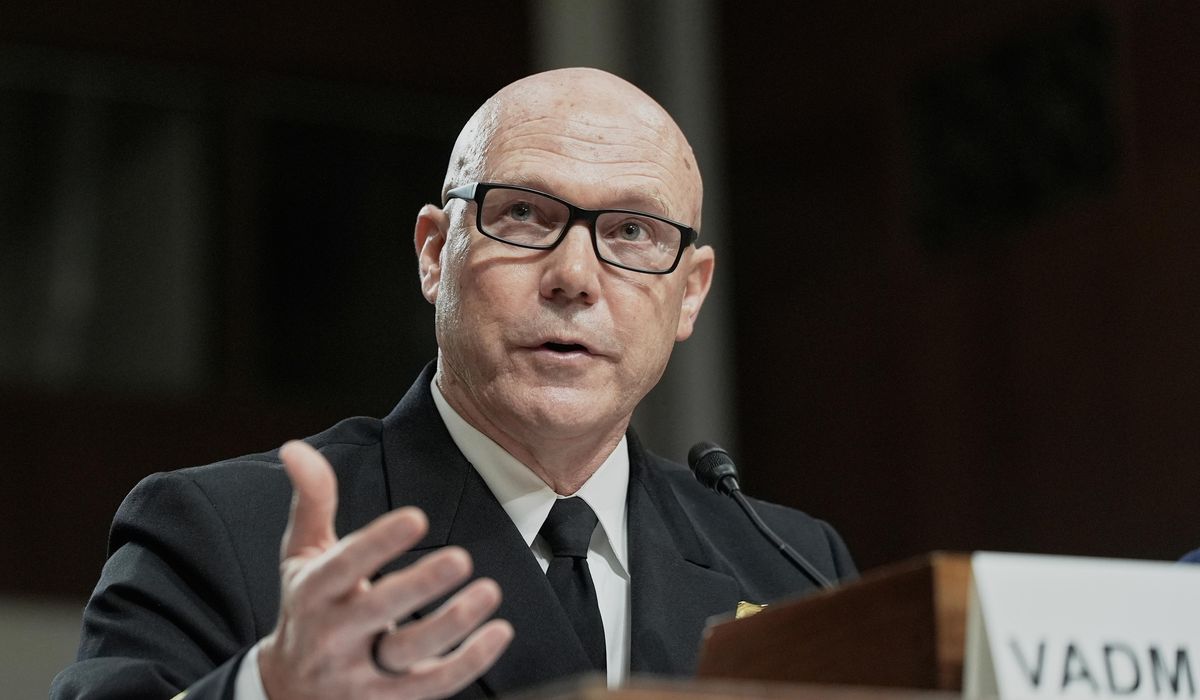
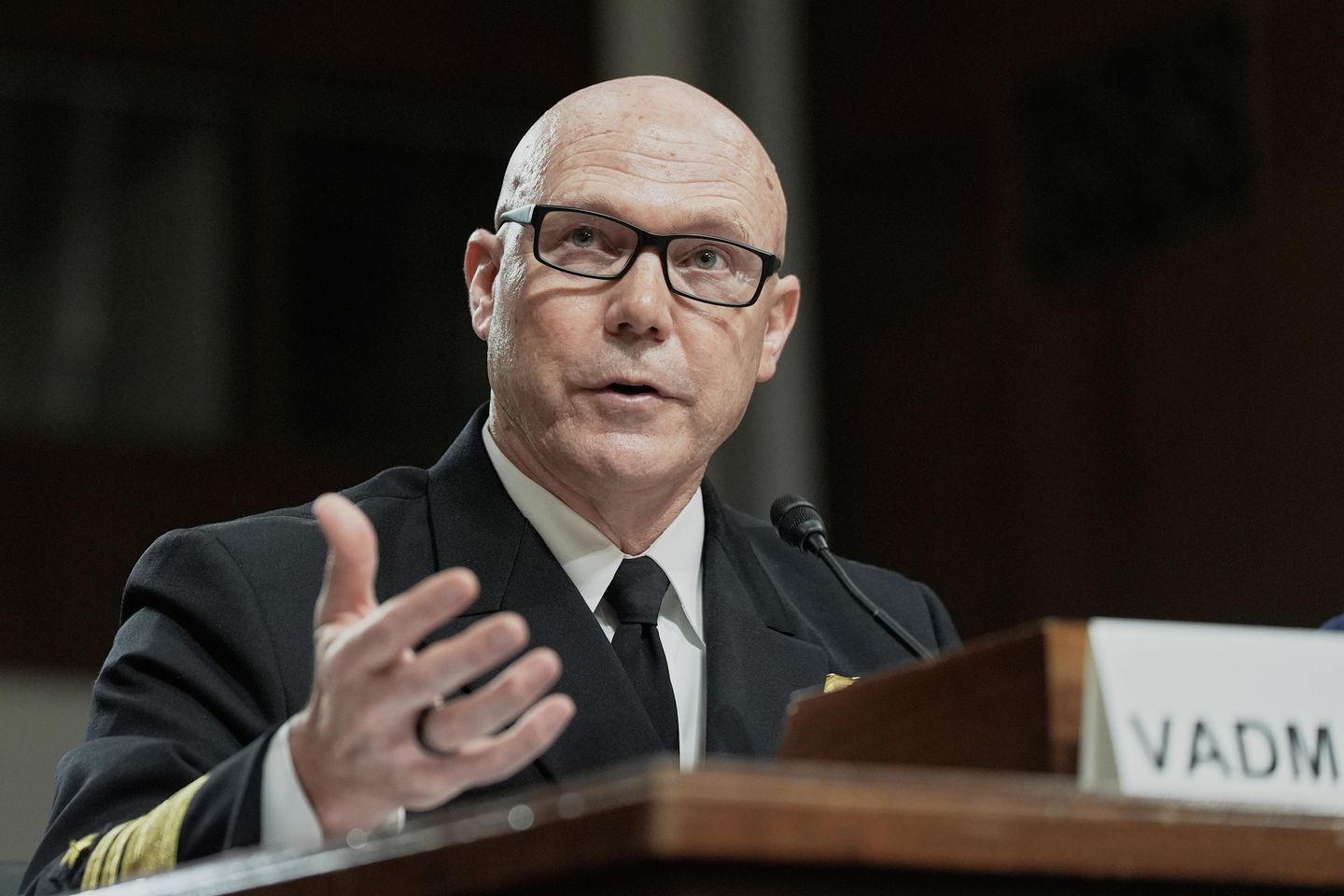
TAMPA, Florida — America’s elite Special Operations Forces units are not just on the “periphery” of 21st-century global conflicts but are an irreplaceable component of the country’s ability to project power worldwide and deter major great power wars, the head of U.S. Special Operations Command said Tuesday.
In an address at a major special forces convention here, Navy Adm. Frank M. Bradley cited the daring January raid to capture then-Venezuelan President Nicolas Maduro as an example of the deeply integrated and technologically complex missions that special forces will spearhead in the future.
He described a military environment in which Special Operations Forces, or SOF — including famed outfits such as the Green Berets, the Navy SEALs and Delta Force, among others — are at the heart of broader military missions involving multiple services and operating across all domains, including space and cyber, and integrating cutting-edge capabilities such as artificial intelligence.
“Today’s crises and increasingly those of tomorrow are going to require a more synchronized joint force team, one where SOF is not just on the periphery or leading its own operation separate from the joint force, but one where SOF is a core element of the main effort, a main effort that will be borne out by our joint force colleagues in the Army, the Navy, Air Force, the Marine Corps, our cyber and our space forces,” Adm. Bradley told an audience at SOF Week 2026, the country’s largest gathering of special forces personnel and defense contractors from around the world, complete with a convention floor packed with the most advanced military capabilities on the planet.
Special forces set a ’new standard’
Adm. Bradley’s comments reflect a growing understanding in military circles that special forces units are moving into a different era, as technology and devastating new weapons make it much harder for the U.S., or any nation, to mass ground forces and assets in the traditional sense.
And he envisioned a future in which complex, more narrowly targeted missions will help the U.S. achieve its national security aims without being dragged into a full-blown, costly war.
In his speech Tuesday morning, Adm. Bradley described the January raid to capture Mr. Maduro as the “most sophisticated integrated interagency joint force raid that we have ever conducted.” The military relied on traditional ships and planes to move personnel, while complex space and cyber operations helped degrade Venezuelan defenses in Caracas ahead of SOF personnel storming Mr. Maduro’s compound and capturing him.
That mission, Adm. Bradley said, set a “new standard” for what the military and its SOF personnel are capable of.
“That is the future of what SOF operations will look like,” Adm. Bradley said.
The success of the Venezuela mission only reinforced the belief that America’s highly specialized forces will be central to U.S. power projection for decades to come in all corners of the world, including the strategically vital Indo-Pacific region.
While those units became virtual household names during the war on terror, with high-profile missions such as the 2011 raid in Pakistan that killed al Qaeda leader Osama bin Laden, analysts are quick to point out that SOF’s roots are much wider.
Dating back to the most dangerous periods of the Cold War, those personnel were often on the front lines of the American fight against communist forces, working on the ground with resistance forces and undertaking other specialized missions across the globe, including evacuation missions and even counter-guerrilla operations to combat Soviet influence.
Just as during the Cold War, SOF units today are again tasked with preventing a major great power war, as fears mount of a potential clash between the U.S. and communist China, Adm. Bradley said.
“For those who see the storm clouds of global conflict on the horizon, we know the challenge before us remains the same: We must deter another distracting and devastating great power war across the world. Deterrence is our mission,” he said. “Deterrence is our foundational goal that we must focus on.”
The budget question
In his address, Adm. Bradley did not explicitly call for major budget increases to the Special Operations Command budget or other funding streams for SOF units.
But some military insiders and powerful lawmakers argue that this new reality — that SOF will be at the center of America’s military strategy for years to come — requires major funding increases.
“The funding provided to Special Operations Command has not kept pace with the seemingly insatiable demand for its capabilities. The command faces a troubling gap between its mission requirements and available resources” afforded by Pentagon budgets, Sen. Roger Wicker, Mississippi Republican and chairman of the Senate Armed Services Committee, said at a recent hearing.
While the Pentagon is eyeing a roughly 44% overall budget increase to $1.5 trillion in fiscal year 2027, the top-line budget for U.S. Special Operations Command operations and maintenance would rise much more modestly, from about $9.7 billion in discretionary spending this fiscal year to $10.9 billion in 2027.
Those figures don’t include money for procurement, research and development, and other costs associated with Special Operations Command, so the full financial picture is more complicated. But SOF advocates say political leaders and budget-writers — including in the Trump administration — still are not moving fast enough to redirect money away from some traditional military capabilities and toward special forces.
“We’re in a transitional phase, but we’re not really adapting fast enough. Everybody talks about it and writes papers about it. But then you look at the defense budget and it’s the same stuff all over again,” Stu Bradin, CEO of the Global Special Operations Forces Foundation, which organizes SOF Week, told The Washington Times in a recent interview.