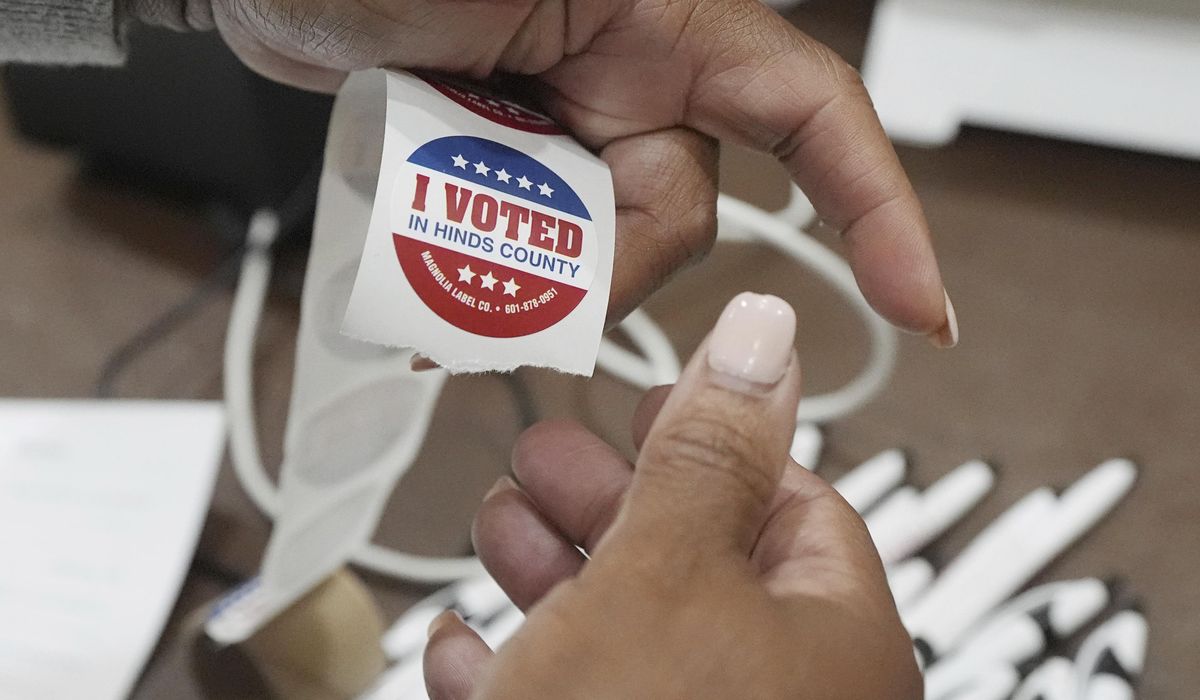
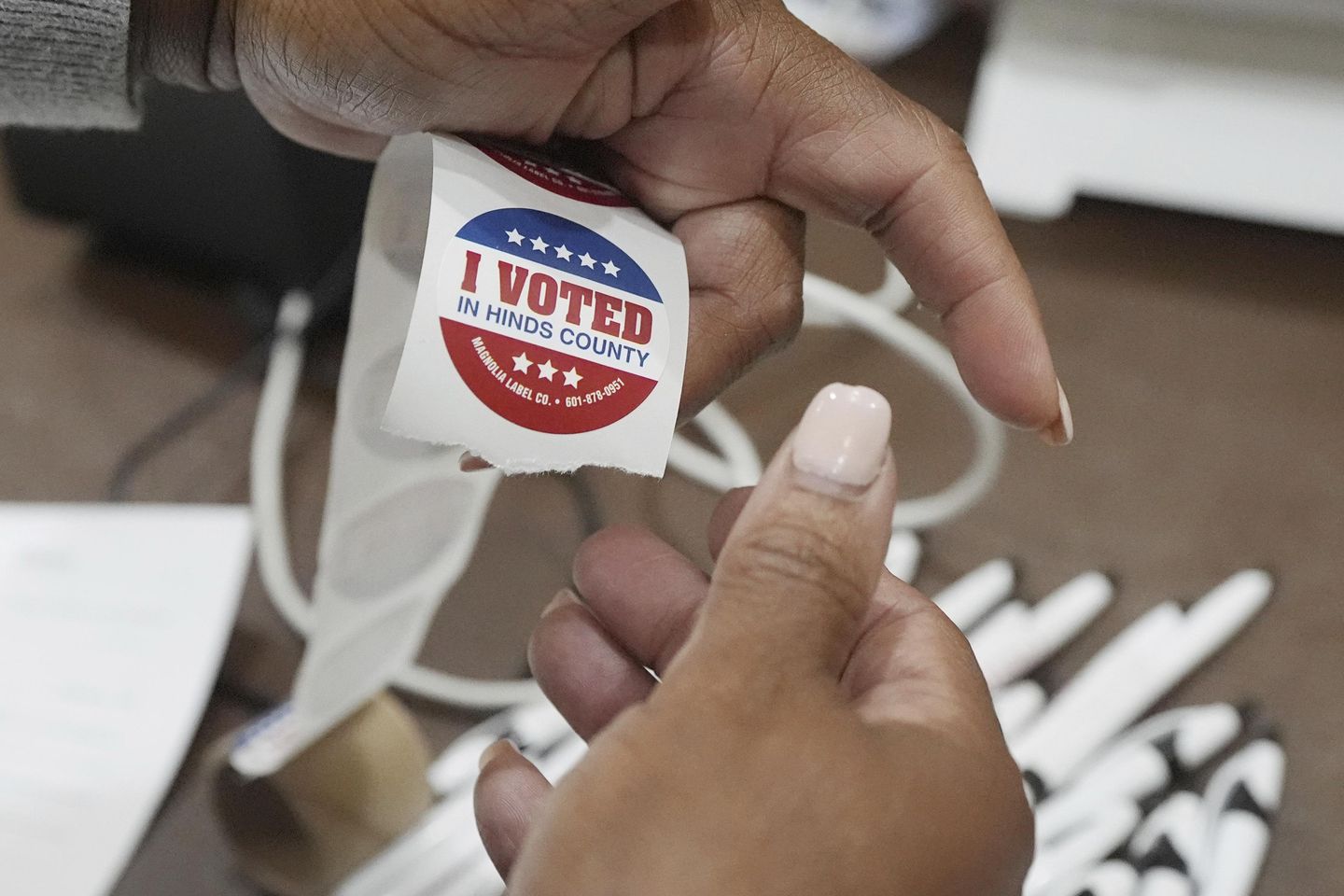
Homeland Security has flagged more than 24,000 names on U.S. voter rolls that may be noncitizens who are ineligible to vote, the department said Thursday.
DHS said those are names it has run through its national database and came up as suspects. They have been sent to Homeland Security Investigations, a division of ICE, for review.
The department also celebrated the conviction of a Mexican man who’d been serving as mayor of a town in Kansas, even though he was not a citizen and had repeatedly voted illegally in elections.
Jose Ceballos was serving as mayor of Coldwater, near the Kansas-Oklahoma border, when state authorities charged him last year with fraudulent voting.
He said on multiple registration forms that he was a citizen, even though he had never attained that honor.
DHS said he did apply for citizenship last year — and lied on that form by saying he’d never falsely claimed citizenship before.
Ceballos resigned his mayor’s post in December, after the charges were brought.
DHS celebrated the new guilty plea.
“This alien has now been convicted of illegally voting in American elections,” said Lauren Bis, acting assistant secretary at the department.
Ceballos reached a plea agreement with Kansas Attorney General Kris Kobach that dropped the most serious illegal voting charges and allowed him to admit to three counts of disorderly election conduct. The deal could help Ceballos avoid deportation.
He also plans to continue to seek U.S. citizenship, according to The Kansas Reflector.
Ceballos’s case was flagged after his citizenship application.
Experts say that’s a common occurrence, though often it’s the migrants themselves who admit they wrongly registered.
The federal government under President Trump is also being more proactive, pushing to run all state voter lists through DHS’s Systematic Alien Verification for Entitlements, or SAVE database.
Some GOP-led states have cooperated but a majority of states have resisted turning over their lists.
The Justice Department has filed more than two dozen lawsuits to try to get a look at the data. The five lawsuits that have reached a judge’s ruling have all gone against the DOJ.
DHS on Thursday said the success of SAVE in identifying 24,000 potential bogus voters should entice other states to help out.
“The SAVE program is a critical tool for state and local governments to safeguard the integrity of elections across the country,” Ms. Bis said.
Critics say SAVE spits out bad data, wrongly flagging people who are, in fact, American citizens.
U.S. Citizenship and Immigration Services, in new data submitted to Congress this spring, said SAVE’s manual verification — which kicks in if the automated system can’t determine an answer — had a 98% accuracy rate in 2025.
That’s below the target rate of 99%.