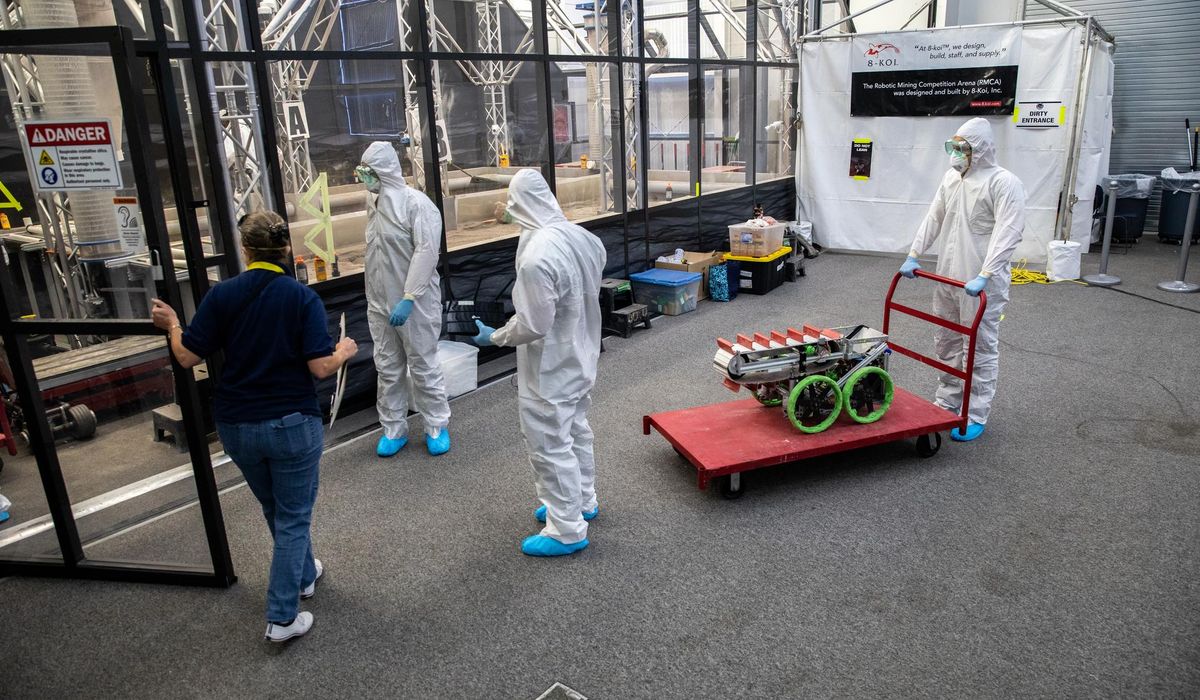
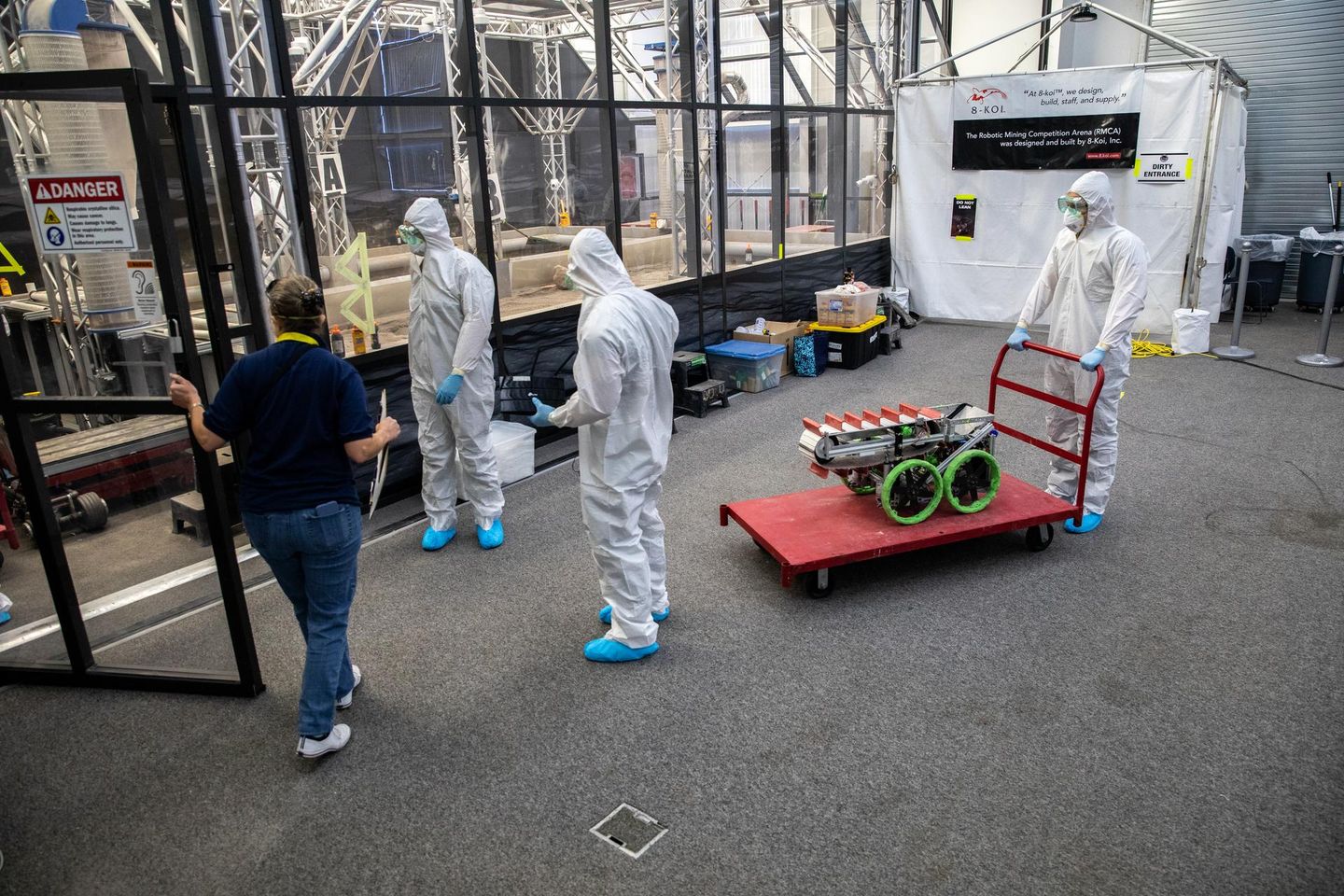
NASA will host its 2026 Lunabotics Challenge next week at the Astronauts Memorial Foundation’s Center for Space Education at the Kennedy Space Center Visitor Complex in Florida, the agency announced.
Fifty college teams from across the country will gather to design, build and operate autonomous lunar robot prototypes capable of constructing a berm — a protective barrier built from soil and other material simulating lunar regolith — NASA said.
In future lunar operations, such berms could protect equipment from debris during landings and launches, shade cryogenic propellant storage areas, help shield nuclear power infrastructure from space radiation and serve other support functions, the agency said.
“The task of robotically building berm structures will be important for preparation and support of crewed lunar missions,” Kurt Leucht, a NASA software developer, In-Situ Resource Utilization researcher and Lunabotics commentator at Kennedy Space Center, said in a statement. “These competing teams are not only building critical engineering skills that will assist their future careers, but they are literally helping NASA prepare for our future Artemis missions to the Moon.”
According to NASA’s Lunabotics Challenge webpage, the university-level competition requires teams to use NASA systems engineering processes to design, build and operate their lunar robots. NASA says the challenge is intended to engage and retain students in STEM fields through hands-on research, design and engineering experience tied to future space exploration goals.
NASA’s Lunabotics Challenge was established in 2010 and is administered as one of the agency’s Artemis Student Challenges.
The three-day event runs Tuesday, May 19, through Thursday, May 21, with competition hours scheduled from 8 a.m. to 6 p.m. each day, according to NASA.
This article was constructed with the assistance of artificial intelligence and published by a member of The Washington Times’ AI News Desk team. The contents of this report are based solely on The Washington Times’ original reporting, wire services, and/or other sources cited within the report. For more information, please read our AI policy or contact Steve Fink, Director of Artificial Intelligence, at sfink@washingtontimes.com
The Washington Times AI Ethics Newsroom Committee can be reached at aispotlight@washingtontimes.com.