We write a lot about media bias here at PJ Media; in many ways, it’s the low-hanging fruit of political writing and analysis. Endless examples abound, so it’s easy to point them out.
At the same time, we have our biases and aren’t afraid to let them show. After all, we don’t claim to be a straight news site. I have my opinions about almost everything I write — news, culture, theology, sports, whatever — so chances are you’re going to hear them.
Sports media outlets have their biases, too. Outfits like ESPN and The Athletic breathlessly report every time Aaron Judge blows his nose. ESPN is especially obsessed with the University of Colorado football program simply because Deion Sanders is the head coach. (Don’t get me wrong; I love Deion, but a middling football program doesn’t deserve the oxygen it gets.)
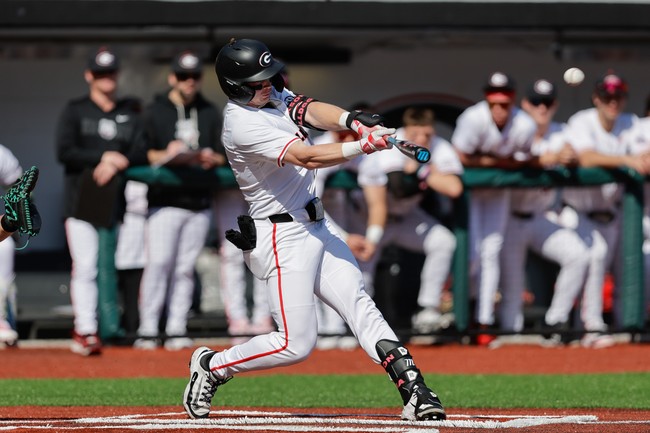
“What’s Chris on about now?” I hear you asking, dear reader, and here’s where I’m going with this one. My Georgia Bulldogs baseball team is in the midst of an excellent season. We’re ranked in the top five in most polls, but for some reason, we can’t get past our conference rival, the Texas Longhorns, who are ranked just above us despite the fact that we have a better conference record and overall record.
Side note: D1 Baseball, one of the premier college baseball outlets, has a nasty habit of sleeping on Georgia. On Highway to Hoover, D1 Baseball’s Southeastern Conference (SEC) podcast, early-season episodes focused on legacy teams like Texas, Louisiana State, and Ole Miss, while Georgia often received less than two minutes of coverage in a 45-minute episode. The sentence “I’m just not sure about Georgia” became a cliché. D1 Baseball’s “experts” tend to pick against Georgia in conference series as well, and we’ve proven them wrong almost every time.
As of this writing, Georgia has a 38-11 overall record and an 18-6 record in conference play, while Texas sits at 35-10 overall and 15-8 in the SEC. Yet #5 Georgia is one spot behind #4 Texas in D1 Baseball’s poll. Baseball America, which is usually pretty high on Georgia, has Texas at #3 and UGA at #6 (Baseball America even has Auburn above Georgia despite a worse record), while Perfect Game has Texas at #4 and Georgia at #5.
Related: The Most Wonderful Time of the Year: College Baseball Returns
Why? That’s the question I posed to ChatGPT on my morning walk.
Chat and I talked about the podcasting and other media coverage angle, and we both agreed that college baseball media tends to prefer the SEC teams with a long history of success, like LSU, Ole Miss, Mississippi State, Vanderbilt, and, yes, Texas. Georgia has been getting bigger and better mentions as the season has progressed, but those legacy teams are still dominating coverage.
“Georgia has the better ‘who’s winning the SEC?’ case. Texas has the better ‘selection committee résumé sheet’ case,” Chat replied. “If Georgia finishes the job in the SEC, especially with Auburn still on the schedule, the polls may finally have to quit slow-walking it. Right now they’re basically saying, ‘We see you, Georgia… but we really like Texas’ RPI.’ Which is classic pollster behavior: never miss a chance to overcomplicate a ballgame.”
*RPI stands for “Rating Percentage Index,” and it’s a key measurement of strength of schedule and winning percentages for ranking and tournament-seeding purposes.
I posed this question to Chat: “But where does RPI give way to real results?” It answered (with emphasis in the original):
It should give way when the results are no longer ambiguous.
RPI is useful when you’re comparing teams from different leagues, different schedules, different regions, and different levels of opportunity. It helps answer, “Who has played a tougher road?” Fair enough. But once you’re comparing two teams inside the same conference, in the same meat grinder, and one team has a better overall record and a better SEC record, RPI ought to become supporting evidence — not the whole closing argument.
The NCAA’s own baseball selection criteria say the committee can consider a bunch of things, “not necessarily in priority order”: overall record, Division I record, RPI, nonconference record and RPI, recent record, head-to-head, common opponents, and advisory input. So even by the official framework, RPI is one item in the toolbox, not Moses coming down the mountain.
That’s where Georgia has a gripe. If Texas’ argument is “our schedule/RPI profile is better,” fine. That belongs in the conversation. But Georgia’s argument is not fluff:
Georgia is ahead in the SEC standings.
Georgia has the better overall record.
Georgia is performing better across the exact conference race both teams are trying to win.
That should matter a lot. Especially in the SEC, where you’re not exactly fattening up on directional schools and somebody’s cousin’s Bible college. You’re playing grown-man baseball every weekend.
The point where RPI should give way is when it starts overruling the scoreboard instead of explaining it. If RPI says Texas has a stronger résumé, that’s useful. If RPI causes voters to discount Georgia actually being ahead of Texas in the same league, then it’s stopped being a metric and started being a permission slip for preseason bias.
At the end of the day, it’s going to take a big Texas misstep for us to get above them (and Auburn — seriously, Baseball America?) before the SEC tournament. The polls may still be choosin’ Texas, but the SEC standings are choosing Georgia.
The Dawgs will just have to show everybody up the next two weekends against defending national champ LSU and overrated Auburn. Then they’ll dominate at the conference tournament, host their regional and superregional, and win it all at the College World Series in Omaha, Neb. Simple as that, right? Then maybe they’ll get the respect they deserve.
Closing note: I can’t use the phrase “choosin’ Texas” without sharing the most irresistible neo-traditional country song in years.
The media’s bad habits don’t stop at politics. Whether it’s Washington, Hollywood, academia, or even college baseball, the press loves its favorite narratives — and it really hates letting facts get in the way.
That’s why PJ Media keeps calling it out, with sharp analysis, honest opinion, and just enough humor to keep the nonsense from winning the day.
Join PJ Media VIP today and get 60% off with the promo code FIGHT. You’ll unlock exclusive columns, deeper analysis, and the kind of independent commentary the legacy media would rather you not read.
Use code FIGHT and become a PJ Media VIP now.