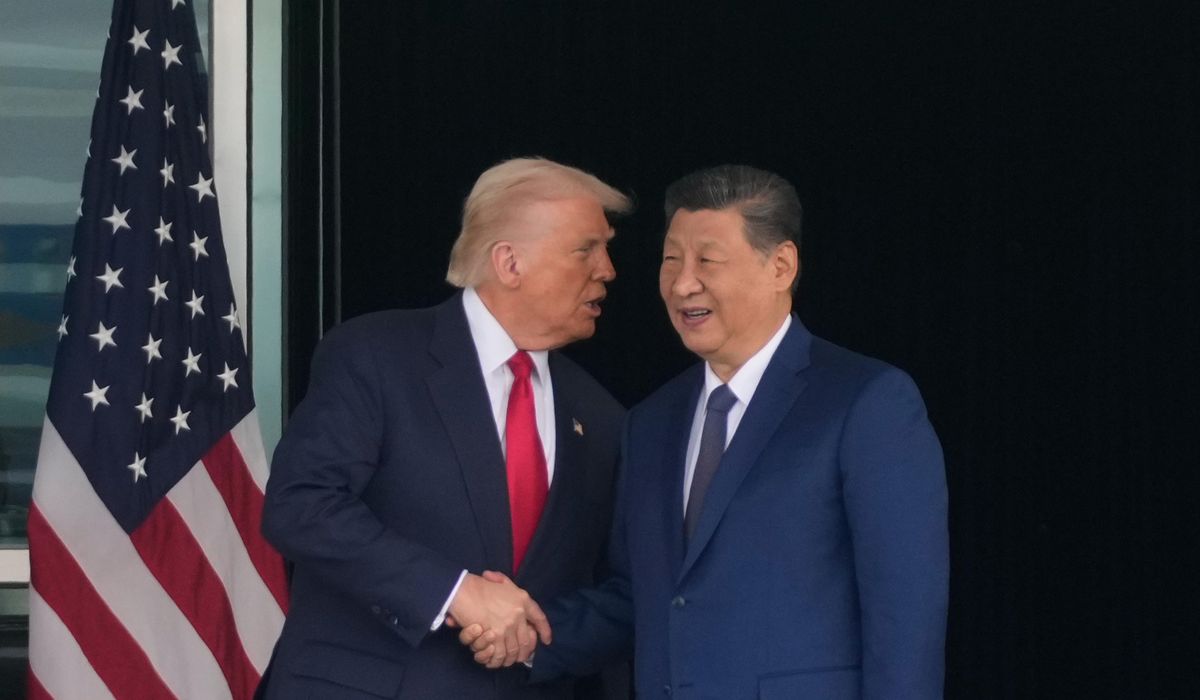
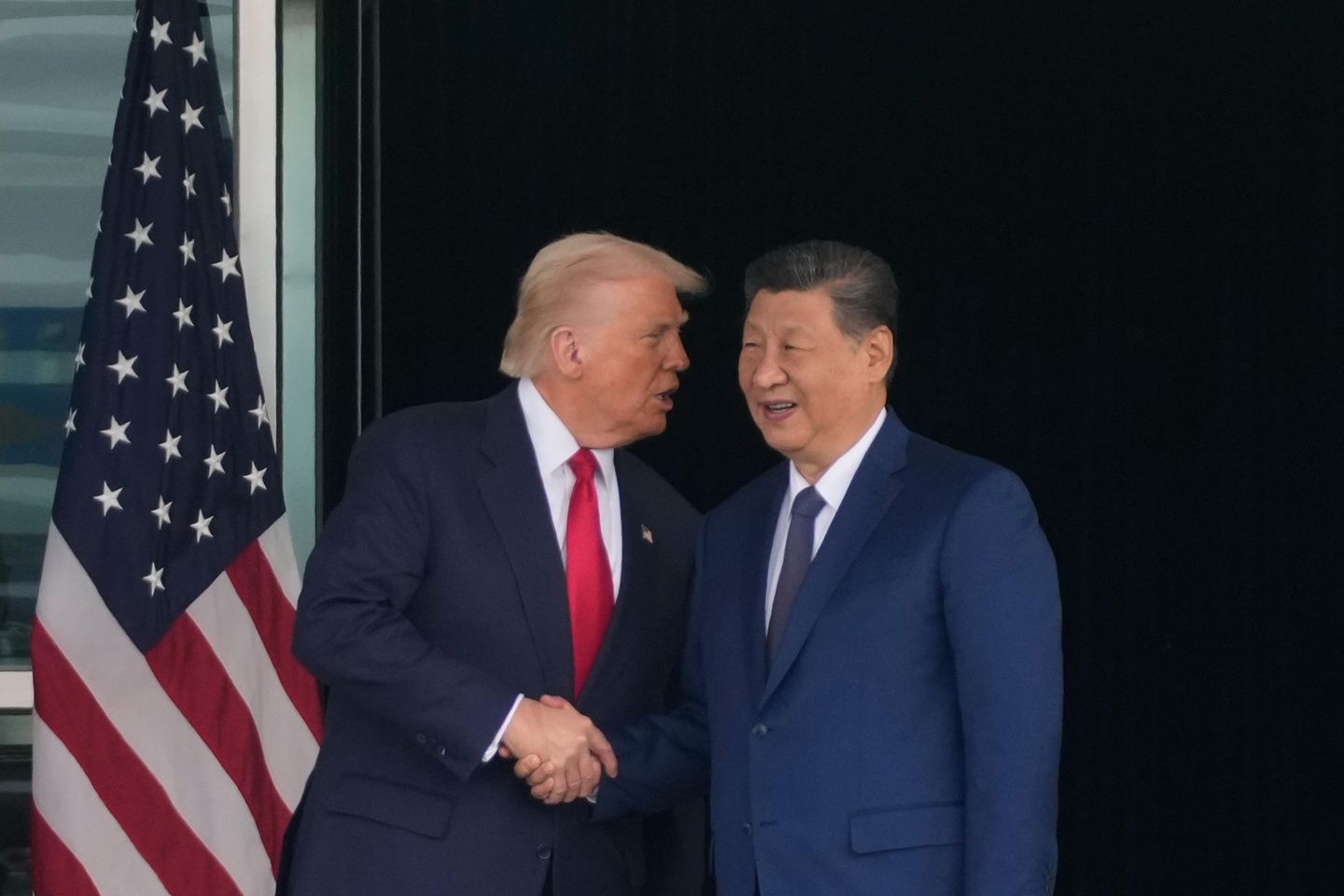
President Trump will press China on its export of deadly fentanyl and related chemicals during a meeting next month with Chinese leader Xi Jinping, according to a senior Trump administration trade official.
U.S. Trade Representative Jamieson Greer, who is leading preparations for the Beijing summit, also told Congress that the president will discuss obtaining greater access to rare earth minerals largely controlled globally by China when the two leaders meet.
Mr. Greer disclosed some details of the planned summit set for mid-May during testimony before a House Appropriations subcommittee on Thursday.
The trade office is seeking an additional $7 million in its annual $95 million budget that Mr. Greer said will be used to add experts on China to its staff and to enforce regulations against unfair trade practices.
Asked by Rep. Hal Rogers, chair of the commerce, justice, science and related agencies subcommittee, how the funding increase will be used to deal with the “growing economic and technological threat posed by the Chinese Communist Party,” Mr. Greer said China’s economy is different than the U.S. system.
“They use extreme subsidies. They control their private sector in a way we don’t. They constantly issue new measures. And we need to be able to have the resources to understand those measures and respond to them,” Mr. Greer said.
The United States is trying to have a “constructive relationship” with China and to trade in “non-sensitive areas” in a more balanced way, Mr. Greer said.
“But we also need to make sure that we have enforcement available where if the Chinese violate any deals we make, or take other unfair trade practices, or engage in other unfair trade practices, we have the negotiators, the subject matter experts, the economists and the attorneys,” he said, noting that the office conducts investigations and defends U.S. interests.
Mr. Greer said in March he and Treasury Secretary Scott Bessent held talks with Chinese officials on the summit.
“We expect the meeting to go smoothly,” he said. “We expect that we will prolong stability in our trade and economic relationship with the Chinese.”
A key U.S. goal of the talks in Beijing will be assuring that the United States can continue to obtain rare earth minerals that most of the world buys from China for their industries, he said.
A second goal will be to ensure that the Chinese are purchasing goods from the United States, including agricultural products, commercial aircraft and medical devices, he said.
“There are certain things we’re fine to import from China as well, and so we want to have an outcome geared toward having balanced trade with China and a managed trade relationship with them to avoid surprises, avoid escalation, and ensure that the trading relationship is for the benefit of Americans,” Mr. Greer said.
On China’s role in fentanyl exports and related precursor chemicals that have killed tens of thousands of Americans through drug overdoses, the trade representative said a main reason the president imposed tariffs on China last year was Beijing’s role in the deadly drug trade.
Democrats sought to remove the fentanyl-related tariffs, which would have reduced American leverage on the Chinese government, Mr. Greer said.
In all official meetings with Chinese counterparts, the United States delegations bring in national security officials to pressure the Chinese to control fentanyl and precursor chemicals, he said.
Information on specific Chinese companies or shipments involved in the drug trade is also shared with Beijing officials.
Still, the problem of Chinese drugs and chemicals persists with only “incremental progress,” Mr. Greer said.
“Fortunately, we’ve had fentanyl deaths decline over the past year, which is good. But there’s a lot more to be done and certainly the Chinese have a lot more they can do on that front,” he said.
Last month, White House drug czar Sara Carter told a United Nations commission on narcotics that China manufactures fentanyl precursors in the “millions of tons.”
“We know that China’s weak export controls and lax enforcement allow its chemical industry to foster friendships with the cartels,” Ms. Carter said. “At the same time, China’s overly effective controls over rare earth minerals wreak havoc on legitimate industries.”
Last year an estimated 80,000 Americans died from drug overdoses and poisonings and fentanyl and precursor chemicals were designated by the administration as weapons of mass destruction, she said.
Fentanyl-related tariffs remain at 10% on Chinese goods and were reduced following Mr. Trump’s meeting with Mr. Xi in South Korea Oct. 30. Total cumulative duties on Chinese imports declined roughly 57% to 47% as a result.
The summit next month was set during the South Korean meeting and was postponed from April due to the ongoing Iran conflict.
Mr. Trump recently warned China not to send new weapons and other military goods to Iran and threatened Beijing with an additional 50% tariff if weapons were transferred to its Middle East ally.
Following published reports that China was preparing to send shoulder-fired anti-aircraft missiles to Iran, Mr. Trump said Beijing would suffer “big problems” if the missiles were delivered.
Then last week, Mr. Trump said he received a written assurance from Mr. Xi that China was not sending arms to Iran.
“He responded to a letter that I wrote because I had heard that China is giving weapons to — I mean, you’re seeing it all over the place — to Iran,” Mr. Trump told the Fox Business Network on Wednesday.
“And I wrote him a letter asking him not to do that, and he wrote me a letter saying that essentially he’s not doing that.”
The exchange highlighted that, in addition to trade issues and fentanyl, the two leaders are expected to discuss the Iran conflict.
Chinese state media has criticized the United States for its blockade of the Strait of Hormuz and called for an end to the conflict.
Iran remains a key regional ally for China and provides oil for the Chinese system, oil exports that have been restricted by turmoil over control of shipping through the strategic waterway.
About 20% of the world’s oil passes through the strait.
Mr. Trump stated in a post on Truth Social that China was pleased with the announced opening of the strait.
“I am doing it for them, also – And the World,” Mr. Trump stated, noting, “President Xi will give me a big, fat, hug when I get there in a few weeks.”