Now I don’t know if we can hand some of the credit for this amazing 180° to spending the last three years watching their Teutonic neighbors shriveling away, and the better part of the first few months of this new year watching those sameGermans – and, by extension, most of the rest of the European Union – spiral into a full-fledged energy panic of epic meltdown proportions.
I mean, you have to admit, it’s been fugly. When even the Bond villainess running the European Union admits their costs have soared, and the ‘energy shock’ in the short time of the Iranian conflict has already cost the EU collectively €27 billion.
GULP
…The new energy crisis triggered by the Middle East conflict could hurt European consumers and industries for years, European Commission President Ursula von der Leyen said on Wednesday.
“Our shared goal is now to see a lasting end to the war,” von der Leyen told the European Parliament in a speech today.
“But there is also a harsh reality we all need to face: the consequences of this conflict may echo for months or even years to come. This is why energy was on top of the informal EUCO’s agenda,” the Commission President added.
The crisis caused by the Iran war is the second Europe is facing in just four years, in a sobering lesson for the EU that “we simply cannot be overdependent on imported energy,” von der Leyen told the European lawmakers.
The Commission has estimated that in just 60 days of conflict, the EU’s bill for fossil fuel imports has jumped by $31.6 billion (27 billion euros), without a single molecule of additional energy, she added.
“So the way forward is obvious, we must reduce our overdependency on imported fossil fuels and boost our home-grown, affordable, clean energy supply. From renewables to nuclear, in full respect of technology neutrality,” von der Leyen said.
The high priestess of green was forced to mention renewables, but you know it’s nuclear that she was talking about, and what a retrenchment in tone.
But that is nothing compared to what the Belgians announced last night, which was a complete repudiation of their former carbon crazy agenda, and a full stop to the decommissioning and destruction of the nuclear power plants in the country.
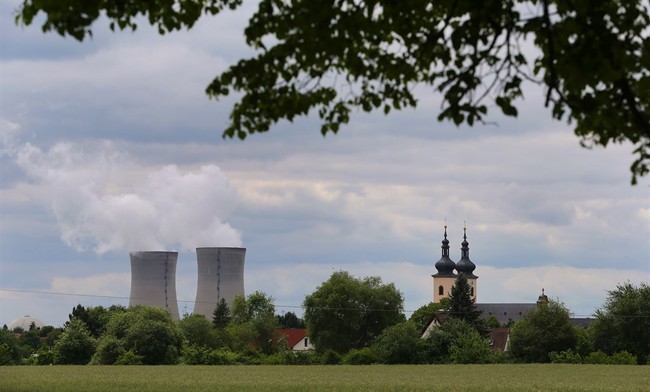
There will be no German-style cooling tower implosions in Belgium, effective immediately.
In a dramatic policy shift that marks the final nail in the coffin of Belgium’s long-standing nuclear phase-out, the federal government has announced plans to acquire all of French energy giant Engie’s nuclear assets in the country. https://t.co/rfxOT54KRv
— Brussels Signal (@brusselssignal) April 30, 2026
The country’s Prime Minister wants secure, reliable power and is working to nationalize every last one of the country’s multitude of French-owned reactors to achieve it.
In a dramatic policy shift that marks the final nail in the coffin of Belgium’s long-standing nuclear phase-out, the federal government has announced plans to acquire all of French energy giant Engie’s nuclear assets in the country.
The move, announced today by Prime Minister Bart De Wever, aims to guarantee secure, affordable and low-carbon baseload power for decades to come.
Engie and the Belgian Government signed a letter of intent setting out the framework for the negotiations. Next to a radical change, it is also a significant breakthrough as negotiations between both parties had been difficult for years.
The proposed deal covers every nuclear activity currently owned and operated by Engie and its Belgian subsidiary Electrabel.
This includes the two reactors still running under a 50/50 joint venture (Doel 4 and Tihange 3, extended until 2035) as well as the five units that were progressively shut down or placed in decommissioning mode.
With the decision, all decommissioning activities have been halted effective immediately.
The Belgians will also be building new nuclear facilities.
Engie, the French company, has been pushing to shutter the older plants. It was costing them money they could make elsewhere in renewables to keep them operational.
…One of the reasons for the closures was that Engie wanted to close the plants. They had a financial incentive to close the reactors because they could make more money building heavily subsidized renewable generation.
Belgium’s current government is more pro-nuclear, and may decide the restart some of the currently closed reactors. Statements by Belgium’s Prime Minister, quoted in the article, suggest that they are interested in doing so.
This is such a drastic change from just a year ago. In February of 2025, they were still busy and determinedly turning out the lights.
Unit 1 of the Doel #nuclear power plant has been taken offline for the final time after 50 years of operation and disconnected from the grid. Its closure is in line with Belgium’s 2003 nuclear phase-out policy https://t.co/0IDj051bxc pic.twitter.com/oXssJV7Qow
— World Nuclear News (@W_Nuclear_News) February 17, 2025
Although I will cut them a bit of a huss. The country’s government had tried to extend the power plant’s life but ran afoul of the European Union’s draconian and immovable climate cult #rulez and was forced to shutter it.
…The country had been exploring extending the life of their other reactors, but then the European Union stepped in with fits about ‘their rules.’
We all know how well those have worked out for everyone.
Belgium’s new government is looking to double its nuclear power capacity from 4 gigawatts to 8 GW by building new reactors, Energy Minister Mathieu Bihet was quoted as saying by financial daily Tijd on Tuesday.
It sure makes me wonder if the EU would be so unyielding on the shutdown now, hmm?
And sometimes I’m so smart. Look what I said a year ago.
…Besides now floating dreams of new nuclear reactors, the Belgians are going to have to get off their duffs and do something if they don’t want to turn into the Germans.
And they are on track to shut down the perfectly functional ‘twin’ reactor of the one they turned off this week this coming November.
It heartens me that they do not want to become Germany.
…Belgium had reversed course on nuclear last year, when its parliament scrapped a planned phase-out.
The move will contribute to the government’s goal of securing around 4 gigawatts of nuclear capacity by 2040, said Sylvain Cognet-Dauphin, a senior analyst at the S&P Global consultancy.
“There are two ways to get to that target: build new nuclear, which takes time, or restart and extend existing units,” Cognet-Dauphin said. “There won’t be a significant lifetime extension or new build without significant government involvement.”
Extending the lifetime of aging reactors and restarting recently closed ones entails significant investment and risk. “If you’re a private operator, investing in nuclear assets is billions, even tens of billions, and they come with construction, waste and political risks,” he added.
This should be the biggest understatement of all.
… “Nuclear retirements are not considered mainstream in Europe anymore,” Cognet-Dauphin said. “It’s a big U-turn compared to 10 or 15 years ago.”
It’s a sea-change in attitude.
71% of Belgians supported nuclear power as an option in a poll taken last year.
And, as the Belgian reactors weren’t sabotaged like the shuttered German ones, an industry reassessment of the feasibility of restarting the closed ones has come in very favorably.
The cost/benefit analysis beats wind.
(Steve Hilton, should you win, take note, although I don’t know what’s physically left standing besides Diablo Canyon.)
Restarting Belgium’s shuttered reactors remains the fastest and cheapest way to get nuclear on the grid in Belgium. Two French EPR2 reactors, 3,300 MW of capacity, would cost an estimated €24 billion based on recent announcements from EDF. By contrast, bringing nearly 3,900 MW of existing Belgian reactors back to operating condition could cost as little as €3–4 billion. France is aiming for an estimated construction timeline of ten to eleven years for its domestic EPR2 reactors. Belgium, by contrast, could bring its first reactors back online within two years, and all of them within six. Restarts provide a near- to mid-term bridge to the government’s planned new nuclear construction, while also helping to build the supply chains, workforce, and sustained momentum needed to deliver those projects.
The economics of restarting Belgium’s closed reactors are looking increasingly favorable against the cost of not restarting them. Tihange 1, the strongest restart candidate, could return to service within one to two years at a cost of approximately €350–500 million and produce power at roughly €65 per megawatt-hour (MWh). Iranian missile strikes on the world’s largest LNG export facility have already pushed European gas prices above €60/MWh thermal before conversion to electricity which, at a combined-cycle efficiency of 55% and after accounting for the EU’s carbon tax, translates to an all-in electricity generation cost of approximately €140/MWh. Belgium’s newest and least-subsidised offshore wind facilities produce power at around €90/MWh; however, this excludes system integration, balancing, and backup capacity costs.
Electricity production from Belgium’s closed reactors could have a market value of €60 billion over twenty years. With ambitious targets for reindustrialization alongside the growth of high-performance computing and new energy-intensive industries, companies are willing to pay a premium for large amounts of reliable power. In one of the first deals to restart a previously closed nuclear plant in the United States, Microsoft agreed to pay between $110 and $115/MWh for power from Three Mile Island Unit 1 to enable its restart. If Belgium’s closed reactors were restarted and granted two ten-year life extensions each, at €100/MWh, they could generate roughly €60 billion in revenue from rapidly growing industries eager to meet their energy demands swiftly.
LOOKS TO TAKE CONTROL
BREAKING: Belgian government to take control of nuclear fleet 🇧🇪
Today, plans was announced to take control of all nuclear power plants in the country from French energy group Engie, in an effort to secure its own energy supplies.
Let’s go 🚀 pic.twitter.com/9w5dJkkTJr
— Johan Christian Sollid (@sollidnuclear) April 30, 2026
What an excellent thing for a country to do, finally.
And seriously, about California? We just had this Diablo Canyon discussion in the comments.
California’s only nuclear plant, Diablo Canyon, just won approval to stay open until 2045.
It was scheduled to shut down in August 2025. Now it will keep delivering clean, reliable electricity for 4 million Californians for another 20 years.
In 2022, I spoke at an American… pic.twitter.com/V7iSnAEl5s
— isabelle 🪐 (@isabelleboemeke) April 2, 2026
Someone needs to take control and keep the lights on.