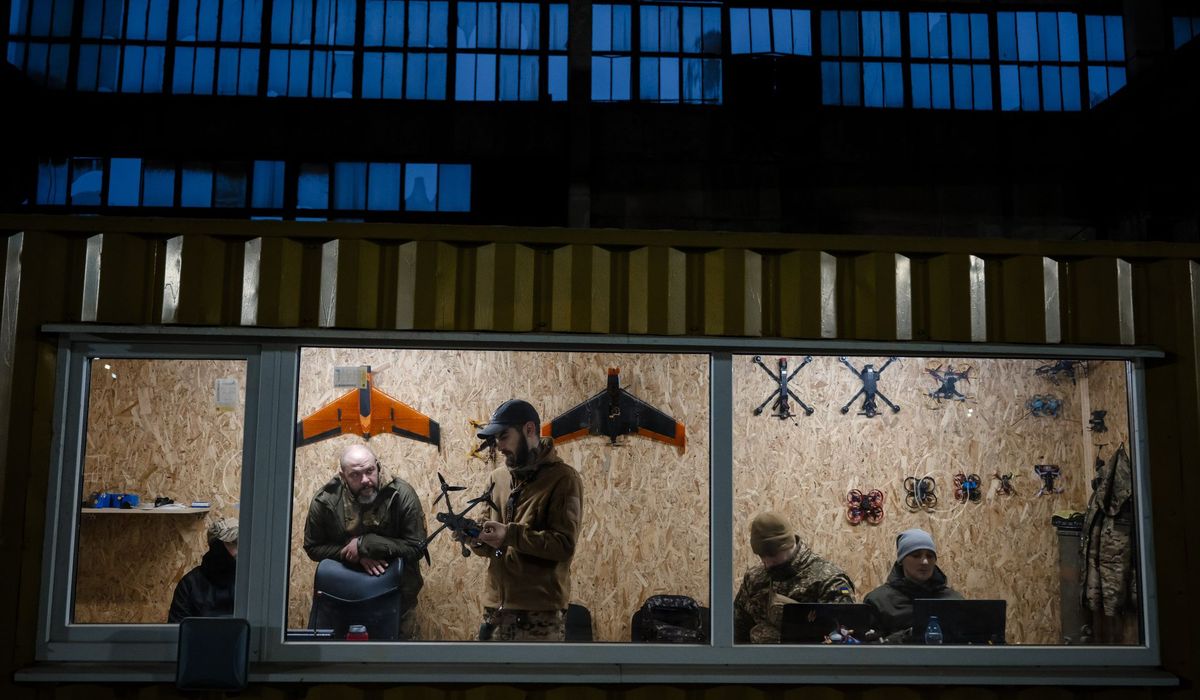
KYIV — The drone lifts off with a hard metallic buzz, shoots toward the first obstacle and slips through cleanly.
The next test is less forgiving. A row of metal rings are set up at different heights. The pilot steadies the aircraft, raises it carefully and pauses for a second too long. The drone clips the circle and drops to the floor.
The instructors do not bark. They repeat the same lesson heard throughout Killhouse Academy, a training center run by Ukraine’s 3rd Army Corps somewhere in the Kyiv region: patience, precision and repetition.
In a war defined more and more by increasingly nimble and lethal drones, they tell students, becoming “unmanned” is one way to save lives and conserve Ukraine’s scarce manpower.
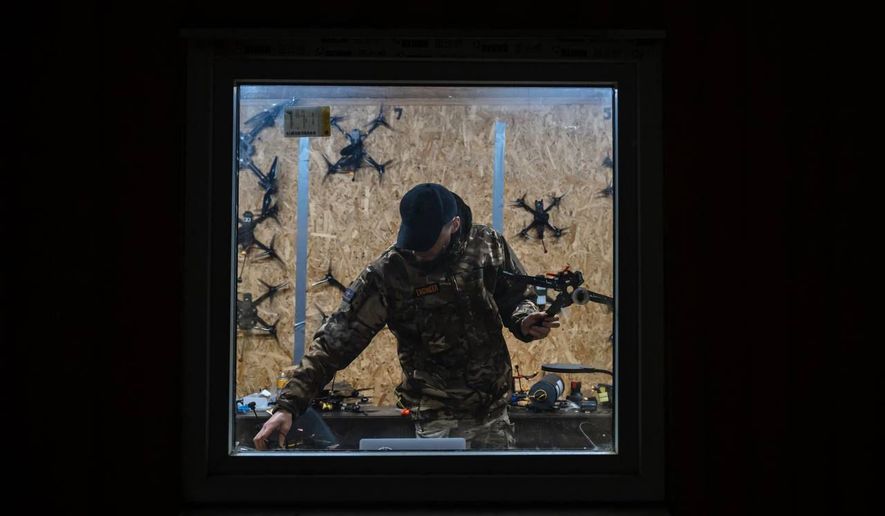
Besides learning to fly, students at …
more >
A school for the drone war
Inside a former industrial complex turned training ground, students weave first-person view drones through tires, pipes and improvised gates before steering toward mock targets, including a fake Russian tank and an old Soviet-style van.
Upstairs, classrooms and workshops hum with a quieter kind of intensity, as instructors lecture, while students solder, troubleshoot and prepare the next round of flights.
The academy’s own course listings show how far it has grown: beyond FPV basics and advanced piloting, it now offers drone engineering, fixed-wing unmanned aerial vehicle training, ground robotic systems, tactical medicine and firearms courses.
For Killhouse, the drone school is only part of the story: Launched in early 2024, the program had expanded to four sites across Ukraine by early 2025. The academy now advertises courses in Kyiv, Lviv, Odesa and Cherkasy, with its FPV basic course open to both civilians and military personnel.
The format is simple and intensive: six daytime sessions or nine evening ones, blending lectures, simulator work and live flying.
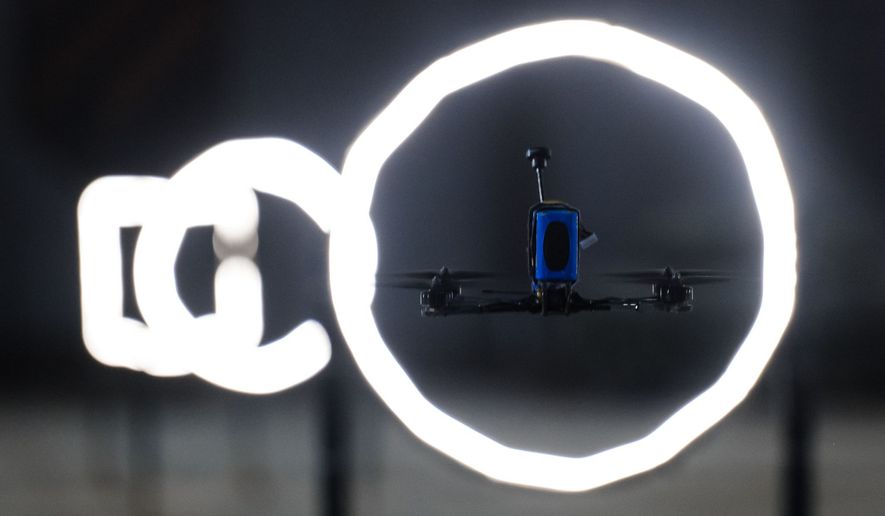
A FPV drone flies through the …
more >
That mixture of theory and practice is part of the academy’s appeal — and growing success.
“I want systematic, generalized knowledge from the guys and girls who have actually worked in real combat conditions and know what they’re talking about,” said Olia, 29, who works in drone manufacturing and enrolled in the course to deepen her professional understanding of systems that now shape modern warfare.
“Lectures and practice are combined straight away, which really helps you test your knowledge immediately.” She said she is not taking the course to join the military. The point, for now, is to become better at her civilian job in the drone sector.
Still, she said she would strongly recommend the training to others, especially younger Ukrainians and newcomers to the field.
Preparing before the call-up
Others come for a very concrete — and more pressing — reason: to get ahead of mobilization. Hryhorii, a 24-year-old geology student with thick glasses and a boyish smile, said he knows he is nearing the age at which he can be drafted.
Far from a zealot or a military enthusiast, he speaks like many young Ukrainians now do: pragmatically.
“We have a draft age starting at 25, and I’m 24. That’s why I’m getting ready little by little,” he said. “I realize that, unfortunately, I’ll be weak as an infantryman. Thanks to this course, at least I’ll already have some skills.”
When asked whether he plans to volunteer or wait to be called up, he hesitated. “Most likely, I’ll wait,” he said. “I’m not sure I’ll go on my own.”
That calculation helps explain why places like Killhouse matter beyond their training value, and why their courses have encountered such success. They sit at the intersection of two changes reshaping Ukraine’s war effort: a tighter, more coercive mobilization system, and a parallel effort to make military entry look more elective, specialized and attractive.
Harder rules, softer pitch
Ukraine’s 2024 mobilization overhaul tightened the legal framework around service, with men ages 18 to 60 having to update their military records, carry registration documents and comply with a more centralized administrative system.
The law also mandated training before deployment to combat zones and replaced peacetime conscription with basic military training. The government also lowered the draft age from 27 to 25, a politically fraught move that still stopped short of conscripting 18-to-24-year-olds.
At the same time, the Defense Ministry has moved toward what amounts to a market-style recruiting campaign.
In February 2025, the ministry launched “Contract 18-24,” a voluntary service model for young adults ages 18 to 24, offering a one-year infantry contract or a two-year drone operator contract, plus a package centered on a 1 million hryvnia payout, monthly pay of up to 120,000 hryvnias, state-funded training and social benefits.
This campaign is widely seen as an attempt to inject younger troops into an army strained by casualties, exhaustion and a chronic manpower shortage. According to recent estimates, the average age of the Ukrainian military is 47, underlining why the state is trying so hard to recruit younger people without formally drafting them.
The results, however, have so far been mixed.
Reuters reported in April 2025 that fewer than 500 recruits had joined two months after the program launched, despite the unusually generous financial incentives. By December, the scheme had drawn hundreds of 18-to-24-year-olds but Reuters also highlighted the brutal attrition some of those volunteers faced after hurried preparation and front-line deployment.
Women, drones and the new pipeline
Killhouse offers a glimpse of how that younger pipeline is currently being shaped.
Trasta, a young servicemember now working there as an engineer, said she had been in the army only about three months. Before joining, she was working as a humanitarian project manager.
She said she deliberately sought out the 3rd Army Corps because she saw it as “the most efficient, the best brigade in Ukraine.” She moved from Lviv to Kyiv, completed Killhouse’s FPV and engineering courses, and was then offered a role repairing the drones used by students in training.
Now, Trasta said, her days are spent fixing whatever breaks on training drones, from damaged frames and motors to software and flight-controller settings.
“The drones are developing really fast because the situation on the front line depends on these technologies,” she said, pointing to AI-assisted targeting, signal resilience and the constant contest with Russian electronic warfare.
She also said Killhouse is representative of a broader shift when it comes to the interaction between the army and Ukrainian society at large.
“A lot of my friends don’t think about joining the army right now, but they are still learning skills for the future,” she said. According to her, that pattern is visible among women as well as men, and even among some very young people training on simulators.
Official figures point in the same direction. Ukraine’s Defense Ministry said in February 2025 that 42,366 people had contacted army recruitment centers since they began operating, and that 21% of those candidates were women.
The ministry said the most sought-after positions included UAV operators, drivers and marksmanship specialties. In March 2025, the ministry said more than 70,000 women were serving in the armed forces, including over 5,500 on the front line.
By March 2026, Ukrainian officials were putting the total above 75,000.
Choosing the role, not the war
While those numbers do not tell the whole story of mobilization in Ukraine, they do show where the system is headed.
The state still relies on compulsory service, tighter enforcement and the threat of being sent where needed. Yet, it is also borrowing the language and tools of the marketplace: choice, specialization, bonuses, branding and targeted appeals to the young.
At Killhouse, that shift is now visible in every classroom and obstacle course: Some students are there because they want to serve, while others have come because they suspect they may have little choice later and would rather arrive with skills than as frontline infantry.
For many young Ukrainians, the question is not whether the war will reach them, but in what role it will.