I’m old enough to remember when television entered mainstream homes in the 1950s; critics, cultural commentators, educators, and concerned citizens expressed widespread worry that television would transform viewers into passive, mind-numbed “automatons,” “zombies,” or “boob tube” addicts.
During the 1950s — a decade already preoccupied with fears of mass conformity — social critics worried that millions of families staring at the exact same screen every night would erode individuality. Cultural observers warned that TV would standardize human thought, behavior, and consumer desires across the entire country.
They were partially right in some respects, but if anything, TV in the home encouraged individuality and expanded the imagination. Yes, it “standardized” consumer desires to a large degree (pretty much the point of advertising), but it also allowed for an explosion of consumer choices, with products finding niches inside of niches. All in all, the fears of the naysayers proved to be unfounded.
This cycle of technology-induced panic is a repeating pattern in media history: Similar arguments about turning humans into mindless vessels were made about novels in the 18th century, radio in the 1920s, video games in the 1980s, and smartphones and AI today.
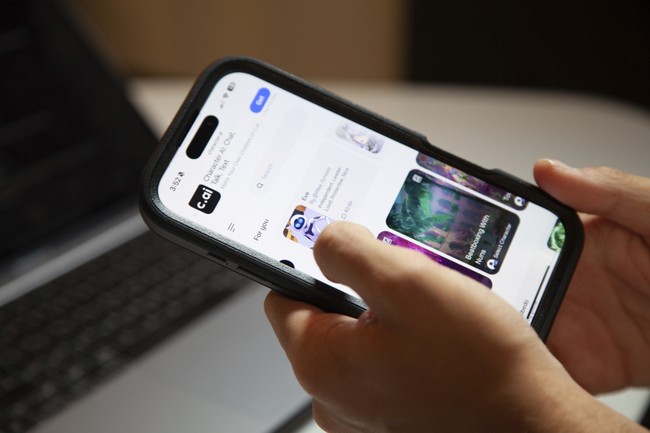
With artificial intelligence (AI) becoming ubiquitous in the office, it was only a matter of time before a revolution in home AI use would become part of the American landscape of indispensable gadgets that no modern family can do without.
“The barriers to entry for families — in terms of cost and technical knowledge — are next to nothing,” Sarah Dooley, founder of AI-Empowered Mom and author of an upcoming book on the topic, told Axios. “With lower barriers and adoption moving at lightning speed, impact and risks for families are often high.”
“Last week, Bloomberg reported that OpenAI’s first hardware device will be a screen-free, mobile smart speaker built to be a “humanlike AI companion that lives in the home,” according to Axios.
It should be noted that AI in the home, including ChatGPT and other specific AI models, is a much more useful step than the smart speakers introduced a decade ago.
Earlier systems were often reactive and needed a command. The next generation of domestic AI can remember conversations, infer household patterns and adapt to individual family members.
81% of parents have used AI to help with parenting tasks, a Lurie Children’s Hospital survey published in May found.
Pew Research has found 64% of U.S. teens use chatbots, mostly for research and schoolwork, followed by fun and entertainment.
The home may become AI’s most intimate and least governed environment. Workplaces and schools are only just beginning to set formal guardrails around the technology.
“The unit of impact is often the family, not the individual users,” Daniel Zhang, chief of staff at the Stanford Institute for Human-Centered Artificial Intelligence, told Axios. “If one person chooses to engage with AI, the presence of that device or the model affects everyone in the household.”
“It’s hard to make broad claims because there’s so much that matters in the details for these kinds of things,” said Anne Maheux, a developmental psychologist at UNC Chapel Hill. Maheux studies AI’s effects on adolescents.
“An AI device used openly in the kitchen is different from a chatbot a child accesses ‘privately in their bedroom,’ and both are different from a school computer that stays at school,” Axios noted.
Exclusively for our VIPs: Rethinking Sports Betting — Before It’s Too Late
Nobody fully understands what it can mean to let AI into the most sensitive and private areas of our daily lives. “Not researchers, lawmakers, CEOs, parents or influencers” understand the true ramifications of immersive AI in the home.
I guess we’ll find out together.
Editor’s Note: President Trump is leading America into the “Golden Age” as Democrats try desperately to stop it.
Help us continue to report on President Trump’s successes. Join PJ Media VIP and use promo code FIGHT to receive 60% off your membership.