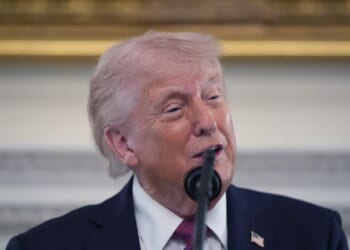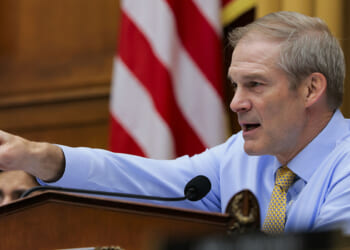
“Trump Derangement Syndrome” is often caricatured as something loud and theatrical: viral meltdowns, over-the-top comparisons, and unhinged social media spirals.
That version certainly exists (see: The View), and it gets the most attention because it’s easy to spot and even easier to mock. But there’s a quieter, more persistent strain that doesn’t always look emotional or erratic on the surface.
It shows up less as shouting and more as interpretation — a reflexive unwillingness to take anything originating from or surrounding the Trump administration at face value, no matter how ordinary or verifiable the facts might be.
In that mode, even routine events get filtered through suspicion, where the default assumption is not just disagreement, but disbelief — where the least charitable reading is treated as the most obvious one.
And that’s where things start to get more revealing than the loudest online outbursts. Because skepticism of power is healthy; reflexive rejection of reality, less so.
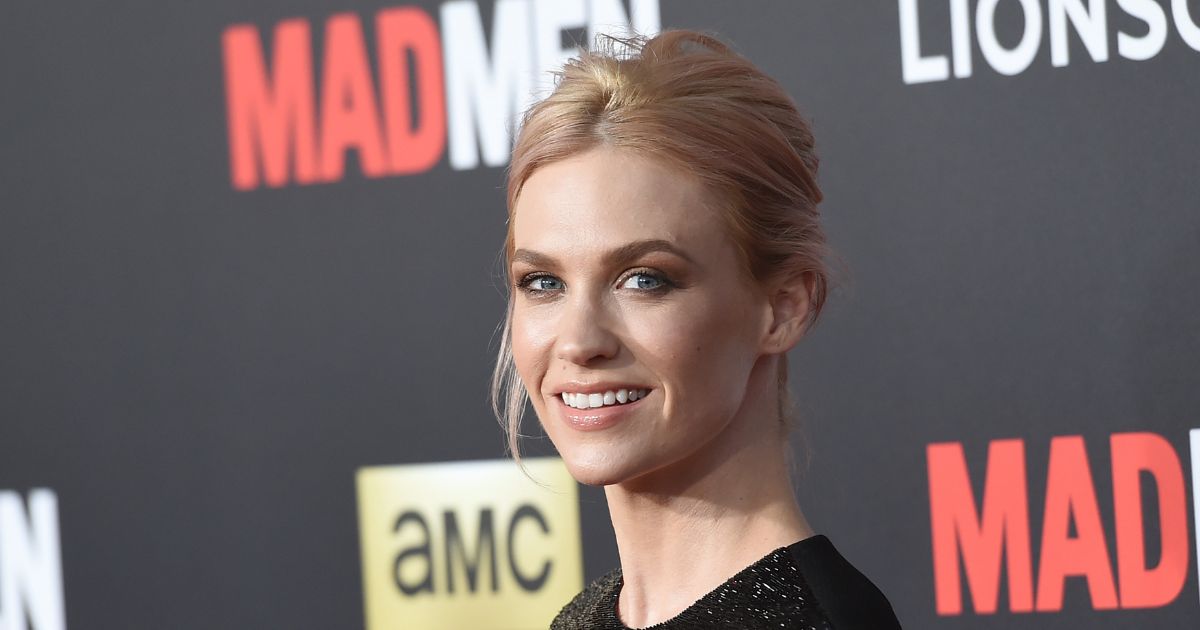
And then there’s Hollywood actress January Jones.
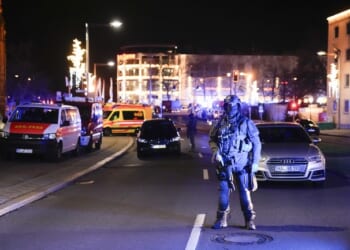
Jones, the 48-year-old actress perhaps best known for her run on hit drama series “Mad Men,” took to her Instagram story after the failed assassination attempt of President Donald Trump which took place on Saturday during the White House Correspondents’ Dinner, according to OK! magazine.
According to a screen capture from The Express Tribune, this is what Jones said in her Instagram story, where posts typically self-delete after 24 hours:
“Do you have a boring dinner party coming up, and lots of losers and fake friends have rsvp’d?” the post read. “Are you looking for help staging a small scale low risk assassination attempt to get out of it?”
“Look no further, the US Government is your man, call us now at 1-800-wehate-americans and they’ll add a bonus podium to talk at people at length about how cool and strong you are and ruin everyone’s evening,” it continued.
“This is NOT a one time offer, you can do it as many times as you want, taxes don’t apply.”
Oh, brother. Even ignoring the fact that, from all indications, the alleged gunman appeared to be a leftist, Jones’ remarks are pathetic and beyond the pale.
I can’t believe I have to type these words out, but there’s a rather obvious difference between sarcasm aimed at institutions and rhetoric that trivializes violence directed at individuals.
Whatever one thinks of political theater, framing an alleged assassination attempt as staged performance doesn’t just miss the mark, but it drags a deeply serious category of events into the realm of casual entertainment. That shift matters, because it erodes the instinctive moral clarity that should surround political violence in any form.
The danger isn’t only in the message itself, but in how it gets received and repeated. Once the idea takes hold that a reported attempt on a political figure’s life might simply be a hoax or staged production, it doesn’t stay confined to one Instagram story. It becomes part of a broader ecosystem of doubt, where even credible reporting is treated as suspect by default.
Just look at the current state of political discourse. That kind of reflexive disbelief is corrosive in ways that are quite difficult to reverse.
Even more troubling is the way this framing can blur the psychological boundary between commentary and permission.
Dehumanizing language and conspiratorial insinuation don’t exist in isolation. Rather, they tend to accumulate. History is not especially kind to societies that become too comfortable treating real-world violence as metaphor or media manipulation.
This is especially true when the subject matter involves political assassination attempts. However one parses the details of any specific incident, the underlying category remains one of the most serious threats in a democratic society.
To treat it as farce is to invite the worst kind of interpretive ambiguity: the idea that such acts are either not real, not serious, or not worthy of moral condemnation. That ambiguity is exactly the rhetorical space in which would-be extremists often look for validation.
At a minimum, public figures should maintain a higher standard than that — not because they are required to police every opinion, but because amplification carries consequences.
When the line between critique and conspiracy dissolves, it obviously cheapens discourse. But more importantly, it also weakens the shared understanding that political violence is beyond the pale, regardless of target or context.
Advertise with The Western Journal and reach millions of highly engaged readers, while supporting our work. Advertise Today.