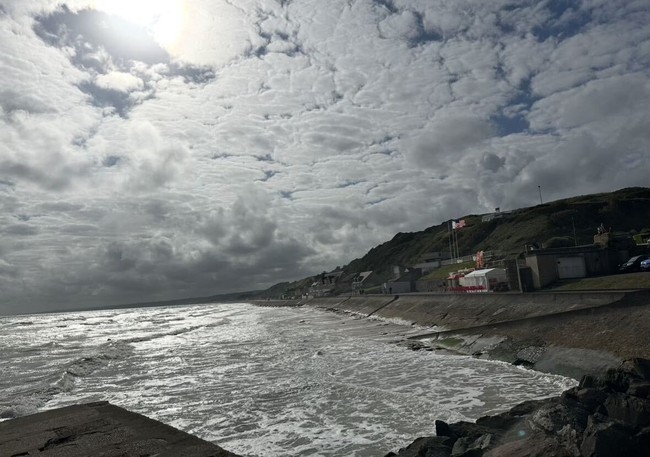
In Aug. 2025, more than 81 years after over 150,000 Allied troops landed on the beaches and in the towns and swamps of Normandy to dislodge the Nazi war machine, I visited those same shores.
I stood on the remains of a concrete landing on Omaha Beach and climbed to a former German bunker, looking out over the stretch of sand where my Great-Uncle Jack Corley disarmed mines amid devastating enemy fire in the early hours of the D-Day landings. In the American cemetery overlooking Omaha, I passed row after row of white crosses and stars of David, each a husband or son or brother who did not return home.
I walked through the rivulets of seawater on Utah Beach and saw hundreds of artifacts and displays from World War II at the museum there. At Pointe du Hoc, I peered out the slit of a blackened, shot-riddled Nazi bunker and looked down the sheer cliff side our boys had to climb as Nazis relentlessly fired on them. 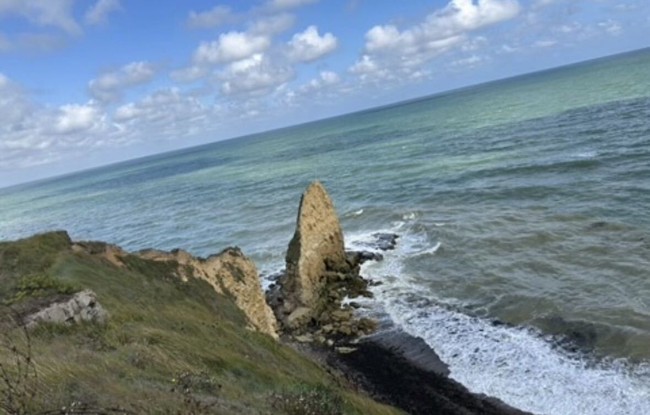
I paid a visit to the Bayeux World War II museum. And I stood in the square of Sainte-Mère-Eglise beside the ancient Roman column, looking up at the paratroopers memorial stained glass, and the steeple where John Steele was hanging as the Germans slaughtered his comrades.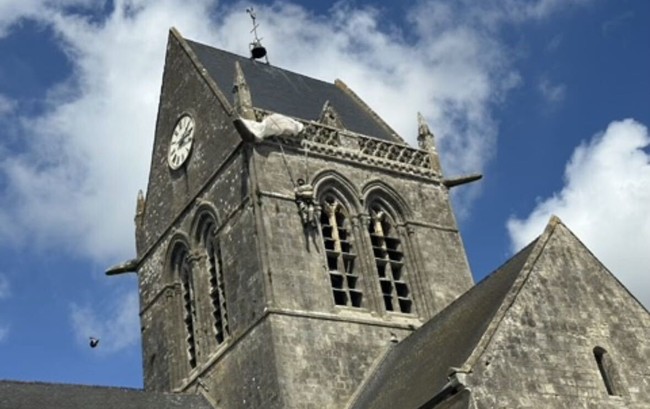
Normandy is very idyllic now. After the noise, chaos, and mass Muslim crowds of Paris, Normandy’s rural towns and the beautiful beaches feel like a marvelous retreat from the worst of the modern world. But when you look down the cliff of Pointe du Hoc, or see just how far the Allied soldiers had to run across Omaha and Utah Beaches amidst constant enemy fire, or look up from Sainte-Mère-Eglise’s square and imagine paratroopers dropping right down on a horde of Nazi soldiers, suddenly the terrible difficulties of Operation Overlord become stark. The high hedgerows, the complicated network of fields, the numerous little villages, the cliff-ringed beaches, all illustrate how challenging the terrain was, especially in darkness or semi-darkness.
Related: ‘Unbroken Story of American Triumph’: Trump’s Midway Anniversary Message
It did not help that several of the most incompetent Allied commanders were in charge of the D-Day invasions — Bernard Montgomery, Dwight D. Eisenhower, and Omar Bradley — generals who habitually left a trail of corpses behind them in their poorly managed and politically influenced campaigns (just look at how much of Normandy George Patton freed in a few weeks — with Eisenhower’s order, not the Nazis forcibly stopping him — versus how much all the others freed in multiple months). But fortunately for the Allies, there were thousands of marvelously brave and determined soldiers who, even when they landed in the completely wrong spot or faced the most formidable challenges, always kept fighting forward. With a handful of outstanding officers such as Theodore Roosevelt Jr. and wave after wave of “greatest generation” troops, the Allies would begin the invasion that was to spell doom for the Third Reich.
In 2026, an overwhelming majority of men who parachuted into or landed on Normandy’s shores on June 6, 1944 and the following days have passed on. And more than eight decades after Allied forces broke the Nazis’ grip on Europe, neo-Nazi antisemites, radical Islamists, and woke self-loathers threaten to destroy not only France, but the entire West.
As I stood in the cemetery overlooking Omaha Beach, I dedicated myself not only to telling the stories of the D-Day heroes, but fighting to save the freedom they died to protect. Unless every single patriot is dedicated each in his own way to preserving liberty, then we shall all too soon squander the precious gift the D-Day heroes left to us.
Editor’s Note: Every single day, especially in this 250th year of America’s existence, and during a midterm election year, here at PJ Media, we will stand up and FIGHT, FIGHT, FIGHT against the radical left and deliver the conservative reporting our readers deserve.
Help us continue to tell the truth about the Trump administration and its successes. Join PJ Media VIP and use promo code FIGHT to receive 60% off your membership.