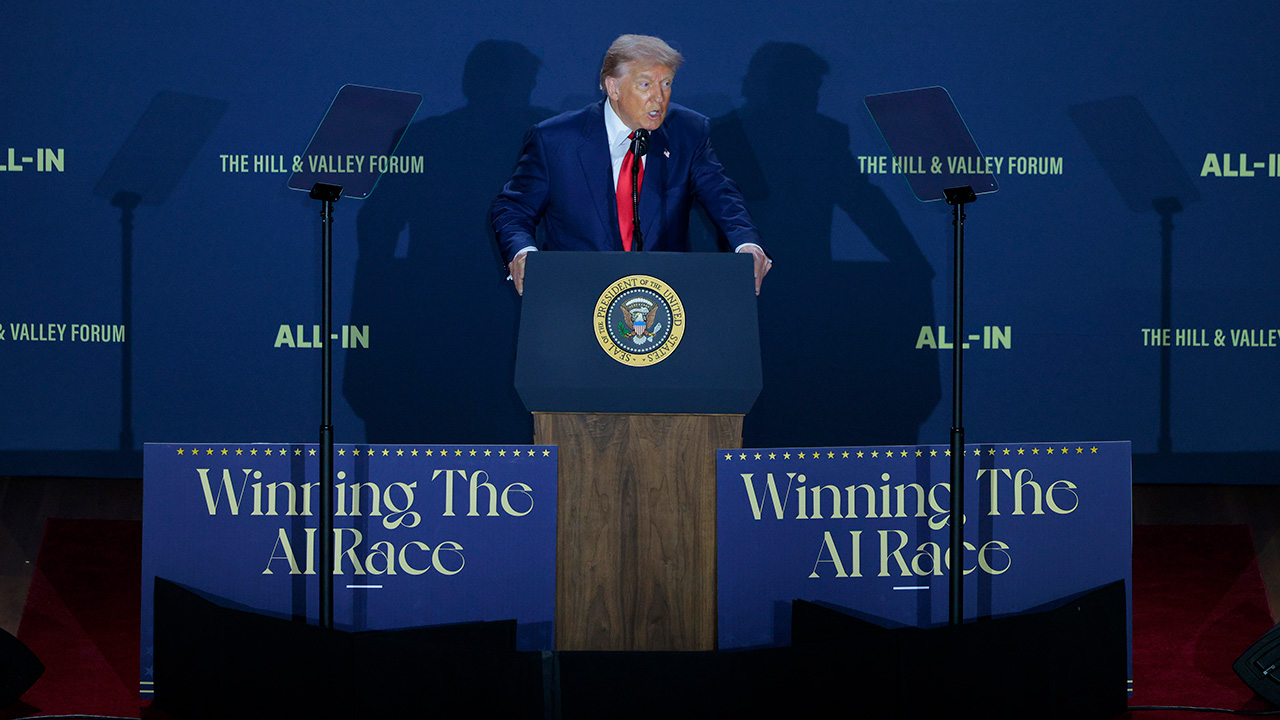
FIRST ON THE DAILY SIGNAL— President Donald Trump is expected to sign an executive order on artificial intelligence safety later this week, but sources familiar with the draft say the directive won’t answer key questions about how to contain potential national security risks posed by new models.
Trump is slated to sign an executive order in the near future giving the Office of the National Cyber Director 60 days to develop a framework on cybersecurity, sources say.
The order will lay out a plan for the government to perform voluntary vetting of AI labs’ pre-deployment models, but it will postpose answering the question of what to do if the vetting process deems the model dangerous, sources say.
There are many differences of opinion within the administration about the proper level of cybersecurity protections, and the substance and timing of the order is subject to change.
A White House official told The Daily Signal that any policy announcement on the subject will come directly from the president.
“Discussion about potential executive orders is speculation. The White House continues to proactively engage across government and industry to protect our country and the American people,” the official said.
Previously, members of the administration considered a draft executive order requiring government officials to have early access to new AI models before their release, sources say. This approach was popular with 82% of American voters, a YouGov/Institute for Family Studies poll found. Some officials wanted an order that would have required labs to submit AI models for review pre-deployment as a condition for government contracts.
However, at this time, the draft of the executive order only outlines a plan for voluntary government vetting, sources say.
The order will direct agencies to hire more people to help the critical infrastructure sector with cyber preparedness.
Currently CAISI, or the Center for AI Safety and Innovation, within the Commerce Department, offers voluntary vetting of pre-deployment models. On May 5, Google DeepMind, Microsoft, and xAI agreed to work with the Center for AI Standards and Innovation, but the Commerce Department has since deleted the details of the arrangement from its webpage.
The order will likely involve in the vetting process the Office of the National Cyberdirector, who will be tasked with writing a framework, as well as others in the intelligence community.
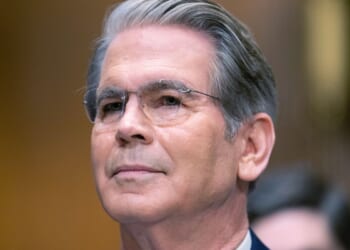
This comes amid concerns that the National Cyber Director Sean Cairncross lacks the technical skills for the role, Politico reported. Cairncross is an experienced political operative whose past roles include chief operating officer of the Republican National Committee in 2016 and 2024.
“Sean Cairncross is doing excellent work to protect the American people and our nation’s critical infrastructure from cyber threats, working closely with senior administration officials and American companies to advance shared objectives and priorities – including addressing cybersecurity challenges posed by the rapid scaling of artificial intelligence — while continuing President Trump’s commitment to ensuring American technological dominance,” White House spokeswoman Liz Huston said.
Huston also cited statements from Jason Kwon, chief strategy officer of OpenAI, and Brad Smith, vice chair and president of Microsoft, praising Cairncross’ work.
She said the Office of the National Cyber Director has been in “constant communication with frontier labs, and any solution will be a compilation of their collaboration.”
“While the White House is the primary convening entity for these conversations, this work would not be possible without the expertise and guidance of industry leaders and their teams,” she said.
Until recently, the Trump administration has taken a light approach to AI regulation, with officials like former AI czar David Sacks criticizing AI “doomers” who fear severe negative outcomes from the rapidly advancing technology.
In fact, the Trump administration reduced funding for the Cybersecurity and Infrastructure Security Agency. The agency’s workforce has been cut by about one-third since Trump’s second term began, Axios first reported.
But White House officials were motivated to implement a more heavy-handed approach to regulation due to increased awareness of the national security risks posed by new models like Anthropic’s Mythos, as well as concerns about possible AI-enabled cyberattacks before the midterms, sources say.
White House chief of staff Susie Wiles posted on X on May 6 that the Trump administration is not “in the business of picking winners and losers” on AI and cybersecurity.
“This administration has one goal; ensure the best and safest tech is deployed rapidly to defeat any and all threats,” she said.