A journalist for The Atlantic made a claim in her latest book that was an exaggeration of artificial intelligence centers’ water use, and has since issued a public statement about the error.
In May 2025, Karen Hao published “Empire of AI: Dreams and Nightmares in Sam Altman’s OpenAI,” an exposé on the company and its apparent impacts on the environment and its workforce.
The book was viewed as a success among outlets like the Financial Times, who longlisted it for “Business Book of the Year Award” in 2025. According to the Lavin Agency Speakers’ Bureau, The New York Times put it on their best seller list, calling it, “excellent and deeply researched.”
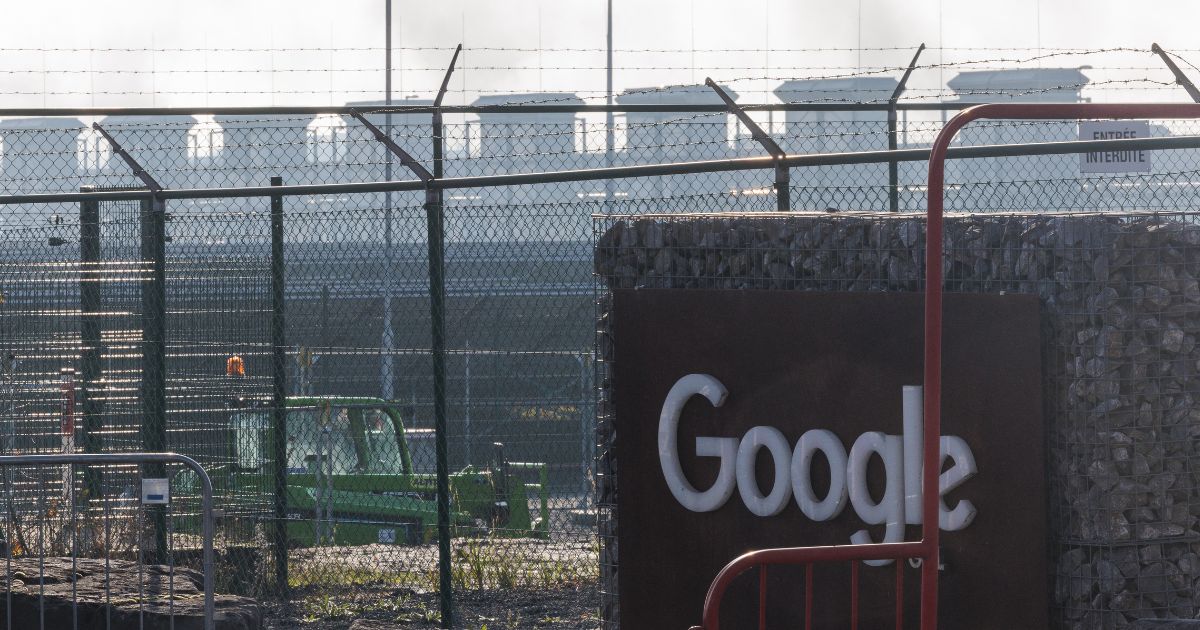
However, there was a massive error these outlets did not catch in fawning over Hao’s work: she cited a Chilean government document that listed a Google data center’s projected water usage which mistakenly used liters per second instead of cubic meters per hour.
It inflated the reported water usage by a factor of 1,000.
Control Associates Inc. clarifies that water usage is still high, saying it was equivalent to 104.5 percent of the water use in the nearby city of Cerrillos, but not anything like the levels Hao gave.
Hao commendably posted a thread to social media platform about the mistake, promising to correct in the next printing of her book.
The data point in question appears in Chapter 12 of my book, which focuses on the environmental impacts of AI. Part of the chapter profiles a community in Cerrillos, Chile that has been resisting a proposed Google data center for years. 2/
— Karen Hao (@_KarenHao) November 18, 2025
Hao made a mistake. To publicly acknowledge that mistake shows she has integrity and strives for accuracy.
With that in mind, what kind of echo chamber has journalism become when such an error is made and major outlets still can’t help themselves from heaping praise on the book?
Being off by a factor of 1,000 is not a small error.
The New York Times did not see this, nor did the Financial Times. Hao gives credit to an independent researcher and writer, Andy Masley, for pointing it out to her.
The thread reads as follows: “The data point in question appears in Chapter 12 of my book, which focuses on the environmental impacts of AI. Part of the chapter profiles a community in Cerrillos, Chile that has been resisting a proposed Google data center for years.”
To describe the data center’s water footprint in lay terms, I included a sentence about how it compares to the water usage of the people in Cerrillos. For that calculation, I relied on a figure from a government document reporting Cerrillos’ residential water use. 3/
— Karen Hao (@_KarenHao) November 18, 2025
“Based on the current best information available, it seems that this document used the wrong units. Where it states that its figures are in liters (“litros de agua” in Spanish), it’s likely that the figures are in cubic meters, where 1 cubic meter = 1,000 liters.
Based on the current best information available, it seems that this document used the wrong units. Where it states that its figures are in liters (“litros de agua” in Spanish), it’s likely that the figures are in cubic meters, where 1 cubic meter = 1,000 liters. 4/ pic.twitter.com/D6Y9L2MTr0
— Karen Hao (@_KarenHao) November 18, 2025
“As a result the document appears to understate Cerrillos’ residential water use by 1,000, which would make my subsequent comparison between the population’s and data center’s water usage also off by 1,000. Thanks to @AndyMasley for being the first to point this out.”
As a result the document appears to understate Cerrillos’ residential water use by 1,000, which would make my subsequent comparison between the population’s and data center’s water usage also off by 1,000. Thanks to @AndyMasley for being the first to point this out. 5/
— Karen Hao (@_KarenHao) November 18, 2025
Although it’s tempting to let Hao catch all the flak here, the episode is more indicative in the broader sphere of journalism of how the decentralization of information has led to a turning away from traditional sources of news.
Outlets like The New York Times, the Financial Times, and Hao’s Atlantic cannot claim to be arbiters of truth and accuracy in a manner they once could, looking down their noses at the rest of us while they feed us their perspectives atop an ivory tower.
Regular people can find out this information for themselves. We can discern right from wrong.
When legacy media outlets fail to realize this, the result is both sad and amusing.
They still try to feed us nonsense, praising one another as “experts” and “authorities” when, in reality, they are just sitting in an echo chamber the rest of us have left.
Advertise with The Western Journal and reach millions of highly engaged readers, while supporting our work. Advertise Today.