
U.S. forces in a two-week stretch destroyed more than 70 Islamic State targets in Syria, struck extremists in northern Nigeria and carried out a daring raid to capture Venezuelan President Nicolas Maduro from a heavily guarded compound in Caracas.
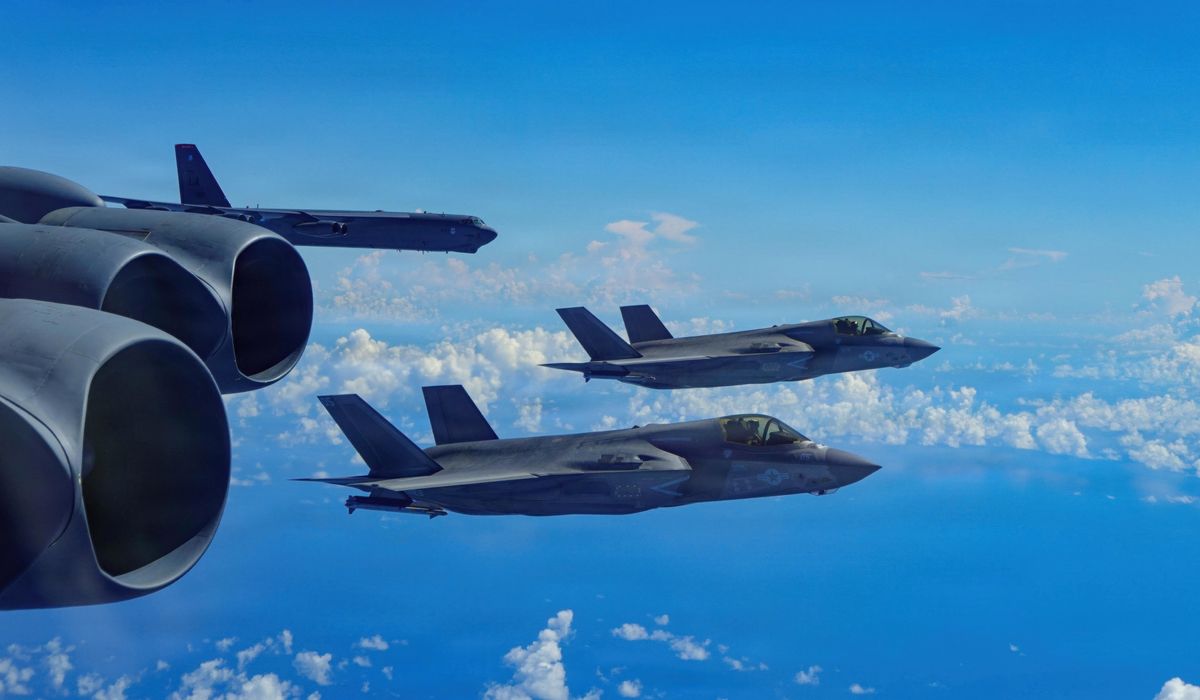
It’s often taken for granted, but that kind of global reach and the ability to plan and execute complex, highly dangerous missions are unmatched by any other military on Earth, even in an era of resurgent great powers such as Russia and China. The recent operations on three separate continents — along with other missions in 2025 such as the strikes on Iranian nuclear sites — served as a demonstration not only of America’s pure military power but also the unique U.S. ability to fuse its intelligence-gathering capabilities around the world together with cutting-edge defense technology and careful planning at the highest levels inside the Pentagon.
The end result, analysts say, is a military that is not only unrivaled among today’s global powers but also stands alone in history.
“We can reach out and touch our enemies around the world in ways that no other military can. The reasons for that are many, and they aren’t just over one week, one month or one year. They are over decades,” said Bradley Bowman, senior director of the Center on Military and Political Power at the Foundation for Defense of Democracies.
“You get what you pay for,” Mr. Bowman said in an interview. “This is a result of investing in our military over the long term.”
Indeed, the vast U.S. military budget — $901 billion for fiscal year 2026 — is significantly higher than even its leading global adversary, China. China’s official military budget reached about $247 billion in 2025, though some estimates suggest that Beijing’s true military spending is significantly higher.
SEE ALSO: U.S. seizes Venezuelan oil tankers, starts to market crude for sale
The financial investment has given U.S. warfighters both the best training and equipment of any armed forces in existence. Those two advantages, coupled with the sheer quality of the men and women in uniform, are what give the U.S. its one-of-a-kind ability to conduct missions anywhere in the world, Mr. Bowman said.
“You have to have all three,” he said. “If any one of them is missing, you don’t have the same military.”
The Jan. 3 raid that captured Mr. Maduro in Caracas is a clear example. No other nation on the planet could have executed such an operation, analysts and military insiders say.
More than 150 U.S. aircraft, including fighter jets, bombers and helicopters, played a role in inserting a team of Delta Force commandos into Mr. Maduro’s compound inside the Fort Tiuna military base in Caracas, military officials said. Aircraft, including drones, Chinooks, and Blackhawks, launched from 20 different locations.
U.S. officials, with information gathered by intelligence sources in Caracas, built a replica of Mr. Maduro’s compound, allowing Army commandos to rehearse the mission. The U.S. reportedly used electronic warfare capabilities to jam the Venezuelan military’s radars ahead of the operation.
Afterwards, Gen. Dan Caine, chairman of the Joint Chiefs of Staff, said U.S. forces practiced the mission repeatedly to ensure “that we cannot get it wrong.”
“Our jobs are to integrate combat power so when the time comes, we can deliver overwhelming force at the time and place of our choosing against any foe anywhere in the world,” he said during a recent press conference.
“Our interagency work began months ago and built on decades of experience [with] integrating complex air, ground, space and maritime operations,” Gen. Caine said. “We watched, we waited, we prepared, we remained patient and professional. … This was an audacious operation that only the United States could do.”
Defense Secretary Pete Hegseth echoed that.
“Words can barely capture the bravery and the power and the precision of this historic operation, a massive joint military and law enforcement raid flawlessly executed by the greatest Americans our country has to offer,” Mr. Hegseth said at a press conference alongside Mr. Trump and Gen. Caine last Saturday.
A message of deterrence
Even as top Pentagon officials were orchestrating the Venezuela raid, military officials had also been carefully planning missions on the other side of the world.
On Christmas Day, U.S. forces struck numerous Islamic State targets in northwest Nigeria in what Mr. Trump said was retaliation for the terror group’s years of attacks on Christian civilians in the African nation. U.S. troops are believed to have used Tomahawk missiles fired from a U.S. Navy warship in the region.
On Dec. 20, U.S. troops hit more than 70 sites across central Syria in a massive assault on the terror group the Islamic State. Fighter jets, attack helicopters and artillery were used in the operation, the Pentagon said, which targeted ISIS infrastructure and weapons depots with more than 100 precision munitions. That operation was direct retaliation for a December ambush near Palmyra, Syria, in which Pentagon officials say two U.S. soldiers and one civilian interpreter were gunned down by an ISIS terrorist.
Those three missions served as the most recent showcase of America’s global military reach, but there’s another clear benefit: a message of deterrence delivered to adversaries, who are reminded that the U.S. not only has the world’s strongest armed forces but is willing to use them.
“Deterrence is not what you or I think. … It’s what our adversaries think,” Mr. Bowman said. “We throw a punch every now and then. That has a positive effect on the perceptions of our adversaries that we’re not all talk.”
There were other examples throughout 2025, none more impressive than the June airstrikes that targeted three key nuclear facilities in Iran. That mission saw seven Air Force B-2 stealth bombers fly 36 hours round-trip from Missouri’s Whiteman Air Force Base to Iran, hit their targets and return to the U.S. without incident.
Months before the Maduro raid, the U.S. launched an intense campaign targeting alleged drug boats in the Pacific and the Caribbean. Earlier in the year, the U.S. carried out repeated strikes against Houthi rebels in Yemen, with fighter jets, drones and other assets targeting the Iran-backed outfit.
The U.S. conducted more than 100 strikes against extremists in Somalia in 2025, making it the most active war zone for American forces anywhere in the world. Even after giving up a key drone base in Niger in 2024, the U.S. still has troops spread “across the continent,” according to U.S. Africa Command.
The majority of the 6,500 U.S. troops in Africa are based at Camp Lemonnier in Djibouti, but the Pentagon also has key drone bases on the continent. And, as the Nigeria operation showed, the U.S. has the ability to hit land targets in Africa via naval assets in the region.