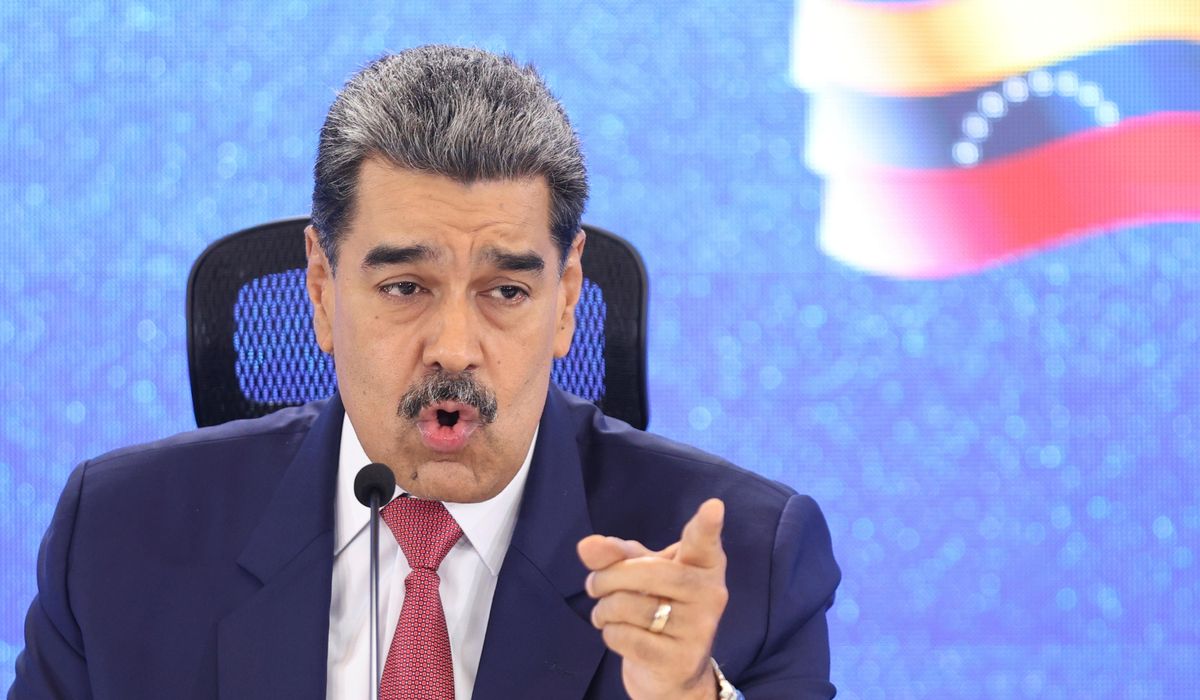

The U.S. carried out major strikes in the Venezuelan capital of Caracas and captured the country’s president, Nicolas Maduro, and flew him out of the country, President Trump said early Saturday.
Mr. Maduro’s wife, Cilia Flores, was also captured in the operation, Mr. Trump announced. Their whereabouts weren’t immediately clear.
The removal of Mr. Maduro represents the most significant U.S. intervention in Latin America since its invasion of Panama and capture of that country’s leader, Manuel Noriega, in January 1990.
For Mr. Trump, the intervention is the culmination of a longstanding effort to install new leadership in Caracas and reassert American dominance in its own hemisphere.
Mr. Trump said he will address the nation later Saturday morning.
“The United States of America has successfully carried out a large-scale strike against Venezuela and its leader, President Nicolas Maduro, who has been, along with his wife, captured and flown out of the Country,” the president said on Truth Social. “This operation was done in conjunction with U.S. Law Enforcement. Details to follow.”
SEE ALSO: Trump versus Maduro: Why the White House is fixated on Venezuela
The U.S. for months has conducted a pressure campaign against the Maduro government, including dozens of strikes on alleged drug boats moving narcotics from Venezuela to the U.S. and, more recently, the seizure of at least one tanker moving illicit oil from the country. The U.S. late last month conducted its first strike on a land target in Venezuela, hitting a dock that the U.S. alleged was involved in drug trafficking.
But Mr. Maduro showed no signs of leaving office and as recently as Friday indicated he was open to direct talks with the U.S. Mr. Trump ultimately decided against any further diplomatic engagement and ordered the military mission in Caracas.
Low-flying aircraft were reportedly seen flying over Caracas early Saturday after multiple explosions rang out in the city.
Details on the mission weren’t immediately disclosed, though it appears the U.S. targeted several key military facilities in the Venezuelan capital. Smoke was seen rising from the hangar of one of those military bases, while another was reportedly without power.
In a brief phone interview, Mr. Trump told The New York Times that the operation involved “a lot of good planning and lot of great, great troops and great people.”
“It was a brilliant operation, actually,” the president said.
The U.S. mission in Caracas reportedly lasted less than 30 minutes. Witnesses reported hearing at least seven separate blasts.
There was no immediate comment from the Pentagon on Saturday morning. The U.S. for months has had significant military assets stationed in the region, including the USS Gerald R. Ford carrier strike group and its 4,000 sailors and dozens of tactical aircraft. Other warships, F-35 fighter jets, a nuclear submarine and other military assets are in the theater.
What happens next?
Venezuelan Vice President Delcy Rodríguez, now believed to be in charge of the country, said she is unaware of the whereabouts of Mr. Maduro. She demanded to see “proof of life” from the U.S.
Mr. Maduro could be brought to the U.S. to face a federal trial. He was indicted in March 2020 on “narco-terrorism” conspiracy charges in the Southern District of New York.
The Venezuelan leader, in theory, could be arraigned in a New York courtroom in the coming days, though so far there has been no clear indication of the Trump administration’s next steps.
U.S. Deputy Secretary of State Christopher Landau said the military action and seizure of Mr. Maduro marks “a new dawn for Venezuela,” saying that “the tyrant is gone.”
He posted on X hours after the strike. His boss, Secretary of State Marco Rubio, reposted a post from July that said Mr. Maduro “is NOT the President of Venezuela and his regime is NOT the legitimate government.”
Sen. Mike Lee, Utah Republican, said Mr. Rubio informed him that “he anticipates no further action in Venezuela now that Maduro is in U.S. custody,” the lawmaker posted on social media.
Until Saturday, Mr. Maduro had hung on to power despite virtually all credible international observers believing that he lost last year’s presidential election to former Venezuelan diplomat Edmundo González. That controversial election, some administration officials seem to believe, resulted in the Maduro government being in an especially weak position and highly vulnerable to U.S. pressure.
Foreign policy analysts have previously told The Washington Times that key figures inside the Trump administration, led by Mr. Rubio, seem to have convinced Mr. Trump that the Maduro regime was as weak as it’s ever been. And they pushed the idea that things have changed since Mr. Trump’s first term, when a failed attempt to formally recognize Venezuelan opposition figure Juan Guaido as the country’s rightful leader became something of a foreign policy embarrassment for the president.
• This article is based in part on wire service reports.