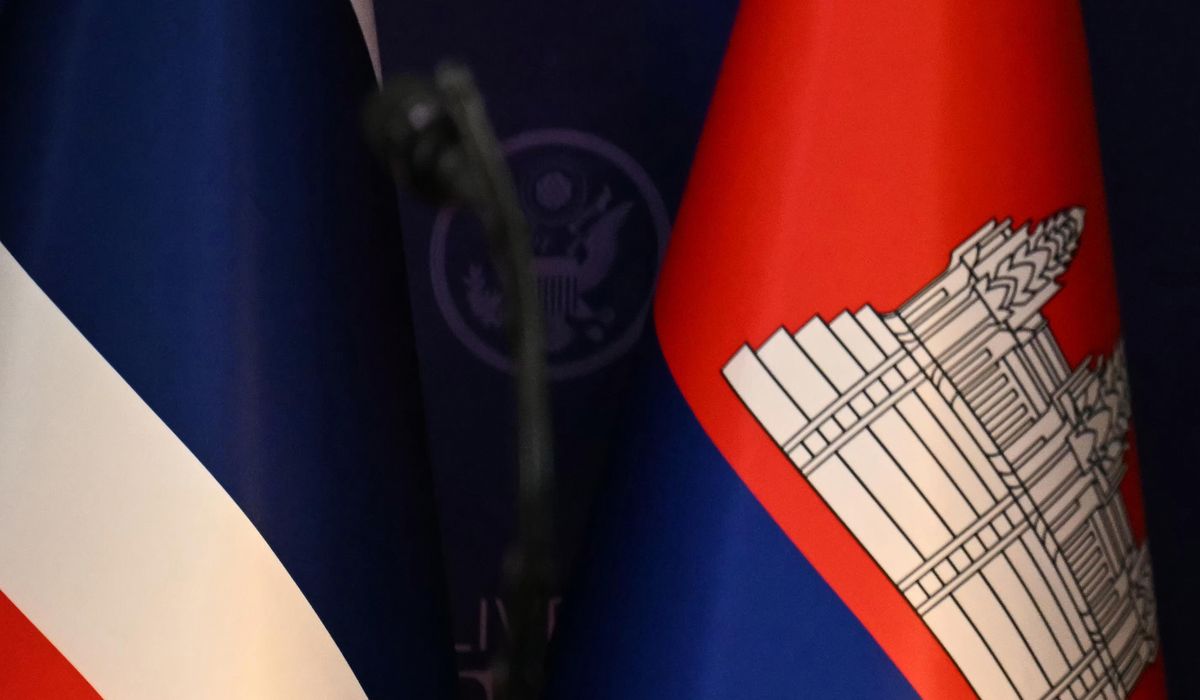
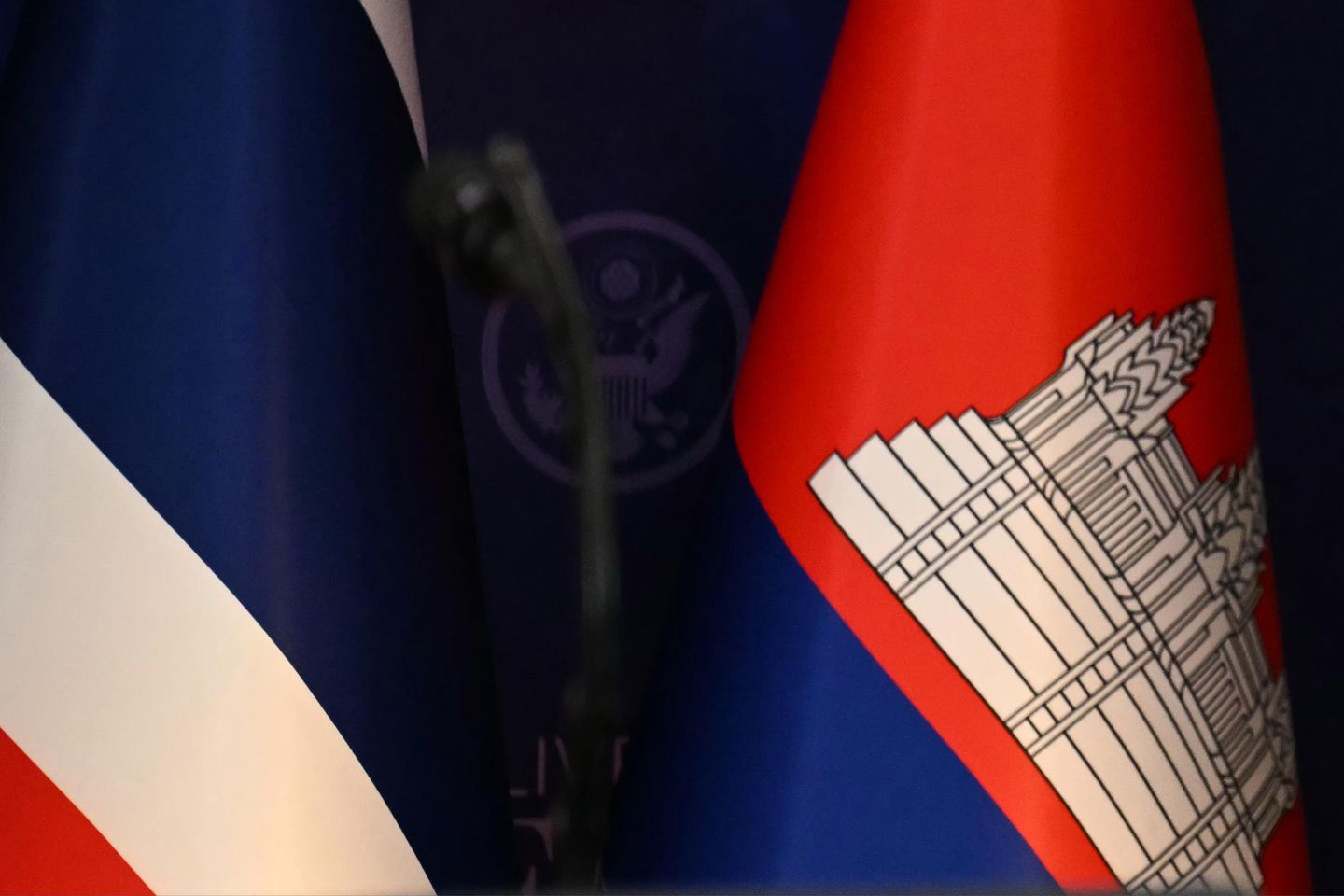
BANGKOK, Thailand — Thailand’s U.S.-supplied F-16 warplanes on Monday bombed Cambodia, which responded by firing unguided ground rockets across the disputed border between the two Buddhist-majority Southeast Asian nations, endangering a peace agreement brokered by U.S. President Trump.
“No more negotiations,” Thailand’s Prime Minister Anutin Charnvirakul said after fighting began at dawn on Monday.
Both Thailand and Cambodia denied shooting first amid the worst day of fighting since the most recent border skirmish began in July.
Phnom Penh said at least four Cambodian civilians died and 10 were injured on Monday in the clashes, while Thailand’s army said one Thai soldier died and eight were injured.
Hours later, around 5 p.m. Bangkok time, Thailand’s army warned the public that Cambodia would attack again soon, during the night.
“Tonight! Cambodian forces are expected to use multiple rocket launchers — BM-21 — to fire into Thai territory with the intention of causing injuries, loss of life, and damage to property,” Thailand’s Second Army Region said in an online alert.
More than 40 people on both sides have been killed along the disputed 500-mile-long forested border since July.
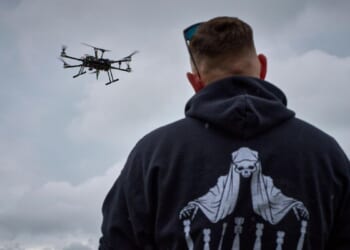
Thailand’s air and mortar assaults targeted a casino allegedly used by Cambodia as a command platform to launch bomb-carrying drones across the border into northeast Thailand’s Ubon Ratchathani province.
Thailand’s warplanes also hit alleged Cambodian rocket bases along the frontier, Thai Army Spokesman Maj. Gen. Winthai Suvaree said.
“The ultimate goal is to destroy as many of Cambodia’s supporting fire systems as possible,” he said.
Bangkok is a non-NATO treaty ally with Washington and supplied air bases and troops for the U.S.-led regional Vietnam War during the 1960s and 1970s.
“To stop the fighting, they must adhere to what we have agreed on” in the Trump-endorsed peace agreement, Thai Prime Minister Anutin said.
“Thailand is determined to defend our sovereignty, according to international rules and our right to defend ourselves.”
President Trump, Mr. Anutin, Cambodian Prime Minister Hun Manet, and the host nation Malaysia’s Prime Minister Anwar Ibrahim signed the peace accords on Oct. 26 in Kuala Lumpur.
The latest escalation erupted after Thailand and Cambodia exchanged rifle fire for 35 minutes on Sunday along the border at Thailand’s Sisaket province. Two Thai soldiers were injured.
Hundreds of thousands of frightened villagers on both sides of the mostly rural frontier evacuated danger zones, packing their belongings onto motorcycles, vehicles and tractors.
Villagers unable or unwilling to leave their homes, animals and farms have dug in, sheltering in makeshift bunkers and cooking on open fires.
Thai armored personnel carriers appeared near coils of barbed wire along the border in Sakeo province, news photographs showed.
“The renewed fighting risks unravelling the careful work that has gone into stabilizing relations between the two neighbors,” said Malaysian Prime Minister Anwar, who helped broker the Thailand–Cambodia peace agreement.
The two days of fighting began after Bangkok presented its case last week at a U.N. anti-landmines forum in Geneva, Switzerland. Thailand accused Cambodia of secretly burying landmines along their border, severely injuring seven Thai soldiers since July and violating the Ottawa anti-landmine treaty and the Trump-pushed October peace deal.
“Thailand does not wish to escalate tensions or politicize the matter, but the country could no longer ignore the increasing number of incidents,” Thai Foreign Minister Sihasak Phuangketkeow told Geneva’s Ottawa Convention, which prohibits anti-personnel landmines.
“Thailand remains committed to the core principles of the convention — no new mines, no new victims, and no weaking of the rules that protect civilians and soldiers alike,” Mr. Sihasak said on Saturday.
Bangkok and Phnom Penh are signatories to the Ottawa Convention, formerly known as the Mine Ban Treaty, and insist they destroyed all their stockpiled landmines years ago.
Cambodia has repeatedly denied planting fresh landmines, being the aggressor, or violating the “joint declaration” agreement.
In its denials, Phnom Penh insisted the Thai military planted the new mines on forest trails near the border in territory under Thailand’s control.
Phnom Penh also suggested the exploded mines were rusty remnants from Cambodia’s 1970s “Killing Fields” regime under the late Pol Pot and its aftermath, when the border was chaotic, porous, and overrun by various military forces.
To counter that narrative, Royal Thai Air Force Spokesman Air Marshal Jackkrit Thammavichai displayed what the military described as “forensic evidence” from its landmine investigation.
It included allegedly incriminating Cambodian troops’ selfies, army videos, and battlefront chatter recorded on Cambodian smartphones.
Thailand said they meticulously pried the data out of two Cambodian phones seized on the battlefield from Cambodian troops.
One phone’s photographs supposedly showed close-ups of uniformed Cambodian forces in a forest, including “Mine Layer Person #2” allegedly planting new landmines on June 8.
Another photo showed a Techno brand Pova 6 Pro mobile phone and two SIM cards, one red and one green, which the Thai military said bore Cambodia’s +855 phone network code.
Extracted content included a “Deployment of Landmine Training Video” allegedly recorded on June 8, showing a Cambodian “instructor” teaching a “soldier” how to remove a safety pin from a landmine, the Thai military said.
“Once the pin is pulled, you can dig a hole and place it,” the instructor is quoted as saying.
“Be careful it doesn’t slip.”