The vaccine debate in this country is not, primarily, driven by disagreements over scientific evidence. Like so many other arguments that touch on scientific matters, most of what is trotted out to justify policies has more to do with institutions defending their authority, money, and, in some cases, a reactive distrust of institutions that continually gaslight us.
As somebody who has nuanced views about vaccines, I am deeply frustrated by the fact that it is impossible to have a rational discussion in which answers to legitimate questions are denied to us because authorities fear that people will not comply with their recommendations if they are told the truth.
Without having done a deep dive into the safety, efficacy, and the relative risks and benefits of each vaccine and the compressed nature of the vaccine schedule, I have a “common sense” view that the benefits of some vaccines substantially outweigh the risks, that others do not, and that the current practice of giving massive numbers of jabs in a compressed period of time is likely more harmful than beneficial.
I believe the latter for a simple reason: the dose makes the poison, and because vaccines contain adjuvants that are not in themselves wholly safe in large quantities, giving 70 doses of a largely safe adjuvant may cause harm that giving one dose may not. We should do rigorous studies to determine the costs and benefits of each vaccine, and of the schedule as a whole.
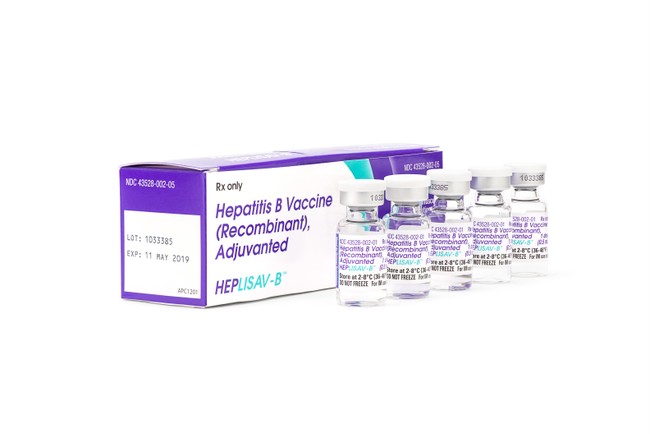
I bring this all up because we are in the midst of yet another debate about a vaccine recommendation, and it is likely that HHS will delay the recommendation for when children are given the Hep B vaccine.
ACIP member Retsef Levi just calmly shredded the idea that every newborn needs a Hep B shot — a claim pushed hard by Big Pharma.
“The policy in the US is completely misaligned with many countries that… care about their children just as much as we do.”
“They are potentially not… pic.twitter.com/i1g27yesjG
— MAHA Action (@MAHA_Action) December 4, 2025
“The policy in the US is completely misaligned with many countries that… care about their children just as much as we do.”
“They are potentially not convinced by the very confident arguments that you and others are making… about the safety and the need and the benefits of having a birth dose for babies born to mothers tested negative for Hep B.”
“The same speakers… were very adamant that the mRNA vaccines are very safe for children and young people.”
“We heard recently some evidence that maybe that confidence was not necessarily correct.”
“Maybe we’ll be a little bit more humble and less confident… and not present the discussion as something that has to do with being evil or being irresponsible.”
“I don’t think that that’s the basis for a scientific discussion.”
Currently, 3.5 million infants are given the vaccine on Day 1, per current recommendations. The United States is an outlier compared to peer countries, which do not make that recommendation. Yet, to listen to “team science” and the media, only anti-vaccine extremists could make such a recommendation, and vast numbers of children will die due to the change.
Peer nations do not give Hep B shots to infants on the first day of life when the mother is Hep B negative, via FDA official Tracy Beth Hoeg and @RWMaloneMD.
Hoeg: “If we’re talking about a universal recommendation and an extremely low risk situation for most babies … and we… pic.twitter.com/wPAtk9DxWC
— Emily Kopp (@emilyakopp) December 4, 2025
Hoeg: “If we’re talking about a universal recommendation and an extremely low risk situation for most babies … and we don’t even have any randomized placebo-controlled trials … We’re really in a situation where we should have more humility and say why are we stating that it’s absolutely necessary to give this dose at birth, especially when high income nations throughout the world are not.”
It would be rather surprising to discover that only rabid anti-vaccine activists could possibly suggest reconsidering the instant vaccination of infants for a disease that mainly infects sex workers and IV drug users, when almost nobody else around the world does. Are European countries indifferent to the fate of their children? Or, perhaps, is the US an outlier because the vaccine advocates aren’t making a scientific case, but one about their authority? After all, they really have no scientific evidence to back up their safe, effective, and necessary claims.
I’m fascinated with psychology driving Prasad, Makary, Bhattacharya, Oz, etc.
These individuals have a science background.
They MUST know they’re:
– pushing harmful BS
– enabling an authoritarian admin
– their legacy is now darknessWTF is the motivation? Why do this? WHY?
— Timothy Caulfield (@CaulfieldTim) December 3, 2025
All the stories out there are about how discussions of the risks and benefits, which have gone largely unstudied, are solely driven by anti-vaccine fanaticism.
🚨Senator Dr. Rand Paul says it’s an “absolute truth” that giving Covid and Hep B vaccines to babies is unnecessary — and possibly harmful.
“I don’t know everything about every vaccine.”
“But I know two things, there is no indication for your child to take a Covid vaccine, and… pic.twitter.com/19OAnO3fu9
— End Tribalism in Politics (@EndTribalism) October 16, 2025
“I don’t know everything about every vaccine.”
“But I know two things, there is no indication for your child to take a Covid vaccine, and there’s no indication for your newborn to take a Hepatitis B vaccine if the mom doesn’t have Hepatitis.”
“These are facts that are absolute — the science is so solid that we should make it the forefront of what we talk about.”
“There’s no argument for even lack of prenatal care — almost all moms are in the hospital, and you can test her for Hepatitis.”
“If you’re going to vaccinate their kid and try to force the vaccine on their kid, the mom is in the hospital, you can test her for hepatitis.”
“So there is really no argument here in this case.”
It’s not that Hep B is a benign disease, and I certainly would not personally recommend that no parent should get their child vaccinated before puberty, when risky behaviors become more common. Assuming that the vaccine is low-risk (no medical treatment is zero risk), and the potential risk for the child is even modest, I would assume that doing so is smart.
But infants, aside from a few who are in high-risk environments, are at nearly zero risk from Hep B. The reason why it is part of the recommended vaccine schedule at birth is that the child is right there, not because it is necessary right then.
How do I know that? Only about a third of adults are vaccinated against Hep B, and as far as I can recall, my doctor has never even brought it up, including when I was in the hospital, which has been too often. It is technically recommended on the vaccine schedule, but no doctors have even brought it up because my risk is near zero.
Only one out of three adults has been vaccinated for the disease, and that number heavily skews to young adults. The assumption, as far as I can tell, is that if you don’t do risky things, you don’t need to worry about it enough to get the vaccine. Your risk of getting Hep B is not zero, of course, but the number of cases prevented compared to the cost and risks of vaccinating everyone just don’t make it worth it.
If you want it, get it. Nobody is stopping you.
I don’t believe that all or most who are fighting to keep the universal recommendation for vaccination at birth have bad motives. Instead, I believe they have abandoned the fundamental public health principle of informed consent. They want to preserve their status as authorities, and admitting that they got something wrong would undermine their authority.
Exactly the opposite is the case, of course, as you can see what happened with the fiasco of the COVID vaccine. Rather than maintaining trust in public health authorities, the obscurantism about the safety and effectiveness of the vaccine has made trust collapse.
If they are lying about this, then what about other things? I know that my level of trust has dropped dramatically, and I know plenty of scientists who are furious that they were lied to and have lost trust.
Instead of insulting people for asking questions or wanting more evidence, public health officials should lay out the facts. The absence of data and the desire to bully people create mistrust.
Once we rigorously test everything the best we can, it’s likely that some vaccines will pass the test of risk/benefit, and others will not. I suspect that the vaccine schedule will likely be stretched out, and that some will lose their status as recommended.
That’s not a tragedy. That’s how progress works. Just as we take some drugs off the market, we will probably have to take some vaccines off the market as well. It has happened before, and trust did not collapse. That happened after the COVID gaslighting.
I take quite a few drugs, but I don’t just assume that because a doctor recommended one, I should. I discuss the pros and cons, read up on the research, and make a calculated judgment, knowing that there are potential risks. My doctors welcome those discussions because our discussions are rational and informed.
We all look back on the era of doctors as gods with some disgust, and with good reason. But over the past few years, we seem to be going in that direction again. “Be your own best advocate” has turned into “do what we say,” and that is a bad thing.
Do the science, lay out the facts as we know them, and let people make their own judgments.
- Editor’s Note: Do you enjoy Hot Air’s conservative reporting that takes on the radical left and woke media? Support our work so that we can continue to bring you the truth.
Join Hot Air VIP and use the promo code FIGHT to get 60% off your VIP membership!