When the communists took over in Cuba, they quickly expropriated a lot of property belonging to US companies. That meant the companies were simply out their investments in Cuba with no hope of being paid for what was stolen.
One of those companies was Havana Docks, which as the name suggests controlled docks in Havana. The company sued and the DOJ agreed they were owed millions of dollars, but that amount was never paid.
After the seizures, American investors filed claims with the U.S. government through the Foreign Claims Settlement Commission, an agency at the Department of Justice. In 1971, the commission certified Havana Docks’ claim of $9.1 million, or nearly $100 million adjusted for inflation, which remains unpaid. In total, the commission certified $1.9 billion in claims held by almost 6,000 claimants or about $9.3 billion in current value, according to the U.S.-Cuba Trade and Economic Council.
Lawsuits against Cuba were effectively blocked, in part by a portion of the Helms-Burton Act which was under the discretion of successive US presidents.
The Cuban Liberty and Democratic Solidarity Act, also known as the Helms-Burton law, also included language declaring that resolution of the property claims should be a key condition for restoring economic and diplomatic ties with Cuba. It included a provision at issue in Monday’s court cases that provided a path for Americans to sue in federal court over the “trafficking” or use of assets seized by the Cuban government. Known as Title III, it also gave presidents an on-off switch to suspend or activate the litigation stipulations, which were politically and diplomatically controversial.
Until 2019, presidents of both parties had suspended that provision. The Trump administration chose to activate it, opening the door to the lawsuits.
Once Trump opened that door, multiple lawsuits were filed. In the case of Havana Docks, they filed not against Cuba but against cruise ship operators which had used the docks to bring tourists to Havana. Initially, the company won in court but that judgment was overturned.
In 2022, Havana Docks won a historic ruling by a Miami federal judge, who ordered cruise lines Carnival, MSC, Royal Caribbean and Norwegian to pay over $400 million for using the docks and facilities that Havana Docks had built in the pre-Castro era at the port of Havana to transport American passengers.
But because Havana Docks’ concession expired in 2004 — before the cruise companies took U.S. visitors to Cuba between 2016-19 — a federal appeals court overruled the decision.
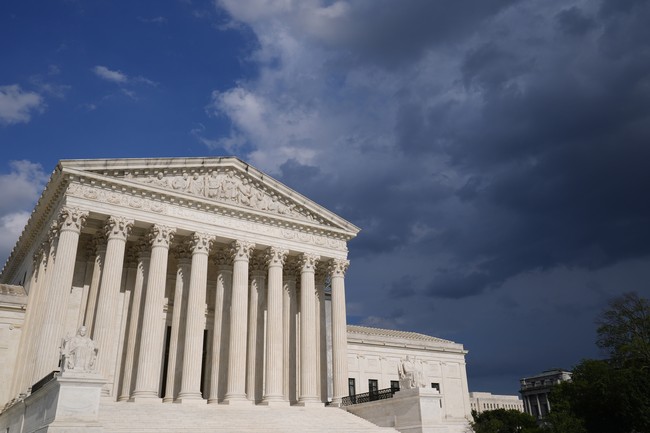
So this case was one of two that the Supreme Court heard oral arguments about today. And as mentioned above, one of the key issues was whether or not the company was owed anything given that its interest in the property was set to expire in 2004.
Representing Havana Docks, Richard Klingler told the justices that the “confiscated property” covered by the Helms-Burton Act includes property of which Cuba seized control in 1960, including the docks. “Stopping trafficking in such facilities,” Klingler argued, “locks them up as tainted until Cuba pays for what it took.” Therefore, he suggested, it doesn’t matter that Havana Docks would no longer have an interest in the property after 2004, because the cruise lines had been “trafficking … in facilities.” The contrary ruling by the U.S. Court of Appeals for the 11th Circuit, he said, would put “an ‘open for business’ sign on property taken from Americans,” despite Congress’ purpose in enacting Title III.
For the most part it seemed like the conservative justices were supportive of the company’s right to collect while the progressives were more skeptical:
Justice Elena Kagan appeared sympathetic to the cruise lines’ argument…
Justice Samuel Alito was more skeptical.
However, Justice Barrett seemed to line up more with the court’s liberals.
Justice Amy Coney Barrett suggested to Klingler that Havana Docks’ interest was limited in a different way – specifically, that Havana Docks had the right to use the docks for cargo, while the cruise lines used them to load and unload tourists…
Justice Sonia Sotomayor voiced a related concern about fairness – specifically, about whether companies like Havana Docks should be allowed to recover indefinitely for the use of the property, even if that means that they ultimately receive much more than what Cuba should have paid them in the first place. “There’s a due process problem in thinking that you’re entitled to multiple recovery from infinite number of people who might use this dock that far exceeds … the amount that you were owed.”…
Justice Brett Kavanaugh echoed Sotomayor’s questions. “[W]hat is the theory,” he asked Klingler, “you have of why Congress would enact a statute that allows you to obtain compensation from a variety of American businesses potentially that vastly exceeds the value of your property?”
But the real surprise may be Justice Brown who has made a point of dissenting loudly in several recent cases. She seems to have been on board with the company deserving the payment, even if it exceeded the total amount they were owed by Cuba.
Justice Ketanji Brown Jackson, the justice who was perhaps the most consistently supportive of Havana Docks, seemed to agree. The entire aim of Title III, she posited, “was to try to keep Cuba from trafficking in this property.” And although she acknowledged that “it may seem pretty draconian to suddenly give multiple recoveries to all these people … if you think of it in light of Congress’s intention to really, really make it hard for Cuba to traffic in these properties, that kind of a sanction makes at least some sense.”
There was also a second case heard today involving property owned by Exxon that was expropriated by Cuba. We won’t have a decision in these cases until sometime in June or July, but the Miami Times notes that this could potentially be another blow to Cuba at a time when it is already nearing a collapse.
…a favorable decision could provide another point of leverage for the Trump administration, which has cut oil supplies to Cuba from Mexico and Venezuela and is pressuring Havana to engage in negotiations amid a worsening humanitarian crisis.
The administration had made it clear it sees both cases as significant for its foreign policy towards Cuba: It allowed the U.S. solicitor general’s office to send lawyers to the Supreme Court on Monday to argue in favor of Havana Docks’ and Exxon’s positions.
It’s hard to see how Cuba can survive long enough for these decisions to matter. It’s only February and the country is already having daily blackouts and has almost no gasoline and no ability to refuel planes. Over the next month or so the entire country may go dark and even food deliveries will become a problem. We’ll just have to wait and see how bad things get.
Editor’s Note: Do you enjoy Hot Air’s conservative reporting that takes on the radical left and woke media? Support our work so that we can continue to bring you the truth.
Join Hot Air VIP and use promo code FIGHT to receive 60% off your membership.