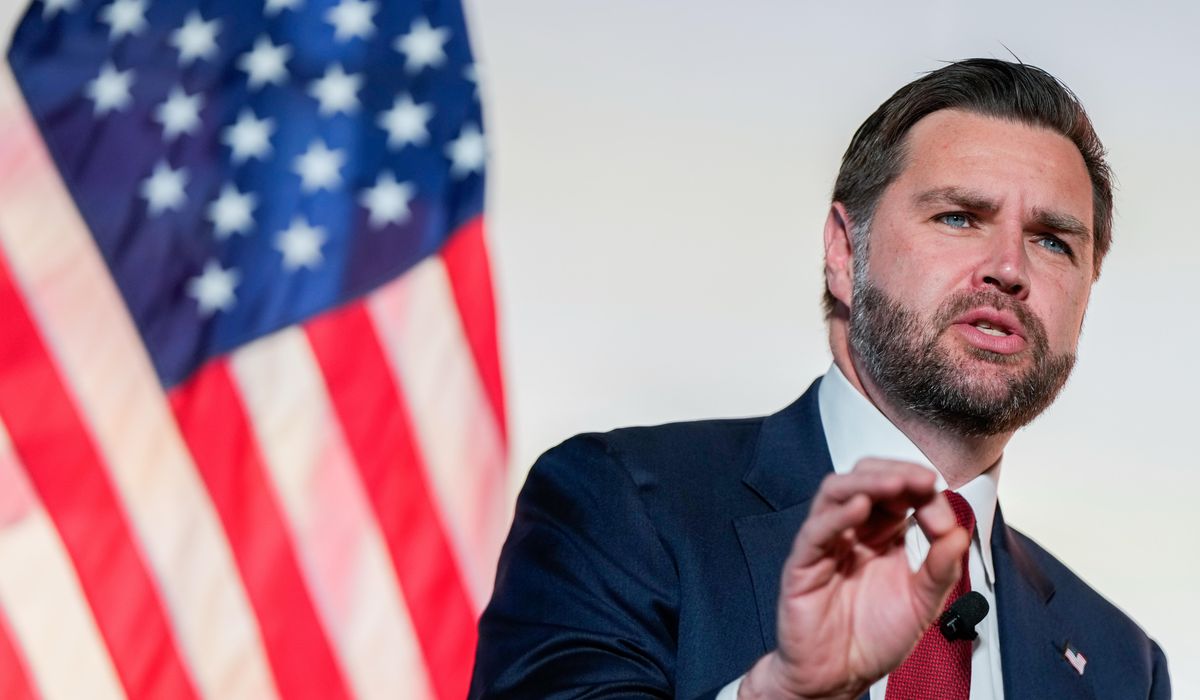
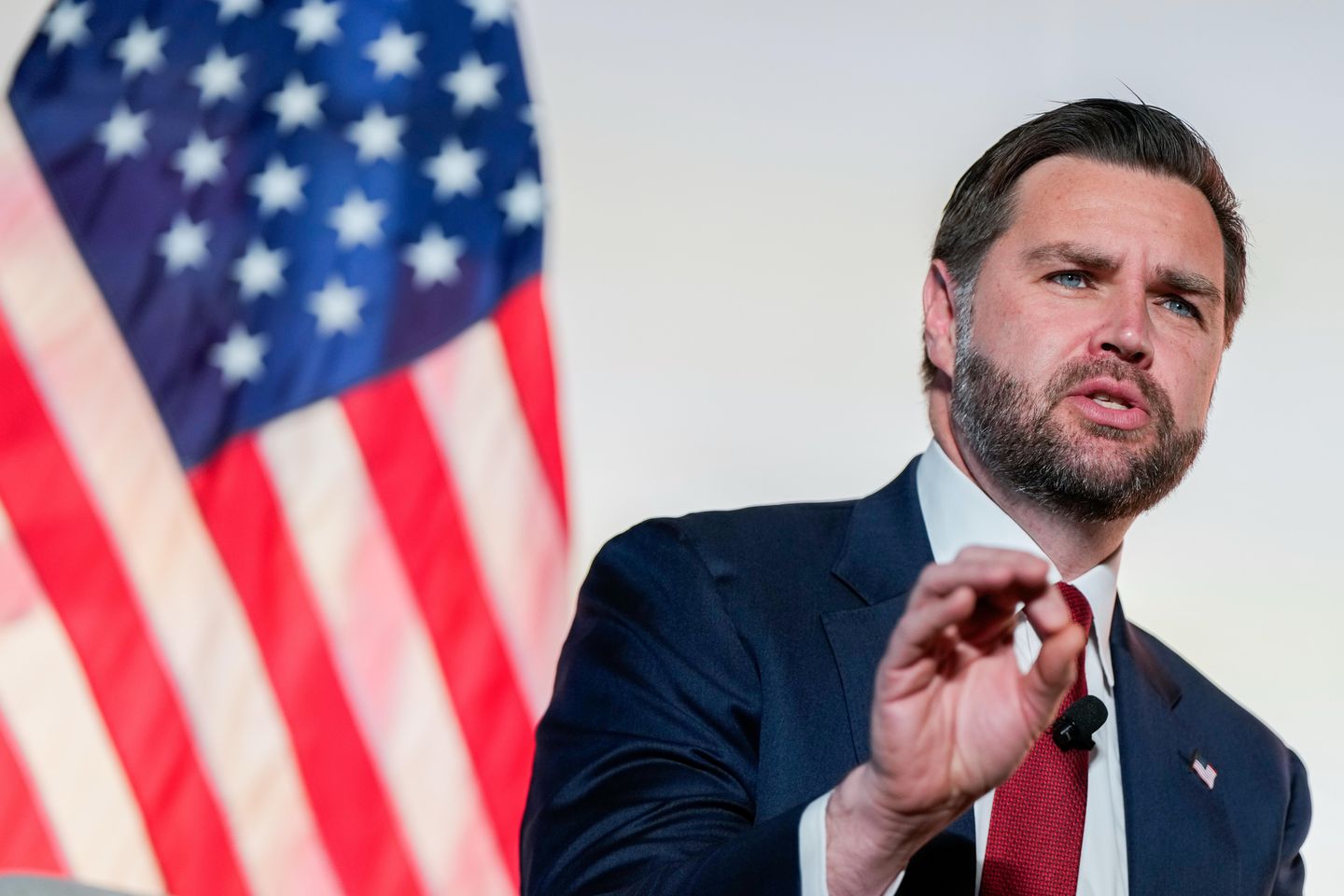
Supreme Court justices grappled Tuesday with whether to topple another domino in campaign finance restrictions — this one a limit on political party committees being able to coordinate with individual candidates on how to spend money.
Vice President J.D. Vance and Republican congressional campaign committees asked the justices to erase the restriction on coordinated spending, saying it’s an infringement of free speech rights, without much benefit to the political process.
Noel Francisco, the lawyer for Mr. Vance and the GOP committees, said the coordinated limits are “at war with this court’s recent First Amendment cases.”
The case is the latest to ask the court to rewrite the complicated campaign finance rules Congress set up in the Watergate era, then stiffened with the McCain-Feingold legislation in the early 2000s.
Mr. Francisco said those laws have defanged political parties and shifted cash and power to polarizing super PACs, which can raise and spend massive amounts of money from the outside. He urged the justices to restore power to the parties as a check.
“Political parties serve a moderating influence,” Mr. Francisco told the high court. “By invalidating the coordinated party expenditure limits, you start to restore the political powers to the relative political power that they’ve ultimately had, which I think is ultimately to the benefit of democracy itself.”
Opponents urged the justices to uphold the current law, warning of the potential for bribery if parties are allowed to coordinate more closely with specific candidates.
They also warned the justices that the case is a way stop on Republicans’ broader quest to erase more campaign finance restrictions.
“This wolf comes as a wolf,” said Roman Martinez, appointed by the court to argue in favor of the current rules. “They’re going to keep litigating to knock down every single one of the restrictions, and that includes the limits on donors to candidates directly.”
The coordinated spending limits are part of a complicated set of restrictions Congress has created to try to limit money in politics, and the potential for bribery.
The rule says that parties’ joint fundraising committees that aggregate money from other committees — such as state parties — cannot directly coordinate with a candidate’s campaign about how to spend that money.
Some of the justices suggested that limiting coordination was a way of preventing bribery. Justice Sonia Sotomayor, an Obama appointee, said the rules grew out of the Watergate era, when the milk industry funneled massive amounts of money to the Republican Party in exchange for Congress enacting subsidies.
She said more recently, tobacco interests funneled money to the GOP to scuttle anti-smoking bills, and trial lawyers contributed to Democrats to stop tort reform.
Justice Sotomayor also said the high court’s track record hasn’t been great when it moves to strike down campaign finance laws passed by Congress.
“Our tinkering causes more harm than it does good,” she said.
“I personally never think free speech makes things worse. I think it virtually always makes it better,” Mr. Francisco replied.
The high court has been agreeing with him for the last 15 years.
In Citizens United, the Supreme Court ruled in 2010 that restrictions on corporations outside of the parties and candidates were unconstitutional.
Four years later, in the McCutcheon case, the justices ruled that the aggregate limit on how much a party could collect from any one donor, siphoned through donations to other committees that then give to a main coordinating committee, was unconstitutional.
Mr. Francisco said the principle behind the court’s decisions has been that Congress can impose limits to prevent bribery, but it can’t act to cut down on the “overall amount of money in politics.” That, he said, is what the coordination limit does.
Marc Elias, a Democratic lawyer at the center of the contract to produce the anti-Trump Steele Dossier, argued on behalf of Democratic Party political committees Tuesday.
He challenged Mr. Francisco’s claim that ditching the coordination limit will strengthen parties, saying instead that they’ll just become bankrolls for the candidates, and force them to drop their party-building and get-out-the-vote efforts.
“What this will do is create a collective action problem that will drive the parties inevitably to just being bill-payers,” he said. “There will be an arms race that right now doesn’t exist.”
Mr. Martinez, meanwhile, warned that if Republicans win here, they’ll be back to erase other limits.
He pointed out that when the GOP argued against the aggregate limits in the McCutcheon case, the coordination limit was one of the guardrails the party pointed to as still in place. Now Republicans are pushing to erase it, too.
“This is the camel’s nose under the tent,” Mr. Martinez said.
But Mr. Francisco said some key checks remain. Bribery is still illegal, as is earmarking a party donation to go to a single campaign. He said there’s no evidence that contributions to a party are bribes, and indeed if a wealthy person or interest did want to sway someone, they’d be better served cutting a million-dollar check to a candidate’s favorite super PAC.
“If this were a real problem, you’d think that they’d have evidence of it occurring one time in all of American history, yet they don’t,” he said.
Justice Sotomayor, though, saw a real possibility of influence-buying. She mentioned “the most major donor to the current president” who she said “got a very lucrative job” in the administration, which she said had the “appearance of a quid pro quo.”
Mr. Francisco said he figured she was talking about Elon Musk, who became a special advisor to President Trump for the first half of the year.
“I have a hard time thinking that his salary that he drew from the federal government was an effective quid pro quo bribery, which may be why nobody has even remotely suggested that to be the case,” he replied.
Justice Sotomayor countered that Mr. Musk might have instead benefitted from “lucrative government contracts.”
Mr. Martinez argued that the justices shouldn’t even be hearing the case. He said Mr. Vance has played down talk of running in 2028, so he’s not a current candidate, and can’t challenge the law.
Mr. Francisco said Mr. Vance maintains an active campaign account, and besides, he was a candidate for vice president last year, when the case reached the appeals court.
The case is National Republican Senatorial Committee v. Federal Election Commission and a decision is expected by the end of June.