SEOUL, South Korea — Persons of faith were stunned Wednesday when they arrived at places of worship to find them surrounded by police and liquidators, whose presence made clear that their religious organization, which had committed no crime, was being dismantled.
The assault on religious freedom was not unfolding in a walled-off authoritarian state, but in one of the world’s most prosperous nations — a liberal democracy closely allied to the United States.
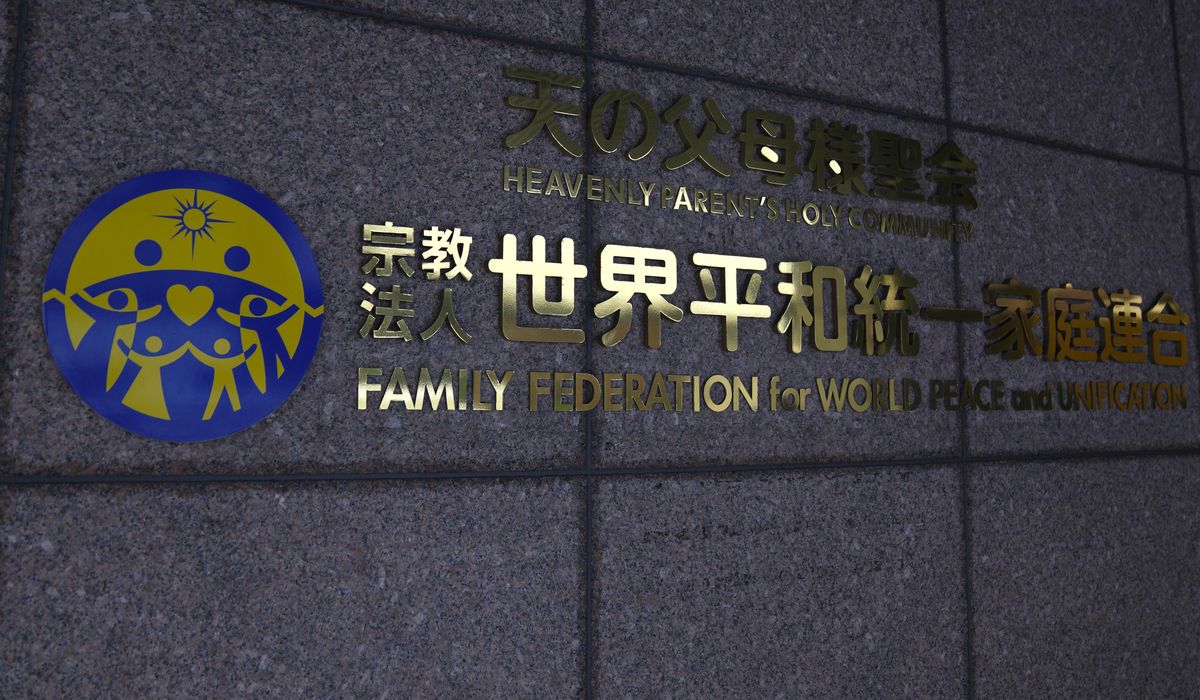
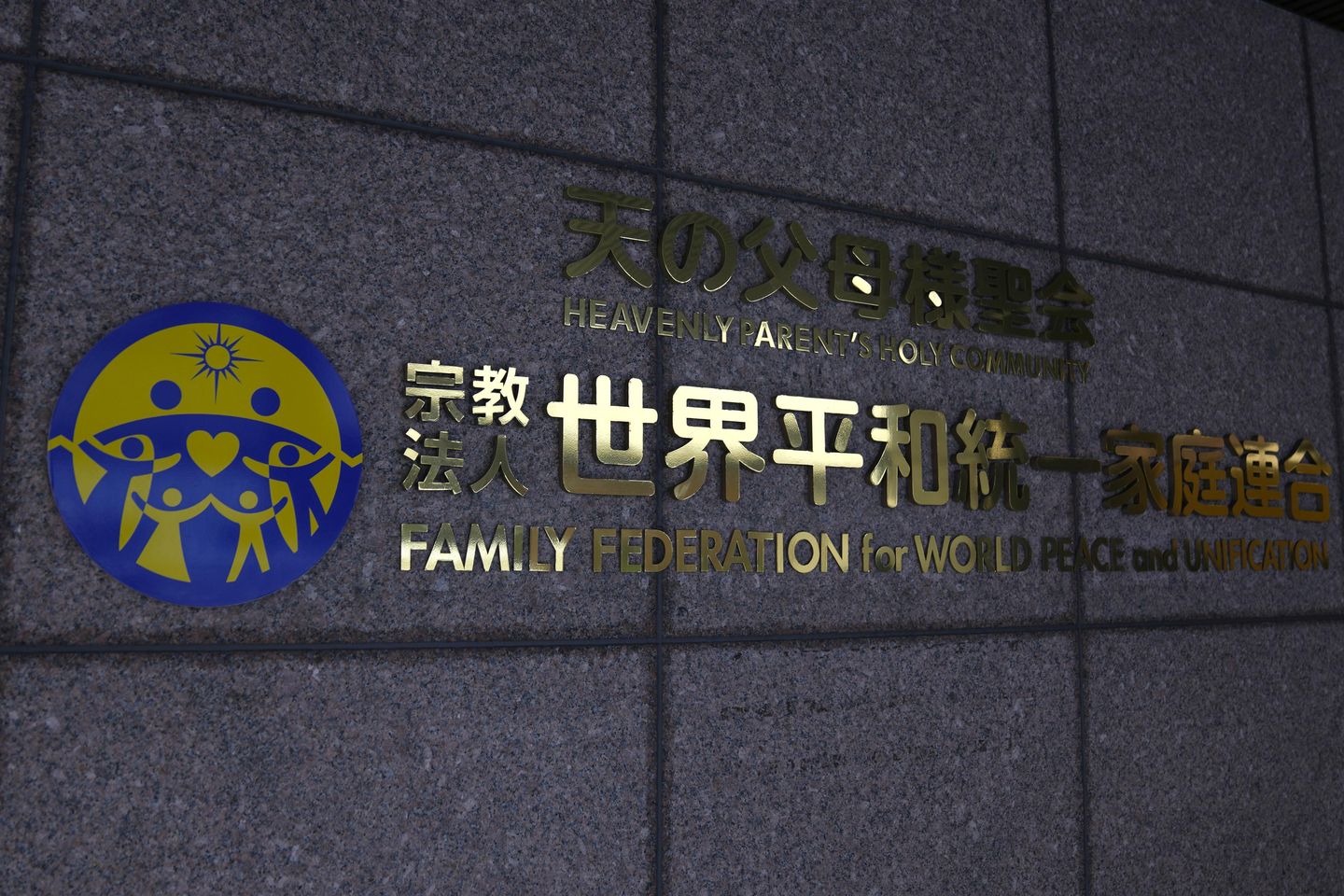
Japan’s Tokyo High Court on Wednesday revoked the religious status of the Family Federation for World Peace and Unification — previously known as the Unification Church — green-lighting its dissolution and the seizure and liquidation of its assets.
The Tokyo High Court decision followed a one-year legal appeal by the Family Federation of a prior lower court judgment.
The religious group was accused of coercive behaviors, financial victimization and, via civil torts, breaching societal norms, but no actual crime.
Religious freedom crushed
Family Federation staffers of churches in major Japanese cities, including Fukuoka, Osaka and Tokyo, were allowed to collect personal belongings but were otherwise barred from the premises.
The remaining 280 churches nationwide braced for the same treatment. Officials anticipate that even a cemetery owned by the Family Federation will be seized.
“Church members can no longer enter church facilities without the permission of the liquidator,” said Norishige Kondo, deputy director of the organization’s legal department. “These facilities were purchased with donations that members voluntarily offered of their own free will.”
Believers were “greatly shocked and disappointed,” he said.
Lacking facilities, Sunday services look set to be downbeat, makeshift affairs.
“To continue worship and maintain their religious community, the church and its members are currently exploring ways to stay in contact with one another through online communication,” Mr. Kondo said.
A Supreme Court appeal is planned, but Mr. Kondo believes the best hope may be “to bring this matter widely to the attention of the international community.”
High-profile Americans have already spoken.
“It is unbelievable that a democracy would dissolve a legitimate faith community that has not been convicted of a crime,” said Sam Brownback, the former two-term governor of Kansas. “This move by the Japanese government violates the Universal Declaration of Human Rights’ fundamental right to freedom of conscience.”
“The decision to dissolve a religious organization that has not been convicted of any crime is completely out of step with what one would expect from a democracy that claims to uphold the fundamental right to freedom of religion or belief,” said Katrine Lantos Swett, co-chair of the Committee for Human Rights in North Korea. “The Family Federation and its community of sincere believers have every right to exist peacefully in a free, democratic society.”
“This will have a chilling effect on all religions in Japan and throughout Asia,” added Mr. Brownback, who served as ambassador-at-large for religious freedom under the first Trump administration. “This decision should be reversed.”
Alleged abnormalities, breached norms
Proceeds from the liquidations will go to 1,599 persons who claim that, over a 40-year period, they or their family members were compelled or coerced into making donations totaling some $130 million to the Family Federation, or into buying pricey religious trinkets — so-called “spiritual sales.”
The liquidators are lawyers operating on behalf of these victims.
Patricia Duval, a French lawyer specializing in international human rights and advocating for minority religions, including the Family Federation, questions the accusations.
“What has been stopped is individual members selling spiritual objects or good-fortune objects — individuals, not the church; the church told members to stop selling these things,” she said in an interview held before the judgments.
The Family Federation said spiritual sales ended in 2009.
Nor are donations unusual.
“Every church has to have money to survive and organize practices, so there is nothing wrong with religious donations,” Ms. Duval continued. The Catholic Church is very rich.”
Wednesday’s decision marked the first time a religion in Japan had been officially dismantled for violations of the Civil Code, rather than for criminal acts.
That caught the attention of the United Nations.
On Oct. 1, four U.N. special rapporteurs, including the special rapporteur on Freedom of Religion or Belief, posted an official statement on the website of the Office of the U.N. High Commissioner for Human Rights.
“The civil tort rulings on which the dissolution decision was based on relies on the violation of ‘social appropriateness’ which were deemed to constitute a serious harm to ‘public welfare,’” the statement read. “As previously noted by the Human Rights Committee, the concept of ’public welfare’ is vague and open-ended and may permit restrictions exceeding those permissible under the International Covenant on Civil and Political Rights.”
Politically, Japan is a liberal democracy. But socially, much of the country’s day-to-day interactions revolve around a concept known as wa — a social structure that emphasizes group harmony rather than individuality.
That can make matters beyond the norm problematic.
Wednesday’s ruling “makes clear … that no religious group in Japan should consider itself safe from being targeted by the government if it finds itself on the wrong side of politics or culture,” Ms. Lantos Swett said.
It also irks Ms. Duval.
“I am amazed by the importance of ‘social norms,’ in Japan,” she said, noting that those who breach them are “socially stigmatized.”
“Religious communities are often out of step with shifting cultural attitudes and political winds,” Mr. Brownback said. “As such, they can be viewed as controversial, polarizing or even strange, but that doesn’t change their right to exist in a free society.”
The Family Federation, which practices mass weddings, has suffered extreme stigmatization.
Multiple cases have been recorded of believers being kidnapped and subjected to harsh “deprogramming sessions” by family members working alongside Christian pastors.
Ms. Duval maintains that the Family Federation has been demonized by left-wing lawyers working for the victims and mainstream Christian groups that differ with its doctrine and see the South Korea-based religious movement as competition.
The Unification Church was founded on a Christian bedrock in 1954 by charismatic preacher Moon Sun-myung, who had escaped communist North Korea.
From humble beginnings in South Korea, the church expanded worldwide, including to Japan, where Koreans traditionally suffered ethnic prejudice.
The church’s affiliates around the world created charities and businesses, including The Washington Times.
A vexed political backdrop
The Family Federation shot to prominence because of a bloody political crime when, in 2022, former Japanese Prime Minister Shinzo Abe was shot dead.
His killer was Tetsuya Yamagami, whose mother, a Family Federation believer, had donated her savings. He was angry at Abe and his Liberal Democratic Party, which had links to the religion.
Staunchly anticommunist, pro-family and politically conservative, the religious group supported LDP campaigns, and Abe had spoken at Family Federation events.
It is common for Japanese religious organizations to forge political ties: Komeito, the LDP’s coalition partner, was a Buddhist party.
After Abe’s assassination, Prime Minister Fumio Kishida, who hailed from a rival LDP faction, purged the party of lawmakers closely involved with the Family Federation.
Amid public shock at the murder and the depth of party-religion ties, and backed by a media that was almost entirely hostile to the Family Federation, the government tasked the Ministry of Education, Culture, Sports, Science and Technology to investigate the case for dissolution.
Mr. Yamagami is serving a life sentence for murder.
What went underreported is the fact that, before he shot Mr. Abe, the Family Federation had returned half his mother’s donations. She did not abandon her faith.