The Senate on Thursday narrowly advanced a war powers resolution to block President Trump from taking further military action in Venezuela without congressional approval.
The 52-47 procedural vote comes just days after Saturday’s joint military and law enforcement operation to capture Venezuelan dictator Nicolas Maduro and his wife, Cilia Flores.
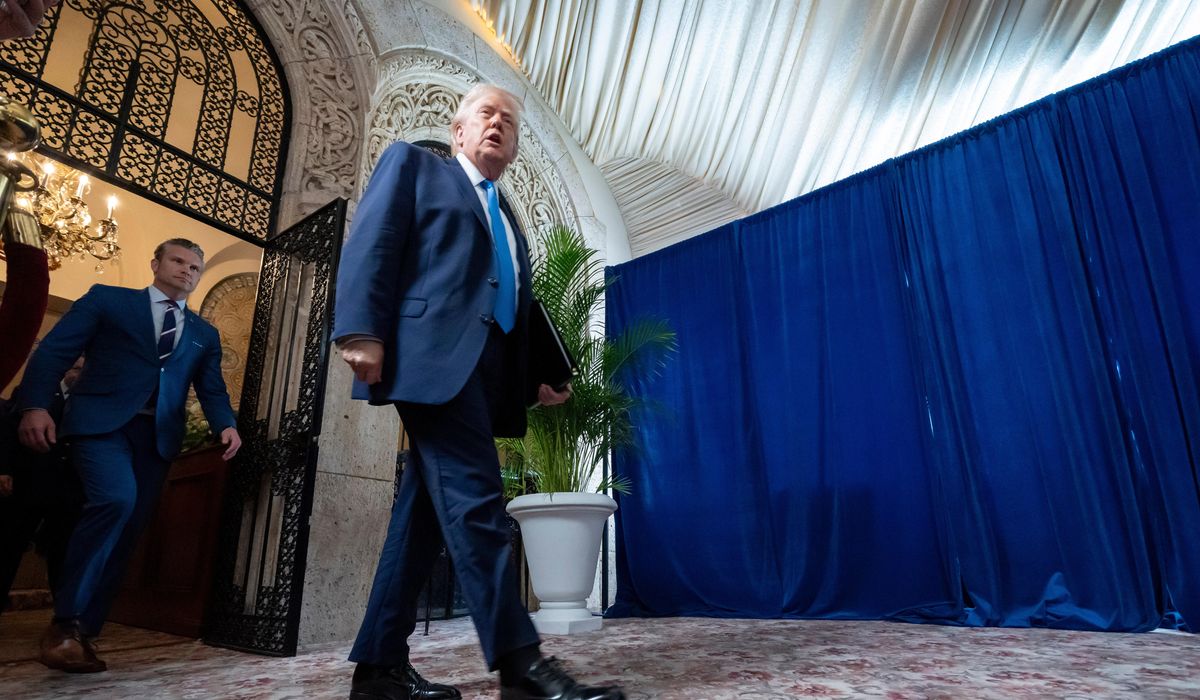
Mr. Trump quickly took to social media to make clear he was not pleased.
“Republicans should be ashamed of the Senators that just voted with Democrats in attempting to take away our Powers to fight and defend the United States of America,” he posted, arguing the war powers measure is unconstitutional, would impede his authority as commander in chief and hamper national security.
The president signaled he may work to change some minds as he noted the “more important” Senate vote will occur next week.
The Senate will first hold another procedural vote, followed by up to 10 hours of debate and an opportunity for senators to offer amendments before final passage.
SEE ALSO: Trump shames 5 Republicans who want to restrict him from more military action against Venezuela
House GOP leaders are unlikely to bring up the measure in their chamber, but Democrats plan to force a vote on their own privileged war powers resolution.
Lawmakers supporting the war powers measure believe Mr. Trump may take more military action to fulfill his vow that the U.S. will “run” Venezuela until there can be a proper transition to a new government, which the president has said could take years.
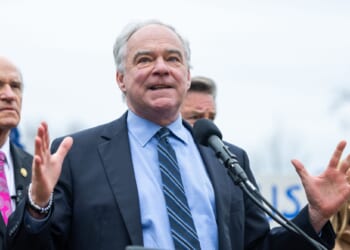
“If you’re going to be ordered to risk your life or your health, it should be on the basis of a political consensus that this is a mission that’s worth it,” said Sen. Tim Kaine, Virginia Democrat and lead sponsor of the measure.
Five Republicans — Sens. Rand Paul of Kentucky, Lisa Murkowski of Alaska, Susan Collins of Maine, Josh Hawley of Missouri and Todd Young of Indiana — joined all Democrats in support.
Mr. Trump called them all out by name in his post and said they “should never be elected to office again.” Only Ms. Collins is up for reelection this year.
Mr. Paul and Ms. Murkowski previously sided with Democrats in backing a similar war powers resolution in early November amid early warnings the Trump administration was planning strikes on Venezuela, but that vote failed.
On Thursday, Ms. Collins, Mr. Hawley and Mr. Young joined them to push the resolution forward.
“I believe invoking the War Powers Act at this moment is necessary, given the president’s comments about the possibility of ‘boots on the ground’ and a sustained engagement ‘running’ Venezuela, with which I do not agree,” Ms. Collins said.
GOP opponents said the war powers resolution would tie Mr. Trump’s hands and weaken his ability to enforce the law. The president has not ruled out future operations targeting other Venezuelan leaders if they remain engaged in narco-terrorism.
“There are Democrats in this chamber who are using the arrest of Nicolas Maduro not to advance American interest, but to attack President Trump,” Senate Republican Whip John Barrasso of Wyoming said. “It does not reassert Congress’ powers. It does not make America stronger. It makes America weaker and less safe.”
Mr. Paul, who cosponsored the measure, said the war powers vote “isn’t an anti-President Trump thing.” He said it’s about the constitutional separation of powers, an issue he’s raised consistently under Democratic and Republican administrations alike.
The Founding Fathers gave Congress the power to declare war instead of the president because they wanted it to be a consensus effort, Mr. Paul said. “They wanted less war.”
While the Trump administration has defended Saturday’s operation as a targeted law enforcement operation that required military support, many lawmakers don’t buy that justification.
“We bombed all of their surface-to-air missiles, all of their air defense systems,” Mr. Paul said. “Obviously, that’s what you do when you go into a country, but it was an all-out war. We were just a lot better than they were, and we won the war in about 24 hours.”
Senate Minority Leader Charles E. Schumer, New York Democrat, said Saturday’s operation is just the start of Mr. Trump’s “military adventurism,” which could lead to “spending treasure and possible lives in an endless war.”
“The American people don’t want that, and Republicans should be held accountable,” he said.
The war powers resolution specifically directs the president to “terminate the use of United States Armed Forces for hostilities within or against Venezuela, unless explicitly authorized by a declaration of war or specific authorization for use of military force.”
The only exception is to allow the U.S. to defend itself from imminent attack or the threat of one.
The language is broad because that is what is required to earn the measure privileged status, allowing any senator to call a vote that requires only a simple majority for passage.
But that also makes it easier for Republicans to oppose, arguing it would be too restrictive.
Mr. Paul said the success of Saturday’s operation and the fact that troops did not stay in Venezuela after capturing Mr. Maduro makes it more difficult for lawmakers to seize back their authority from the Trump administration.
“If there were 3,000 troops still in Venezuela, I think they’d have a harder time, and we might get 10 more Republicans on this,” he said.
While Mr. Trump has said he is “not afraid of boots on the ground,” administration officials say he hopes to avoid that by using the U.S. quarantine on Venezuelan oil as leverage to get the country’s interim leaders to stop drug and weapons trafficking.
The war powers resolution “might very well require the removal of our Navy ships from the Caribbean that are enforcing the quarantine,” warned Senate Intelligence Chairman Tom Cotton, Arkansas Republican.
“Is that what our Democratic friends really want?” he said. “To let these Chavistas in control of the interim authorities start exporting black-market oil again? To keep themselves in power, unaccountable not only to their own people but to America’s vital national security interests?”
The war powers proponents are not only worried about further military force against Venezuela but also Cuba, Colombia and Mexico, countries that may get caught up in Mr. Trump’s war on drug traffickers.
Mr. Kaine said Democrats will be introducing war powers resolutions to block Mr. Trump from taking military action against those countries, as well as Greenland and Nigeria, which the president has targeted for other reasons.
House Democrats are planning to force a vote on a Venezuela war powers resolution this month.
Rep. Jim McGovern, Massachusetts Democrat, who led an unsuccessful vote on a similar measure in December, said he’s having conversations with Republicans in hopes of picking up more support after Saturday’s operation.
“We’re at a point where it’s important for Congress to reassert its authority in these matters, and so I’m hoping we get a bipartisan vote on it,” Mr. McGovern told The Washington Times.
“I’ve talked to a lot of Republicans who are just horrified by how Congress is cut out of everything,” he said. “What’s the point of being here if you’re just going to cave and turn your back on your constitutional responsibilities?”