A Utah pet food company has halted sales of its entire Quest product line and expanded a voluntary recall to include two lots of frozen cat food after disclosing potentially low thiamine levels that the company says can cause thiamine deficiency and neurological signs in cats, according to a company announcement posted by the Food and Drug Administration.
Go Raw LLC of Cottonwood Heights, Utah, announced Feb. 26, 2026, that it was broadening a recall initiated Feb. 17, 2026 — which had covered a single lot of freeze-dried cat food in 10-ounce bags — to include two lots of Quest Cat Food Chicken Recipe Frozen. The company also announced it would stop the sale of all Quest products at all retailers until the thiamine content issue is resolved.
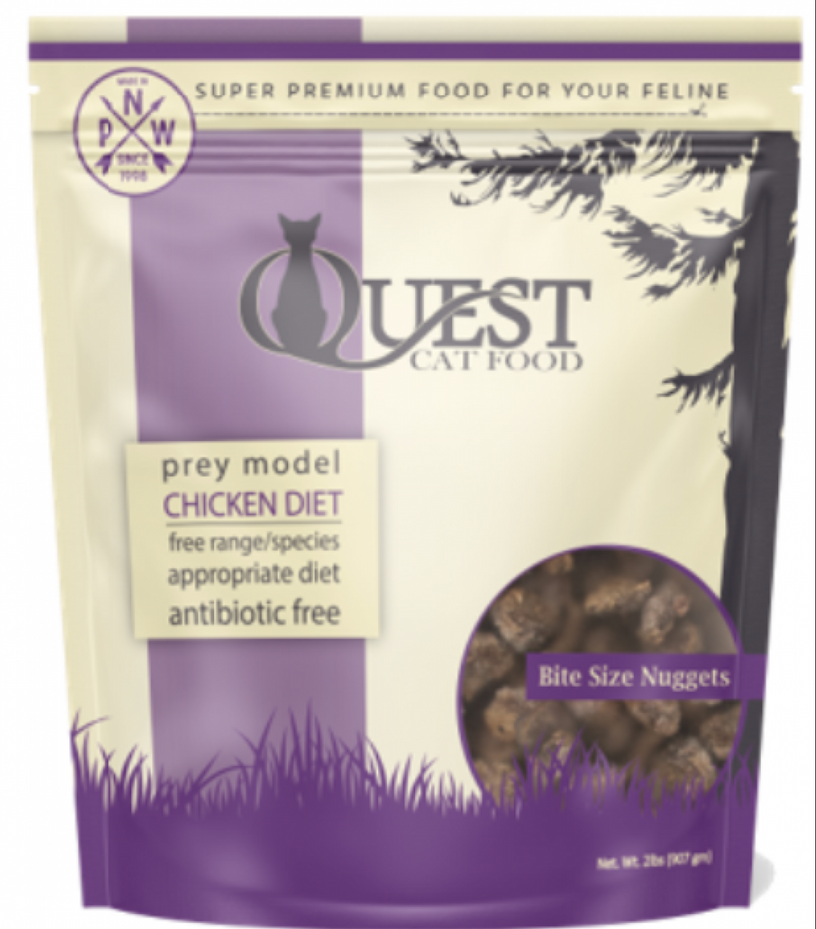
The affected frozen products are sold in resealable 2-pound beige bags with a purple stripe and are identified by lot codes MCD25350 and MCC25321, both carrying UPC 6-91730-17104-9. The lot code and best-by date are printed on the front of each bag. The company’s announcement lists inconsistent best-by dates for the two lots; consumers can verify affected product using the lot code and UPC.
The earlier freeze-dried recall covered lot No. C25288, with a best-by date of Oct. 15, 2027.
Thiamine, or Vitamin B1, is an essential nutrient for cats. According to the company’s announcement, a prolonged deficiency can produce a progression of symptoms beginning with decreased appetite, excessive salivation, vomiting and weight loss. Left untreated, the condition can advance to neurological signs including ventroflexion — a bending of the neck toward the floor — along with mental dullness, vision changes, wobbly gait, circling, falling and seizures. The company noted that thiamine deficiency is typically reversible if treated promptly.
“We take the safety and well-being of pets extremely seriously,” said Shantel Goodrich, a licensed veterinary technician and vice president of operations, in the FDA release. “Rather than risk any potential concern, we made the decision to remove the affected product from the market and replace it with products we are confident meet our nutritional standards.”
Go Raw said it first became aware of low thiamine levels in the Quest Chicken Diet in early February 2026 and immediately launched an investigation covering formulation specifications, raw ingredient suppliers and processing procedures. Retailers have been instructed to pull affected products from shelves, and the company said all existing inventory is being replaced with a newly reformulated product. Replacement inventory is expected to reach distribution channels around mid-March.
The frozen product subject to the expanded recall was distributed through retail stores in 20 states: California, Colorado, Florida, Georgia, Idaho, Illinois, Michigan, Minnesota, Montana, New York, North Carolina, Ohio, Oregon, Pennsylvania, Rhode Island, South Carolina, Texas, Utah, Washington and Wisconsin.
Cat owners who have purchased the affected frozen products should stop feeding them immediately and return them to the place of purchase for a full refund or a replacement product. Any cat displaying symptoms consistent with thiamine deficiency should be seen by a veterinarian immediately. Consumers with questions may contact Go Raw LLC at cs@gorawllc.com or by phone at (801) 432-7478, Monday through Friday, 9 a.m. to 4 p.m. MST.
This article is written with the assistance of generative artificial intelligence based solely on Washington Times original reporting and wire services. For more information, please read our AI policy or contact Steve Fink, Director of Artificial Intelligence, at sfink@washingtontimes.com
The Washington Times AI Ethics Newsroom Committee can be reached at aispotlight@washingtontimes.com.