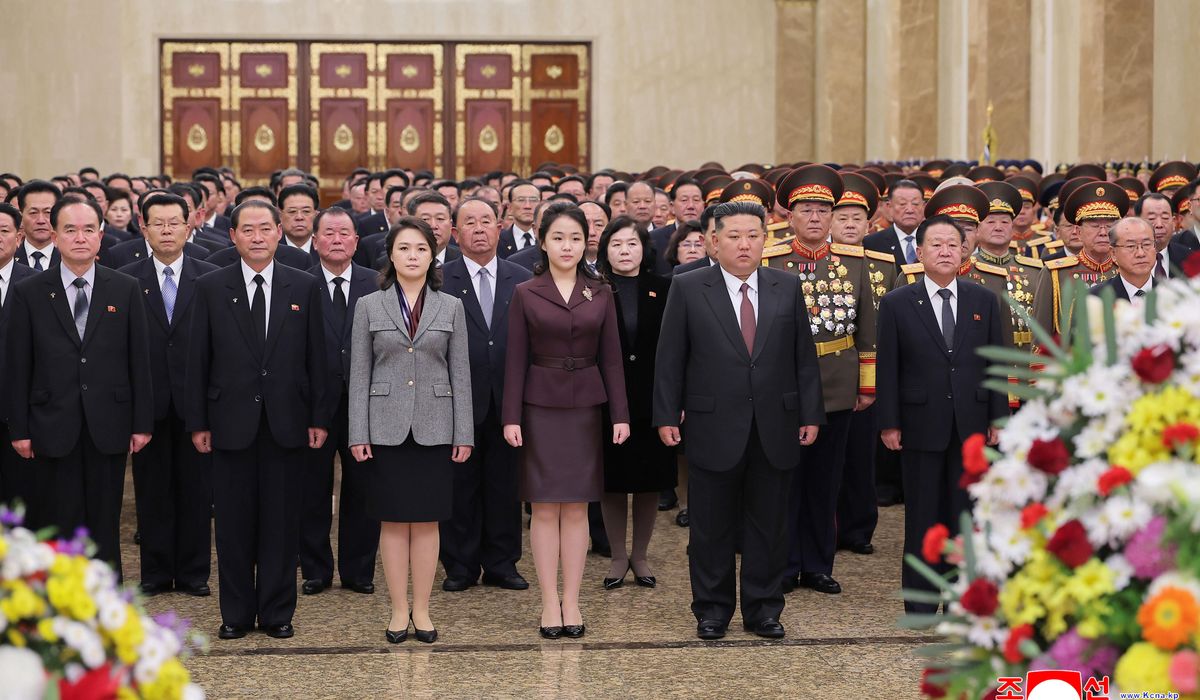
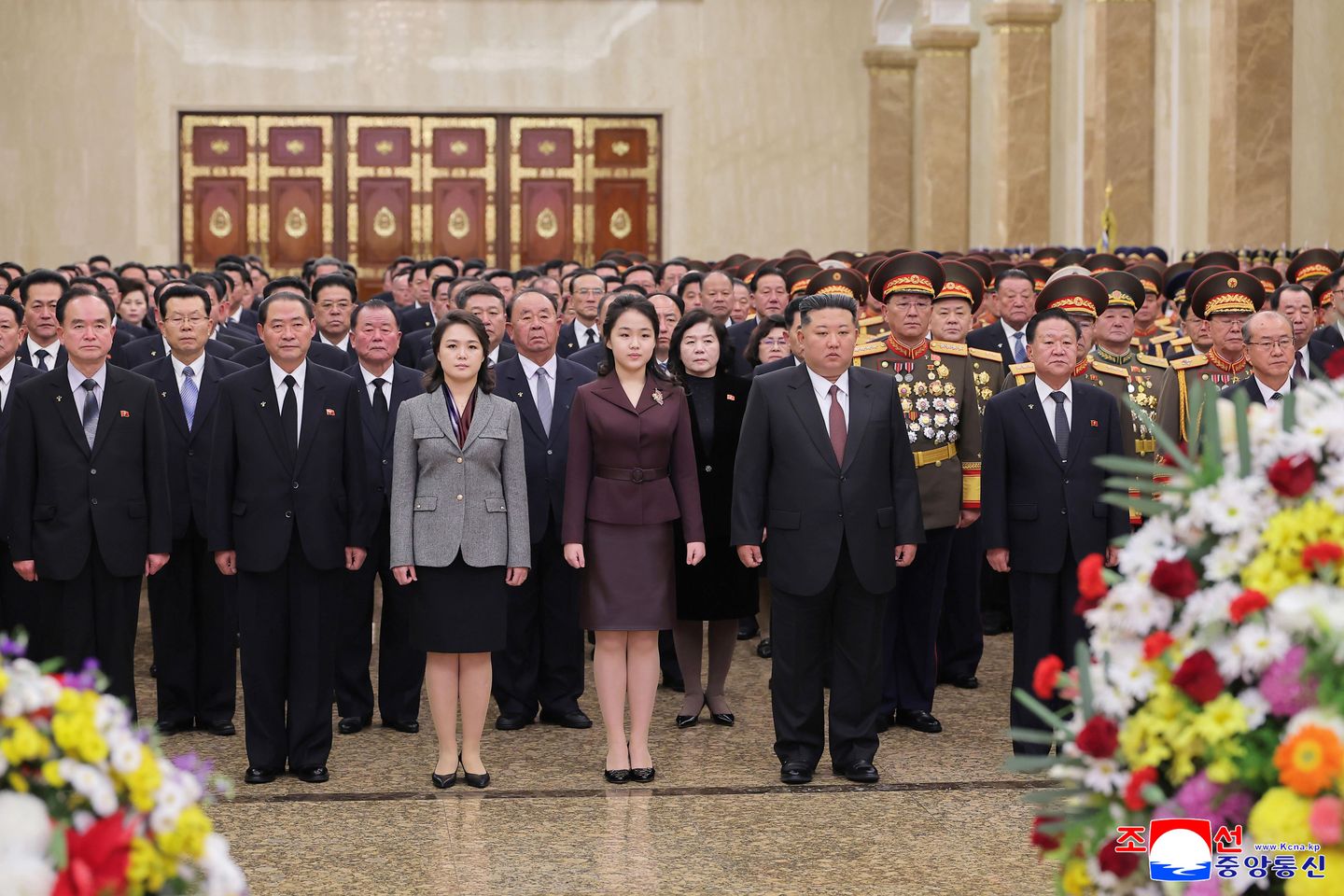
SEOUL, South Korea — North Korea’s Ninth Workers Party Congress kicked off Friday with widespread speculation that Party General Secretary Kim Jong-un will present his teenage daughter Kim Ju-ae as the nation’s next leader.
The move would break a tradition of male succession established at the 1994 death of North Korea founder Kim Il-sung, the grandfather of Kim Jong-un, and introduce the secretive, nuclear-armed dictatorship’s first female leader.
Ju-ae has so far been a no-show at the Workers Party Congress, which sets the nation’s policy goals for the next five years. Kim Jong-un was reelected party chairman, and his sister, Kim Yo-jong, was promoted to director of a party department.
Interest in Ju-ae’s possible succession soared after Feb. 12, when Seoul’s National Intelligence Service, or NIS, told the National Assembly its belief that she is being groomed as the fourth Kim and first female leader.
Ongoing speculation follows the landslide election victory of Japanese Prime Minister Sanae Takaichi on Feb. 8. Her status means women have led the region’s three democracies — South Korea, Taiwan and Japan — but not China or North Korea.
King Kims, not Queen Kims
Defying North Korea’s 1948 national roots in Soviet communism, Kim Jong-un heads a political hodgepodge. It mingles elements of socialism with quasi-market economics, in an ultra-militarized state under a family that presents as absolute male monarchs.
Unlike his father and grandfather, Mr. Kim has empowered a trio of females.
His sister, Kim Yo-jong, puts forth foreign policy positions in state media and acts as her brother’s aide during his overseas trips. During the congress, she was promoted from deputy director to director of the party’s Publicity and Information Department.
His wife, Ri Sol-ju, is the first consort ever to join a reigning Kim in a wide range of public events.
Ju-ae, aged 13 or 14, is the first child of either gender to be publicly presented by any North Korean leader.
Her existence became known when U.S. sports star Dennis Rodman and his delegation met basketball-loving Kim Jong-un and his close circle — then-baby Ju-ae included — in 2013.
Since then, the “Respected Daughter” has joined him at high-profile events, including a water-park opening, a state visit to Beijing, a ballistic missile test and a destroyer launch.
If she does inherit power, she will be breaking tradition.
For more than 2,000 years, Korean monarchs were all males, with just three exceptions during the Silla Dynasty, according to South Korean historian Suk Ji-hoon. Silla fell in 935 CE.
Male inheritance remains the practice in contemporary regional monarchies in Japan and Thailand — and the latter is a stated benchmark for North Korea’s ruling family.
Bradley Martin, author of the landmark work “Under the Loving Care of the Fatherly Leader: North Korea and the Kim Dynasty,” notes that Kim Jong-il, Mr. Kim’s late father, told U.S. stateswoman Madeleine Albright that he considered Thai royalty “a model” for governance.
That could point to Ju-ae’s role.
“There is room and use for more than one royal, and the Thais know the PR value of having a princess who’s beloved of the people,” Mr. Martin said. “Princess Sirindhorn’s popularity probably eased the way for the crown prince [Vjiralongkorn] when he, having some reputational issues, took over as king” in 2016.
A culture of male power
North Korea’s power structure is no model of gender equality.
Jenny Town, who directs 38 North, an expert-level data resource on North Korea, has identified only six females among hundreds of Pyongyang elites.
Outside the trio surrounding Mr. Kim, they are distant family members and Foreign Minister Choi Son-hui, she said.
Ms. Town believes Mr. Kim’s reveal of the women in his life stems from his desire to “craft an image of a family man” and “a more normal kind of leader” — particularly when travelling abroad.
This distinguishes him from his late father, a known womanizer. She also notes that the three women are “not a threat to him” as a male rival might be: “North Korea’s political structure is male-dominant,” she said.
Though under-represented in Pyongyang’s power politics, women led the marketization of North Korea’s economy and Ms. Ri is believed to be a savvy investor. That makes her and her husband “a ‘golden couple,’” said Ms. Town: “The wife is a merchant, the husband is in politics.”
Some pundits believe Mr. Kim has one, possibly two sons, likely younger than Ju-ae.
Per this narrative: Their sister provides cover while they are educated, and Dad has leisure to choose an ideal successor.
“Ju-ae was exposed by Rodman, so Kim could use her in the political narrative without giving away anything new,” said Ms. Town. “Part of the reason for secrecy is this gives flexibility and options of who fits what roles.”
Some believe a son, or sons, are following Dad’s educational path.
“If there is a healthy son with a dominant personality, I’m guessing the lad … may have been sent off to study in Switzerland while his sister stays home as the affectionate apple of the current ruler’s eye,” Mr. Martin said.
A source familiar with South Korean intelligence differed.
“If there is a son in Switzerland, we’d have a photograph,” he stated, citing global spooks’ sharp lookout for junior Kims.
Still, intelligence about North Korea often proves false, with supposedly “executed” persons suddenly returning to public life.
Speculation surrounding Ju-ae is ’NIS guessing,’ said Ms. Town.
Despite North Korea’s male-centricity, it acknowledges needs-based inheritance.
“We all know Kim Jong-il and Kim Jong-un were chosen, in part, due to a lack of suitable alternatives,” said Rob York, program director at think tank Pacific Forum. “If the [South Korean] intel is true, then KJU has already determined that Kim Ju-ae is the only option.”
One reason for the centrality of male political empowerment in the Sinic world is the import of Neo-Confucianism.
Though Communism claims to be a revolutionary philosophy, in East Asia neither Beijing nor Pyongyang has promoted women to state leadership, though two females have served as acting presidents in Hanoi.
In nations with similarly Confucian historical-cultural influences, but which have adopted democratic governance and capitalist commerce, women have sprouted heftier political muscles.
Park Geun-hye was elected president of South Korea in 2013, Tsai Ing-wen led Taiwan from 2016-2024, and Ms. Takachi has won the biggest majority granted to any Japanese government, ever.
“The Sinosphere, in the general sense, is largely patriarchal,” said Mr. Suk. “But the democratic countries at least make the womens’ voice heard a bit more.”
The trend may stem from systemic pragmatism.
“Both Koreas [and China] have noticed the benefits of Confucianism in instituting loyalty and service, not only within the family, but in the state and even within the business firm,” Mr. York said. “Capitalism, however, is a fundamentally transformative system, so South Korea, Taiwan and Japan have had to adjust accordingly.”