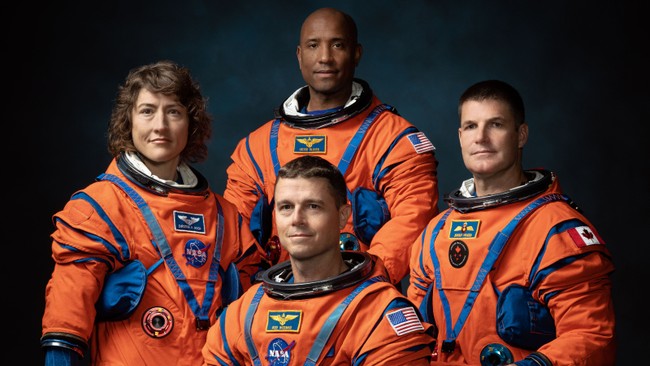
The target launch date for the Artemis II mission, which will take four astronauts on a trip to orbit the moon, is Feb. 6. Early next week, top brass at NASA will gather for a “go /no-go” decision on whether to launch.
It’s been a long time coming. NASA has been developing the Space Launch System (SLS), which includes two solid rocket boosters (SRBs) and the Orion capsule, for 20 years. Development costs have exceeded $29 billion (excluding the Orion capsule), and the entire Artemis campaign is projected to have cost $93 billion through FY2025.
There has been exactly one SLS launch in all that time. An unmanned Artemis 1 was launched in November 2022, traveling to the Moon and back. It was mostly successful.
I say mostly because there was a slight problem with the Orion’s heat shield. In its efforts to save a little money, NASA redesigned the heat shield “to increase manufacturing and installation efficiency.”
It isn’t supposed to look like this.
hey @grok this is a photo of the heat shield on the artemis 1 craft after it returned is this safe? pic.twitter.com/tfOjEb261z
— wagon (@swaginawagon) January 27, 2026
The heat shield is made of a material called Avcoat, which has been shown to be a reliable coating since the Apollo missions. However, it requires a tedious manufacturing process, is very expensive, and takes a long time to complete.
This is a project radically over-budget and years behind schedule (the original timeline called for the SLS to land humans on the Moon by 2020). NASA couldn’t afford the kind of tedious manufacturing process required for the original heat shield design.
They didn’t exactly cut corners, but the new design will take less time to manufacture and will be cheaper.
Is it safe?
“This is a deviant heat shield,” said Dr. Danny Olivas, a former NASA astronaut who served on a space agency-appointed independent review team that investigated the pockmarked heat shield from Artemis 1. “There’s no doubt about it: This is not the heat shield that NASA would want to give its astronauts.”
Still, Olivas said he believes after spending years analyzing what went wrong with the heat shield, NASA “has its arms around the problem.”
Upon completing the investigation about a year ago, NASA determined it would fly the Artemis II Orion capsule as is, believing it could ensure the crew’s safety by slightly altering the mission’s flight path.
In a statement to CNN on Friday, NASA said the agency “considered all aspects” when making that decision, noting there is also “uncertainty that comes with the development and qualification of the processes of changing the manufacturing process of the Avcoat ablator blocks.”
Basically, NASA said, there’s uncertainty involved no matter which course of action it takes.
“The reason this is such a big deal is that when the heat shield is spalling — or you have big chunks coming off — even if the vehicle isn’t destroyed, you’re right at the point of incipient failure now,” said Dr. Dan Rasky, an expert on advanced entry systems and thermal protection materials who worked at NASA for more than 30 years.
“It’s like you’re at the edge of the cliff on a foggy day,” Rasky said.
“I think, in my mind, there’s no flight that ever takes off where you don’t have a lingering doubt,” Olivas agrees. “But NASA really does understand what they have. They know the importance of the heat shield to crew safety, and I do believe that they’ve done the job.”
Altering the angle at which the spacecraft enters Earth’s atmosphere at 24,700 MPH should, in theory, reduce stress on the heat shield and keep the astronauts safe. While the physics of the plan is sound, this isn’t a theoretical exercise. And that has some experts outside of NASA worried.
“What they’re talking about doing is crazy,” said Dr. Charlie Camarda, a heat shield expert, research scientist, and former NASA astronaut.
Camarda — who was also a member of the first space shuttle crew to launch after the 2003 Columbia disaster — is among a group of former NASA employees who do not believe that the space agency should put astronauts on board the upcoming lunar excursion. He said he has spent months trying to get agency leadership to heed his warnings to no avail.
“We could have solved this problem way back when,” Camarda, who worked as a NASA research scientist for two decades before becoming an astronaut, said of the heat shield issue. “Instead, they keep kicking the can down the road.”
That’s what should be the most worrying aspect of the Artemis II mission. While NASA would never do anything to intentionally endanger the lives of astronauts, you have to wonder about the pressure to launch. The current heat shield for Artemis II was installed prior to the launch of Artemis I. It can’t be changed. If NASA is going to launch in 2026, it needs the untested fix of a change in re-entry trajectory to make that happen.
“Heat shields produced for future Artemis missions will be manufactured with upgraded techniques, NASA leaders revealed in a December 2024 news conference,” reports CNN.
Good to know. But what about the four astronauts who are going to orbit the moon next month? There will be a lot of crossed fingers at NASA when the Orion returns to Earth on Feb. 16.
Exclusively for our VIPs: Why Is Snow White?
The new year promises to be one of the most pivotal in recent history. Midterm elections will determine if we continue to move forward or slide back into lawfare, impeachments, and the toleration of fraud.
PJ Media will give you all the information you need to understand the decisions that will be made this year. Insightful commentary and straight-on, no-BS news reporting have been our hallmarks since 2005.
Get 60% off your new VIP membership by using the code FIGHT. You won’t regret it.