Most universities are ignoring the Trump administration’s insistence that diversity-themed essays in student applications violate the Supreme Court’s prohibition on race-based admissions.
About 19 campuses removed or reworded diversity essay prompts this fall after the Department of Justice invoked the high court’s June 2023 ruling in new diversity, equity and inclusion guidelines, the admissions consulting firm College Transitions estimated.
Hundreds of others made no changes to their diversity essays, according to multiple sources.
“There are limits to federal pressure in certain areas, like essays,” said Melanie Haniph, founder of College Admissions for Parents, a website that guides families through the application process. “I don’t think the government really wants to wade into legislating how a student characterizes themselves in a college essay and how individual admissions officers interpret it.”
Private schools that have adopted the Trump administration’s guidance on diversity essays include Brandeis University and Texas Christian University. Some leading public campuses, including the University of Virginia and the University of Michigan, also have complied with the administration’s policy.
“Numerous institutions have acceded to state and federal demands that violate longstanding practices, even when they are not compelled to do so by law,” said Tim Cain, a professor of higher education at the public University of Georgia, which has abolished the essays.
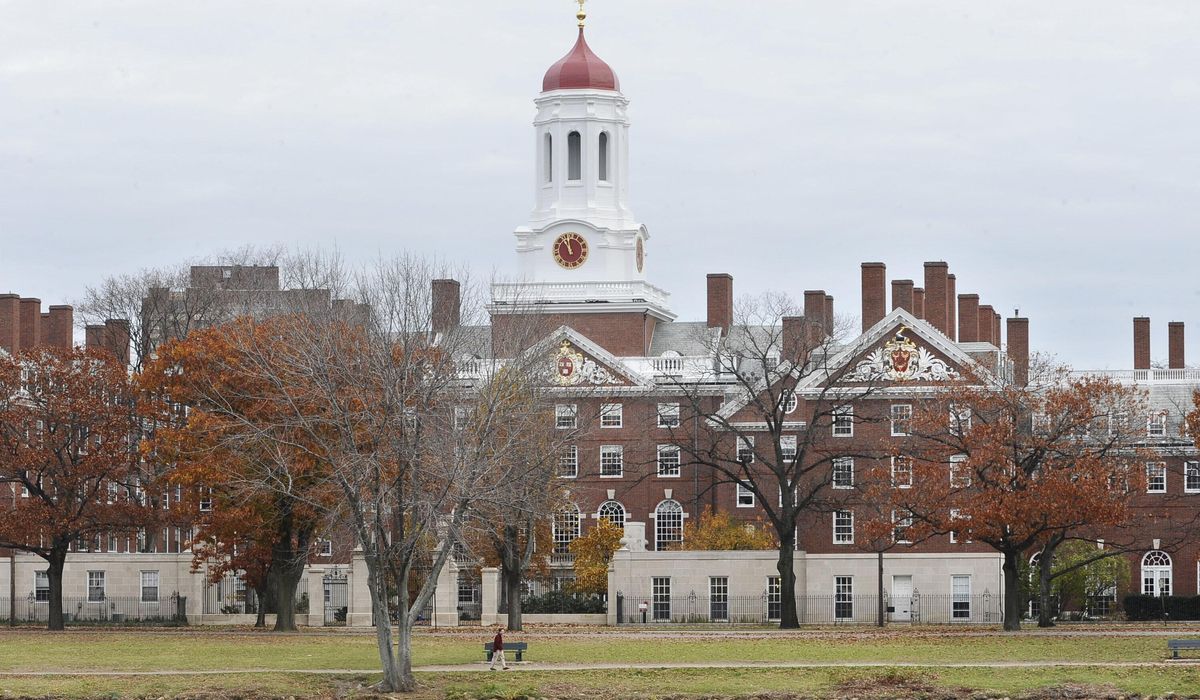
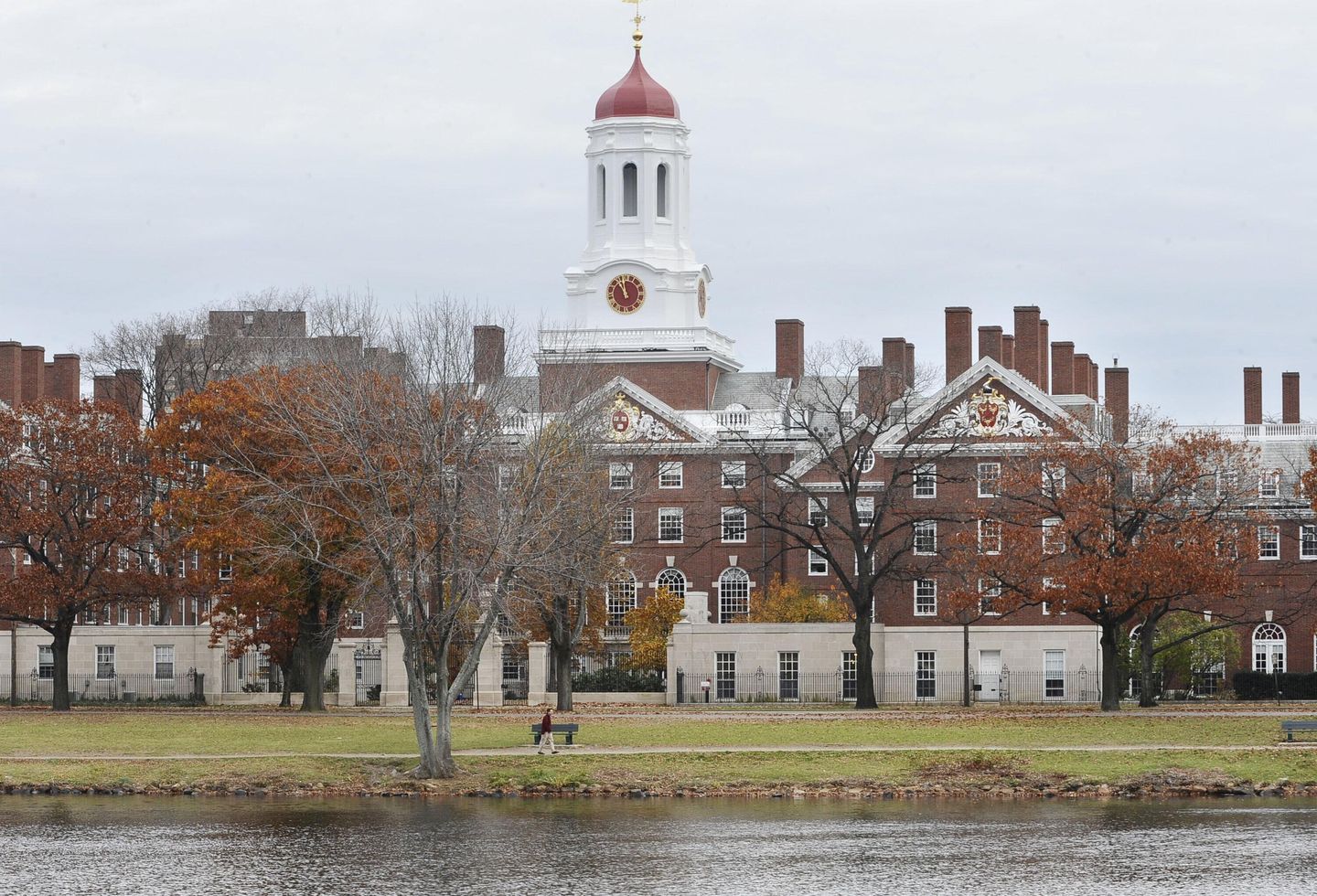
Meanwhile, Yale, Harvard and Duke are among the majority of universities that still ask applicants to reflect on personal identity topics in optional or required essays.
The Common Application, a single online form that more than a million students use to apply to roughly 1,000 colleges, allows students to discuss their personal backgrounds, identities and interests in one of its main essay prompts.
“Some schools caved [to the Trump administration], some have been defiant, and some have been finding roundabout ways to stay under the radar by changing up their language and still doing the work,” said Omekongo Dibinga, an advocate of the essays and professor of intercultural communications affiliated with American University’s Antiracist Research and Policy Center.
American, a private D.C. campus, invites applicants to share a one-page Community Impact Statement “explaining how your personal circumstances are of special relevance to your application.”
Colleges started adding diversity-themed essays to student applications in the 1990s as affirmative action faced political pushback. Advocates say they help identify leadership, service, and resilience qualities that do not show up in grade point averages.
Most of the essays ask prospective students to describe how their families, cultures or personal backgrounds would contribute to campus life. Some also invite reflections on diversity, anti-racism and social justice.
Proxies for race
Chief Justice John G. Roberts Jr. wrote in the majority opinion on the Supreme Court’s ruling that the end of race-based admissions should not be “construed as prohibiting universities from considering an applicant’s discussion of how race affected his or her life, be it through discrimination, inspiration, or otherwise.”
At the same time, he warned that universities “may not simply establish through application essays or other means the regime we hold unlawful today.”
Hundreds of colleges added or tweaked diversity-themed essays under the Biden administration, seeking a legal loophole in this language, education insiders say.
“If a school admits a student because of the racial background she reveals in her essay, it is obviously violating the decision,” said Jonathan Zimmerman, a professor in the history of education at the University of Pennsylvania, an Ivy League campus with optional diversity essays. “But it can admit the student because she wrote eloquently about that background.”
The Trump administration has insisted that diversity essays violate the high court’s ruling and civil rights laws against preferential treatment based on race.
The Justice Department guidelines released in July threaten to withhold federal funding from schools that use “proxies” for race in student admissions and faculty hiring.
Such proxies include asking applicants to furnish “diversity statements” or narratives of “overcoming obstacles,” the department said.
“The use of such questions designed to elicit race does violate the Supreme Court’s ruling, but proving it is another matter,” said William A. Jacobson, a Cornell University law professor and advocate for color-blind civil rights policies. “We all know that the schools are doing this to find out the race of students, but the proof would depend on the question and whether it is reasonably viewed as subterfuge.”
Nadine Jones, a New Jersey-based legal consultant and DEI advocate, disputed the Justice Department’s implication that diversity essays are equivalent to race-based admissions.
“Diversity is not synonymous with race,” said Ms. Jones, who earned her law degree from Howard University, a historically Black institution.
The Washington Times reached out to the Trump administration for comment.
Andrew Quinio, an attorney at the conservative Pacific Legal Foundation, said the administration deserves credit for pressuring dozens of universities to drop mandatory diversity statements from applications.
“Colleges might now be using proxies to discriminate, which is illegal, but this is still a significant retreat from the direct discrimination that colleges engaged in before,” Mr. Quinio said.
Future trends
Several higher education leaders predicted that most universities will continue to use diversity essays.
“College administrators, in general, still see diversity as an overall good,” said Ronald Rychlak, a former associate law school dean at the University of Mississippi, which does not solicit diversity essays. “So I expect them to work to keep it as a factor.”
“Courts have already limited some DEI-related orders, and many institutions are waiting to see how litigation and future guidance play out before making drastic changes,” added Len Jessup, former president of the public University of Nevada-Las Vegas, which does not require diversity essays.
Nora Demleitner, the immediate past president of St. John’s College in Annapolis, said most diversity essay prompts are optional and vague enough to pass legal scrutiny.
“They are broad questions about the meaningful relationships and experiences students have had, which can range from the lacrosse team to the choir, from the Boy Scouts to a volunteer opportunity at a local retirement home,” said Ms. Demleitner, whose private Great Books campus invites applicants to discuss their backgrounds.
The conservative physician advocacy group Do No Harm, which tracks U.S. medical school diversity policies, estimates that nearly half of them have embraced “holistic admissions” as a proxy for lowering academic standards to boost the number of racial minorities training as doctors.
“Schools will continue to do this unless or until judges or lawmakers force their hand,” said Ian Kingsbury, director of Do No Harm’s Center of Accountability in Medicine.