A minimum wage hike of up to $30 an hour is gaining popularity in swing states and major cities, and a left-wing coalition is now pushing Democrats to pledge a substantial wage increase to boost turnout in the midterm elections.
Democrats, left flailing after sweeping losses in the 2024 elections, have refocused their political message on affordability, a top concern among voters and an issue they believe President Trump and other Republicans have failed to address.
One faction of Democrats says the answer to high prices is significantly higher wages.
“If you are looking for a winning issue, this is it,” Democratic pollster Celinda Lake said Tuesday.
Ms. Lake is working with a coalition created to encourage Democratic lawmakers and candidates to support an hourly minimum wage of $25 to $30.
The coalition has launched a political action committee targeting Democrats who do not support the wage hike.
“The PAC is going after electeds who are not staying true to their word, or who are blocking wage increases and are supporting candidates who have shown over and over again that they will stand up for working people,” said Saru Jayaraman, president and co-founder of One Fair Wage.
Democrats are seizing on the affordability issue, with polls showing voters are disappointed with Mr. Trump’s handling of the economy, primarily because of persistently high living costs.
In a survey Ms. Lake conducted in October, a majority of voters in swing-state districts said they supported raising the hourly minimum wage to $25. Voters in 10 major cities, including New York, San Francisco, and Boston, expressed support for a minimum hourly wage of $30.
Ms. Lake said her polling showed a $25 minimum wage pledge would bolster voter enthusiasm and turnout for Democratic candidates in swing states, including Michigan, where Mr. Trump won by less than 1.5 percentage points in 2024.
“Affordability is a very hard thing to hold people accountable on,” Ms. Lake said. “It’s a very nebulous concept. But raising the wage to $25 an hour over a couple of years? That is not nebulous. That is concrete. That is something you can hold an elected official accountable for.”
The promise of a massive wage increase resonated in November with New York City voters, who elected little-known democratic socialist Zohran Mamdani over former Gov. Andrew Cuomo in the mayor’s race.
Mr. Mamdani pledged to enact an hourly minimum wage of $30 by 2030. Mr. Cuomo promised to raise the wage to $20 by 2027.
Minimum wages vary by state and locality, including $17.50 in the District of Columbia, $16.50 in New York City and $14 in Florida.
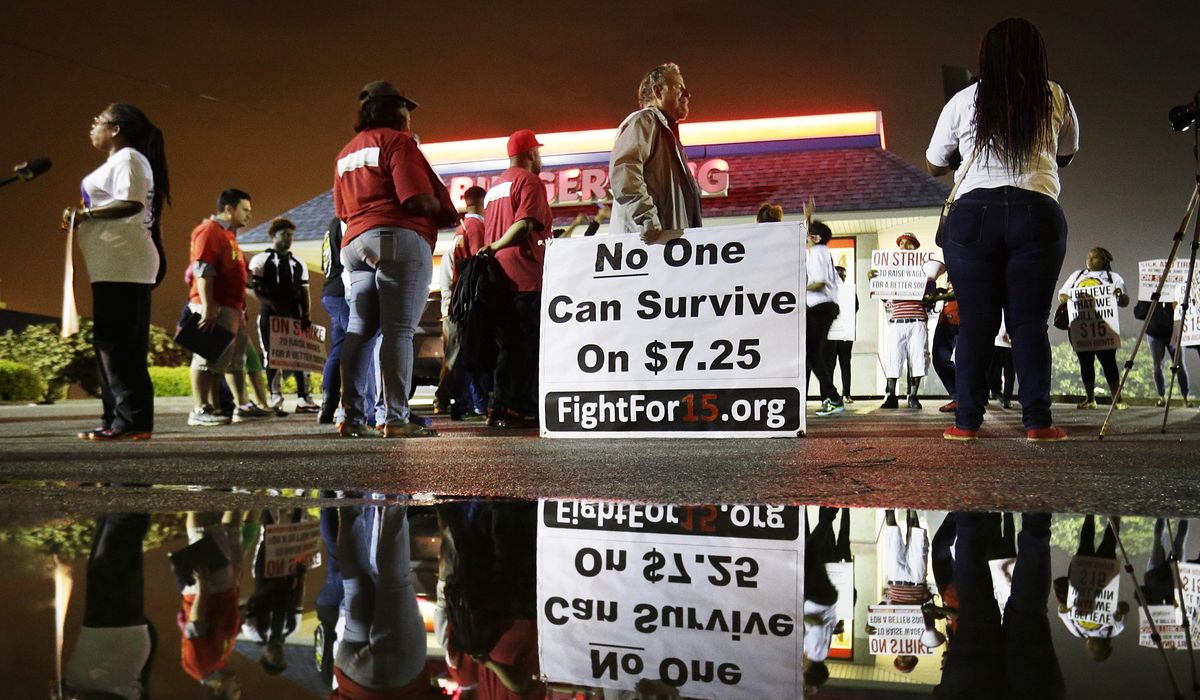
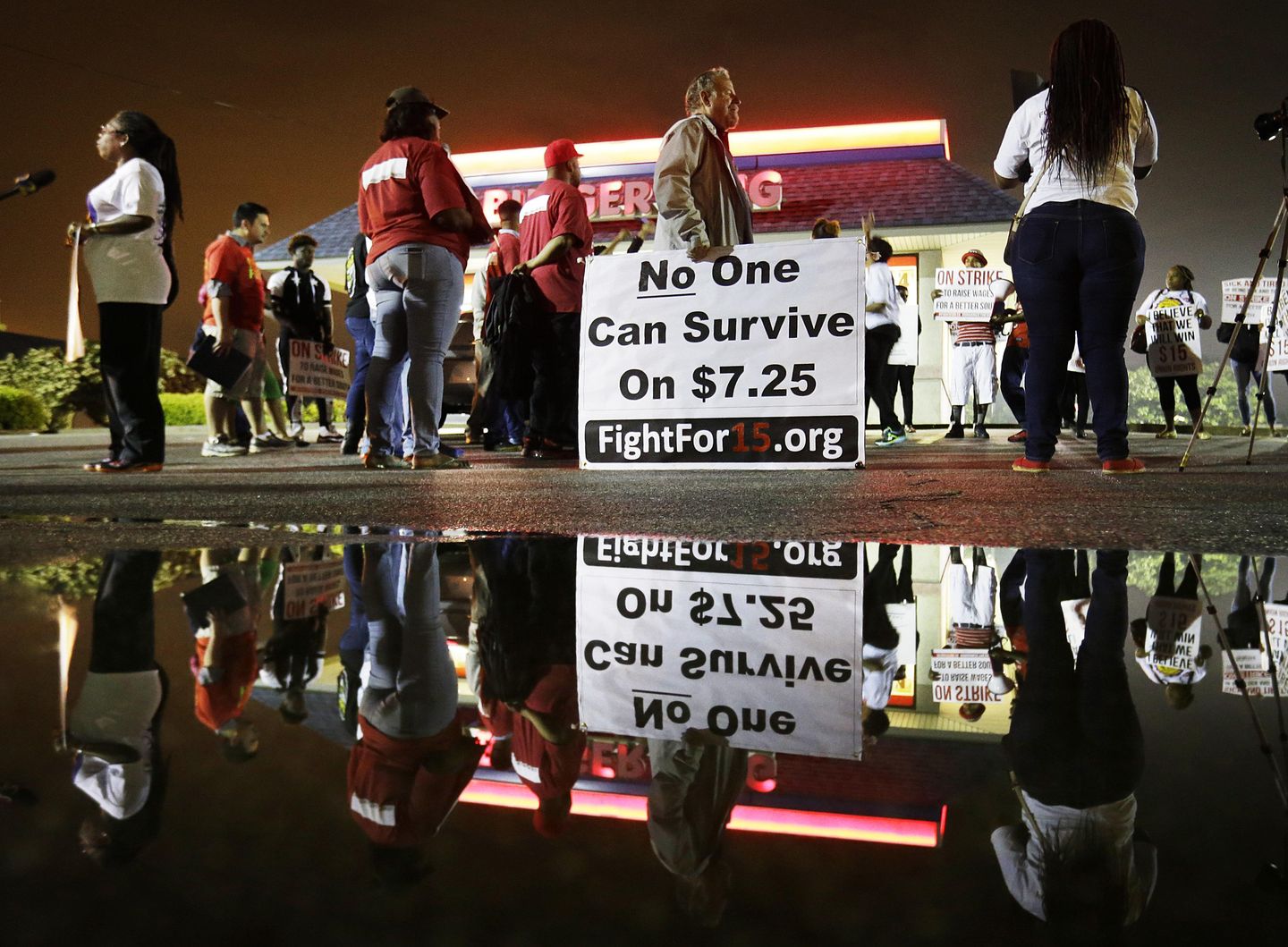
The federal hourly minimum wage for most workers anywhere in the United States is $7.25 and hasn’t been raised in more than 15 years. Alabama, Oklahoma, New Hampshire and 17 other states have set their minimum wage at the $7.25 federal rate.
Democrats in Congress call the federal rate “a starvation wage.” Their proposed legislation, sponsored by Sen. Bernard Sanders of Vermont and Rep. Robert Scott of Virginia, would raise the minimum wage to $17 an hour by 2030, which does not meet the wage hike coalition’s demands.
“The number is way too low,” Ms. Jayaraman said when asked about the proposal.
Neither Mr. Scott nor Mr. Sanders responded to an inquiry from The Washington Times.
Ms. Lake said polls show voters, even those outside big cities, want a much higher minimum wage and would support candidates who back a $25 rate.
“The data show that this is a voting issue, especially for Democrats and key turnout targets,” Ms. Lake said.
Republicans say they are focused on lowering costs. The party generally opposes a government-mandated wage increase, arguing it would reduce jobs and contribute to rising prices.
The tax cut bill Mr. Trump signed in July will allow service workers to keep more of their money by eliminating taxes on tips, Republicans said.
“Democrats are obsessed with fantasy-land economics that created the Democrats’ cost of living crisis in the first place,” said Mike Marinella, spokesman for the House Republicans’ campaign arm, the National Republican Congressional Committee. “President Trump and House Republicans are cleaning up their mess with real, tangible results for hardworking Americans like No Tax on Tips and No Tax on Overtime. Democrats voted against these commonsense relief measures and are instead dangling election-year promises that would jack up prices even higher.”
Last week, Mr. Trump branded himself “the affordability president” in a social media post that promoted his efforts to slash drug prices. Republicans are also touting much lower gas prices, which have dipped in some states to less than $2 a gallon.
In a speech delivered to McDonald’s executives last month, Mr. Trump signaled he would not support a massive minimum wage increase.
Mr. Trump told them, “You’re going to have to fight” efforts to raise the minimum wage.
He accused California Gov. Gavin Newsom of “laying siege on the minimum wage” and called on McDonald’s to “let your local congressmen, your senators, know about it.”
Mr. Newsom, considered a likely 2028 Democratic presidential candidate, raised the minimum wage to $20 an hour last year for fast food workers in large, chain restaurants.
Some analysts argue that the wage increase resulted in the loss of thousands of jobs in California and led to higher food prices. Edgeworth Economics reported in November 2024 that the law resulted in 9,600 to 19,300 lost jobs a year after the legislation was enacted. Pepperdine School of Public Policy and Beacon Economics estimated a decline of 23,100 fast food jobs in California because of the law.
However, the University of California, Berkeley, Center on Wage and Employment Dynamics and the Shift Project at Harvard reported that the law had no net impact on jobs or worker hours.