For decades in Pakistan’s Balochistan Province, state agencies have committed blatant violations of human rights which include extrajudicial killings and enforced disappearances of the Baloch people.
To this day, Pakistan’s security forces continue to target and forcibly disappear ethnic Baloch people. Late November, they reportedly raided a house in Hub Chowki and detained Nasreen Baloch before transporting her to an undisclosed location.
According to Dawn newspaper, Voice for Baloch Missing Persons (VBMP) chairman Nasrullah Baloch said Nasreen’s family has not been provided with any information about her whereabouts, causing severe distress and mental anguish among family members.
Earlier this past May, Mahjabeen Baloch, a student at the University of Balochistan, was taken into custody from Quetta Civil Hospital. Six months later, she still has not been produced in any court, and her family has received no information about her whereabouts.
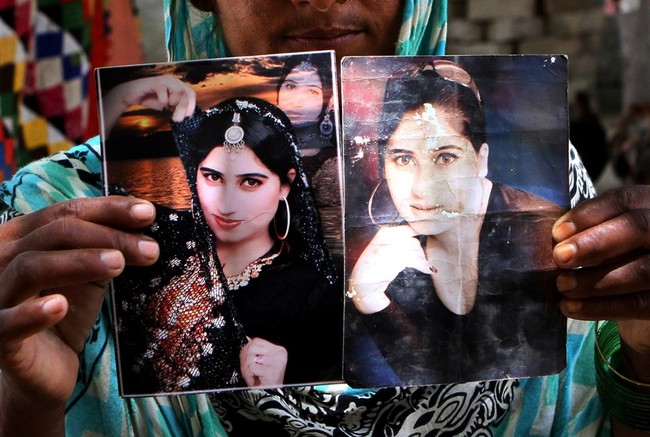
Balochistan has long experienced the trauma of enforced disappearances. Activists say that thousands of ethnic Baloch people were disappeared by Pakistan’s security forces during the last two decades. These individuals were detained without due legal process, or abducted, tortured, and murdered. Although some return after years, they are traumatized and broken. Many never return. Others are found in unmarked graves, their bodies so disfigured that they cannot be identified.
In 2023, the Association MIMAN, a nongovernmental organization in special consultative status to the UN, submitted the following written statement to the UN Secretary-General:
The enforced disappearances of Baloch individuals in Pakistan stand as a haunting reality that demands immediate attention, scrutiny, and intervention by the international community, especially the United Nations. This systematic violation of human rights, perpetuated with impunity, not only inflicts immense suffering on families and communities but also poses a significant threat to regional stability and peace.
In the region of Balochistan, Pakistan, enforced disappearances have become a haunting and recurring nightmare for countless families. Individuals are abducted by state forces or security agencies without due process, often for expressing their opinions or advocating for the rights of their people. The victims are frequently denied access to legal representation, held incommunicado, and subjected to torture, inhumane treatment, or even extrajudicial execution. Their families are left in agony, uncertain of their loved ones’ whereabouts or fates.
Many of the forcibly disappeared Balochs, particularly students, have been killed and dumped by personnel of Pakistani secretive agencies accompanied by personnel of Pakistani Army or Frontier Corps whereas thousands are still believed to be languishing in Pakistani torture cells. They have disappeared tens of thousands of Baloch people in the last two decades.
The families of the missing have endured immense hardships in their relentless search for their loved ones. They have undertaken long marches and staged protests in front of press clubs in major cities across Pakistan.
The Baloch people are a unique ethno-linguistic group spread between Afghanistan, Iran, and Pakistan. Throughout history, they have experienced marginalization within their respective countries.
The Pakistan-Balochistan conflict is a long-standing insurgency in Pakistan’s largest and resource-rich province. It is driven by Baloch people demanding greater political autonomy and control over resources. They are also frustrated by political marginalization, economic exploitation, and Pakistani state repression of Balochistan.
During the 1947 partition of India, Baloch sentiment resisted becoming part of Pakistan, yet the Baloch right to self-determination was never recognized by Pakistan. As researcher Natiq Malikzada puts it: “Oppressive security laws and secret detentions are being used to silence people who have only asked for fair treatment on their own land.”
Reports of enforced disappearances continue emerging from several districts of Balochistan. This prompts families and Baloch activists to stage demonstrations as they appeal to authorities for the return of the missing.
A group at Quaid-i-Azam University (QAU) is currently organizing a protest and sit-in against the disappearance of another Baloch student. A protest camp was established by the Baloch Students Council (BSC) against the enforced disappearance of a sixth-semester student, Saeedullah Baloch. In response, the administration of QAU suspended all academic activities.
Camp speakers highlighted that Saeedullah was forcibly taken away by unknown men in civilian dress on July 8. The incident occurred at the Islamabad Toll Plaza as he and a friend were travelling on a public bus. The protestors added that the abductors were accompanied by law enforcement, who offloaded the two from the bus.
In another incident, Pakistani security personnel allegedly carried out a late-night raid at a home in the Menaz area of Tehsil Buleda. They detained two Baloch brothers who have not been seen since. The men were identified as Zaheer, son of Rahim Jan, and Waseem, son of Rahim Jan. Relatives said both siblings were farmers with no political connections and demanded their immediate release.
In a separate development, Brahui-language poet Ata Anjum was reportedly taken from his residence in Mastung by Pakistani forces. His whereabouts remain uncertain.
Another recent case was recorded in Turbat, where Changaiz Imam, a warden at Central Jail Turbat, has been missing since November 11. His family said he left his home to report for duty but never arrived. His motorcycle is also untraceable. They urged the public to assist by sharing any leads.
Related: Pakistan Continues to Target Dissidents Abroad
Pakistan’s government rejects many of these reports. In 2018, in a rare moment of transparency, Balochistan’s Ex-Home Minister (Sarfraz Bugti) admitted that more than 13,500 people were arrested in Balochistan during a period of the first half year. Many arrested people are often killed in staged encounters and are falsely declared to be terrorists.
Meanwhile, the Voice for Baloch Missing Persons (VBMP) has said that despite 16 years of protests, sit-ins, and rallies, the issue of enforced disappearances remains unresolved.
Speaking at a press conference on Nov. 16, VBMP Chairman Nasrullah Baloch urged the Pakistani state and its institutions to realize that the use of force, extrajudicial killings, and disappearances of Baloch citizens would not improve the province’s situation.
Baloch acknowledged that the organization’s protest camp outside the Quetta Press Club has completed 6,000 days. “This camp has also been set up in various parts of Balochistan, as well as in Karachi and Islamabad. It is viewed across Pakistan and the world as a symbol of peaceful resistance,” he said.
He said that over the past 16 years, the organization has held protests, seminars, and long marches from Quetta to Islamabad, both on foot and by train. Baloch added that the VBMP had registered cases of enforced disappearances with Pakistan’s judiciary, inquiry commissions and the federal and provincial governments, and had presented evidence to the relevant authorities despite “serious difficulties and hardships.”
“False cases under the Anti-Terrorism Act were filed against me, General Secretary Hooran Baloch, Vice Chairman Mama Qadeer Baloch and others. We faced arrests and torture, but we did not abandon our struggle,” Baloch said.
He claimed that two VBMP district coordinators were extrajudicially killed during the movement, yet the campaign continued. Families of missing persons, he said, submit complete details of their loved ones to the VBMP, who then forwards the cases both to the Commission of Inquiry on Enforced Disappearances and the provincial government. Baloch noted, “Thousands of Baloch have been forcibly disappeared, and thousands have been killed extrajudicially, yet the situation continues to deteriorate. We appeal to the state to refrain from using force in Balochistan. The issue is political and must be resolved through political dialogue.”
In 2011, the Pakistani government constituted the Commission of Inquiry into Enforced Disappearances with a mandate to “trace the whereabouts of allegedly enforced disappeared persons” and “fix responsibility on individuals or organizations responsible.”
While it may have tracked down some cases, Amnesty International reported, the whereabouts and fates of a significant proportion of the cases remain unknown. The Commission has also been criticized for many failures, including adopting a flawed definition of enforced disappearance, using a limited scope of inquiry, providing inadequate protection to victims and witnesses, and failing to hold the perpetrators accountable.
Not a single person in Pakistan has been held accountable for enforced disappearances. There is no provision in the law that enables families to claim any reparations for their ordeal.
The 2023 MIMAN statement to the UN noted:
Enforced disappearances in Balochistan have catapulted Baloch people’s lives in the province. The state and its security agencies use of a ‘kill and dump’ policy for Baloch people and disappearances of students, lawyers, doctors, political activists is the issue world needs to be aware of, and there is urgent need to hold Pakistan responsible for the genocide committed against Balochs.
The alarming lack of accountability for enforced disappearances in Balochistan underscores a deeply troubling culture of impunity. Families’ relentless efforts to seek justice are met with indifference, misinformation, or outright denial by authorities. This erodes trust in the justice system and perpetuates a cycle of fear, silence, and helplessness among the Baloch population.
Pakistan is a signatory to international human rights conventions, including the International Covenant on Civil and Political Rights, which categorically prohibits enforced disappearances and guarantees the right to a fair trial and due process. The enforced disappearances in Balochistan not only breach these obligations but also undermine the credibility of the international human rights framework.
The persistent enforced disappearances in Balochistan pose a significant threat to regional stability and peace. The anguish caused by these disappearances fosters a sense of injustice and resentment, which can fuel extremism and violence. The region’s already fragile socio-political fabric is further strained, potentially destabilizing neighboring areas and endangering the broader peace in the region.
Get the news the mainstream media won’t tell you about. Support and follow PJ Media’s coverage of breaking news and cultural analysis. Join PJ Media VIP and use promo code FIGHT to get 60% off your membership.