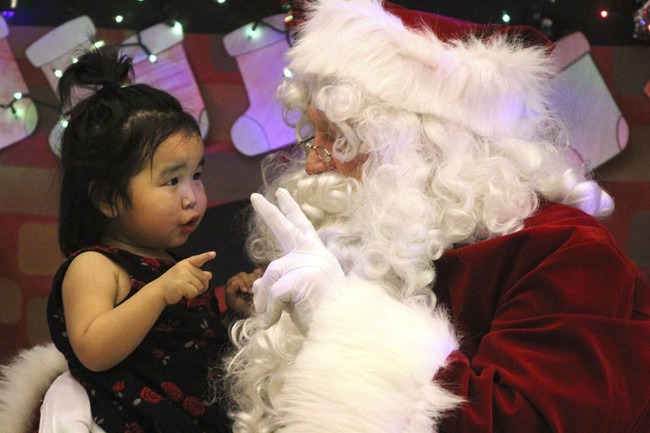
Santa Claus is magical. Everyone feels it, even if we rarely say it out loud — the way a child’s face lights up when she sees Jolly Old St. Nick, the quiet beauty of gifts arranged beneath a glowing tree, the glittering world of Christmas lights and color that turns the darkest month of the year into something bright. All of that wonder gets poured into one fat man with a magnificent beard and a million-dollar smile.
He isn’t real in the biological sense. And yet, in the way that matters, the way that binds families, awakens hope, and makes ordinary life feel touched by grace, he absolutely is.
How the Myth Began
Behind Santa stands St. Nicholas of Myra, a fourth-century bishop known for reckless generosity and a talent for saving the vulnerable. Over centuries, Europeans fused Nicholas with older winter gift-givers, from Odin the wandering bringer of gifts to Father Christmas, to the Dutch Sinterklaas who brought treats each December. Santa, or proto-Santas, have always been associated with generous gifts, the idea of sacrificing your own wants for the desires of others. St. Nicholas gave impoverished young girls enough money for dowries. Odin bore gifts to the deserving, and Sinterklaas brought candy and sweets to good boys and girls. And all this became fused around the idea of Christ’s birth, when wise men from the East brought the newborn child of God gifts.
By the time all those traditions reached American shores, immigrants carried a dozen overlapping winter figures that brought gifts in the dark, dismal, coldest season. And America did what America always does: blended them together and created something new.
Why Santa Became an American Icon
The young United States lacked deep-rooted legends. English heroes like King Arthur and Robin Hood belonged to another country. France had Roland and Joan of Arc. Germany had Siegfried. Russia had Ilya Muromets.
America had the Founding Fathers — too recent, too political, too human to become fairy-tale figures. Children need heroes softened by time, not preserved in bronze. A benevolent, fantastical gift-bringer dressed in bright red and living happily in the coldest part of the world was exactly the right myth at exactly the right moment. He became a symbol of abundance, generosity, optimism, and community. Only in America could a myth like this, centered around a saintly historical figure, evolve into a global operation with a toy factory, a workforce, flying reindeer, and an annual logistics miracle. Only in a high-trust culture like ours could children believe a stranger would surreptitiously enter their home to deliver joy.
That belief is not naïve. It is aspirational. It’s absolutely perfect for America. And it has become critically important for the healthy development of our children.
Why Children Need Figures Like Santa
Children don’t live inside a logical, literal world. They live in the mythic-imaginal stage, where reality and wonder overlap. Their minds learn through story, symbol, and ritual. Santa speaks the language their hearts already understand. Santa teaches children that unseen goodness exists — that the world contains more than what their senses confirm. This is their early training in transcendent thinking, the foundation for faith, imagination, gratitude, and meaning. Santa prepares a child to believe in things that transcend reality without abandoning reality.
It’s also a great way to teach moral cause and effect. “Naughty or nice” isn’t surveillance. It’s scaffolding. Children learn that choices matter, character matters, and behavior carries consequences. Santa gives them a moral framework simple enough to hold, yet true enough to grow into.
And it teaches them quietly that symbolic truth and literal truth are still both truth, that something can be true in meaning, even if it is not literally true. That prepares them for literature, faith, national myth, metaphor, and even moral reasoning. Adults who don’t learn about symbolic truth as children often collapse into cynicism or literalism. Santa inoculates against both, helping adults preserve a sense of wonder even into old age.
When a child receives gifts from Santa, they’re learning about gratuitous abundance — gifts not earned but given because of love. Later, when the child becomes a giver instead of a receiver, the lesson deepens: generosity is not depletion. It is fulfillment. And of course, when they are transitioning to a giver, they have discovered that Mom and Dad were behind all that Santa stuff, which teaches a deeper lesson: that magic was created by the people who love them the most. That those people cared enough to find out what they really wanted, then sacrificed, sometimes working long hours to earn extra money to buy those gifts or spending precious time to make them, then stayed up late to wrap and place them under the tree in secret. Learning the truth about Santa is a rite of passage for American teens.
When children learn the truth, they don’t lose Santa. They inherit him. They move from enchantment to participation, from receivers of magic to co-creators of it. That shift is at the core of human maturity.
What Adults Receive from Being Santa
Children aren’t the only ones shaped by Santa Claus. Adults gain something too, something they often can’t name. When a parent builds Christmas morning for a child, or when a stranger buys a gift for someone on the Angel Tree, they step briefly into the role of the unseen giver. Children receive magic; adults create it, and creation restores a sense of wonder adulthood usually erodes.
By becoming Santa, adults are reconnected to their own childhoods. Even those who grew up without much magic feel a kind of healing in providing it for someone else. Being Santa lets them become the person they needed, or the person they remember with love. And it gives adults a simple way to express affection through effort rather than words. Wrapping gifts, assembling toys, filling stockings — these actions carry love without requiring vulnerability.
Being Santa reminds adults of their better selves. Generosity, especially toward children they will never meet, renews their sense of hope and participation in something larger than their own lives. Santa may be a myth for children, but adults keep him alive because the act of giving transforms them too.
Why It All Matters
Santa survives because children need a figure who embodies joy, generosity, wonder, and the possibility that not everything important can be proved, measured, or touched. Santa is the doorway through which children first learn to believe in transcendent things — love, goodness, grace — before they have the vocabulary to name them. He is practice for bigger truths.
So the next time you hear an adult say, “We don’t do Santa in our house,” or, “It’s cruel to let children believe in him,” think back to Miracle on 34th Street. Think about what that story understood: that children need magic and myth the way they need air and sunlight. Think about how the whole Christmas season glows brighter because we let one benevolent, impossible figure inhabit it. And think about how the act of giving without expecting thanks in return can transform you, make you a better and more joyful person.
And then smile, knowing the truth: Santa may not walk the earth, but the world and our children are better for believing in him while they can.