“After these things, there was a feast of the Jews, and Jesus went up to Jerusalem… Now that day was the Sabbath” —John 5:1, 5:9
“All of the holidays will be nullified in the world to come except the holiday of Purim.” —Midrash Mishlei 9:2, 8th century
Whether you believe that Jesus was the physical manifestation of God or if you believe that he was a teacher and rabbi, there is one thing about Jesus that every human being on this planet can agree with: he was born, lived, and died as a Jew. Jesus was born to a Jewish mother; he was circumcised (Luke 2:21), and he observed the laws, traditions, customs, and holidays of Judaism throughout his entire life.
One of those holidays that he observed begins this Monday night: the holiday of Purim. It is based on the Book of Esther, and tells of the defeat of the Persian tyrants 2,500 years ago through the combined efforts of people and the miracles of God.
The entire Book of Esther is recited, and we learn and remember about God’s miracles, the defeat of evil, and the ultimate victory of the Jews against all odds. The story takes place in Shushan, the capital of the ancient kingdom of Elam, and then the capital of the Achaemenid Empire founded by Cyrus the Great. Today, it is known as the city of Shush, and is in the southwest region of Iran, close to the borders of Iraq and the Persian Gulf.
The tale of Purim involves an evil minister named Haman, a descendant of Amalek, who is the de facto ruler of the kingdom as the actual king, Ahasuerus, is perpetually inebriated. Haman hates the Jews of Shushan because they will not bow down to him, and he convinces Ahashuerus to declare that on a certain day, the Jews of the kingdom will all be killed. Through a combination of the prayers of the Jews, the actions of Esther, a Jewish wife of Ahashuerus, and a series of miracles, the Jews are saved. Haman is deposed and killed, a Jew named Mordecai replaces him as the king’s top chieftain, and the Persians who were planning on slaughtering the Jews were themselves killed.
A holiday remembering how God destroyed the Persian military, saved the Jewish people, and toppled the Persian regime seems especially appropriate to remember in these challenging times with the modern regime of Iran.
According to the Gospel of John, Purim was a Festival that Jesus observed diligently as well. John 5:1-9 says that Jesus went to Jerusalem for a festival on a Sabbath, where he performed the miracle at the Pool of Bethesda. The only festival that fell on a Sabbath between 25 AD and 35 AD was Purim, which was on a Sabbath in 28 AD. It would have been an especially important holiday to him as the holiday centers around God delivering his people, which was a large part of Jesus’ ministry.
Purim is a far more important holiday in Judaism than most people realize, and the ancient texts say that Purim is the only holiday in the Jewish calendar that will still be observed in the world to come. The ancient Persians wanted to kill all the Jews (sound familiar), but God performed the required miracles so that the exact opposite happened, and the evil Persian leaders were killed and replaced with a new regime. This holiday reminds us that our greatest ally is God. It was the prayers of the Jews of Shushan and the actions of Queen Esther that inspired God to save the people from the tyranny of Haman, and it is always God’s intercession on our behalf that protects and saves us.
And more than any time in the last 2,500 years, it seems as if the circumstances of today are all too parallel with what was happening in ancient Shushan.
Iran, controlled by the most extreme of Islamic clerics, has repeatedly said and demonstrated that it is not willing to give up their nuclear development program or its ballistic missiles. It has now been discovered that they are even intent upon growing both programs, and are closing a purchase deal with China to buy CM-302 anti-ship cruise missiles. This would, God forbid, pose a serious threat to U.S. naval forces, as well as increase their offensive capabilities. Between the threats of both Iran and its proxies of Hamas, Hezbollah, the Houthis, and more, Israel is facing a threat to its existence. Similar to the story of Purim, the Jews are again being threatened with destruction by an aggressive and evil regime of Iran.
Ultimately, everything is in the hands of God except for our own awe of God. Israel is under threats that rival anything since the time of Purim 2,500 years ago. But this time it is not just the Jews of Shushan, but all of Western Civilization that is being threatened by the evil Haman of our time, the Iranian Islamic regime led by the Ayatollah. Israel is only the front line of defense in the greater war of Islam, led by the Iranian clerics, against all of Western Civilization.
It is because of this existential threat that all of us, Jew and Christian, need to recount the story of Purim and the Book of Esther. As Jesus did 2,000 years ago, we should gather together in communities and hear the tale, remembering how our prayers and actions truly can lead to the Salvation from God. We need to rejoice together that God saved our people from Persian tyrants 2,500 years ago and will continue to save us all from the tyranny of modern Iran today.
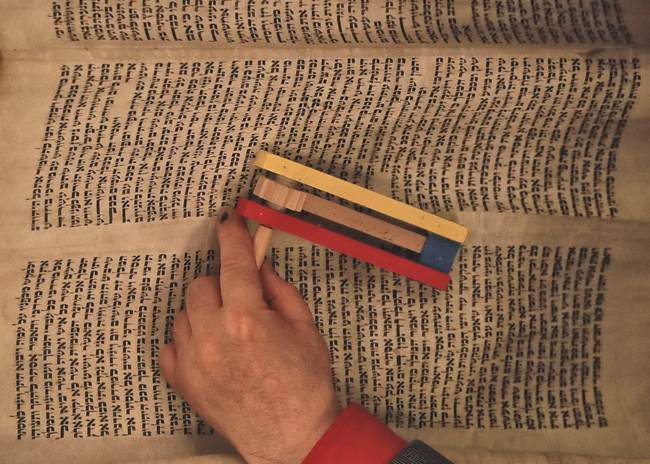
So find a synagogue in your area and go listen to the reading of the Megillat Esther. Celebrate the defeat of the ancient Persians with the traditional pastries of Hamentaschen, the drinking of wine or schbapps, and have fun with the groggers (noisemakers) that we use to celebrate. In rejoicing together about the ancient victory of God over the tyranny of Haman, we draw down God’s blessings so that we, too, like our ancestors in Shushan 2500 years ago, will rejoice in the defeat of the Iranian regime.