NEWS AND ANALYSIS:
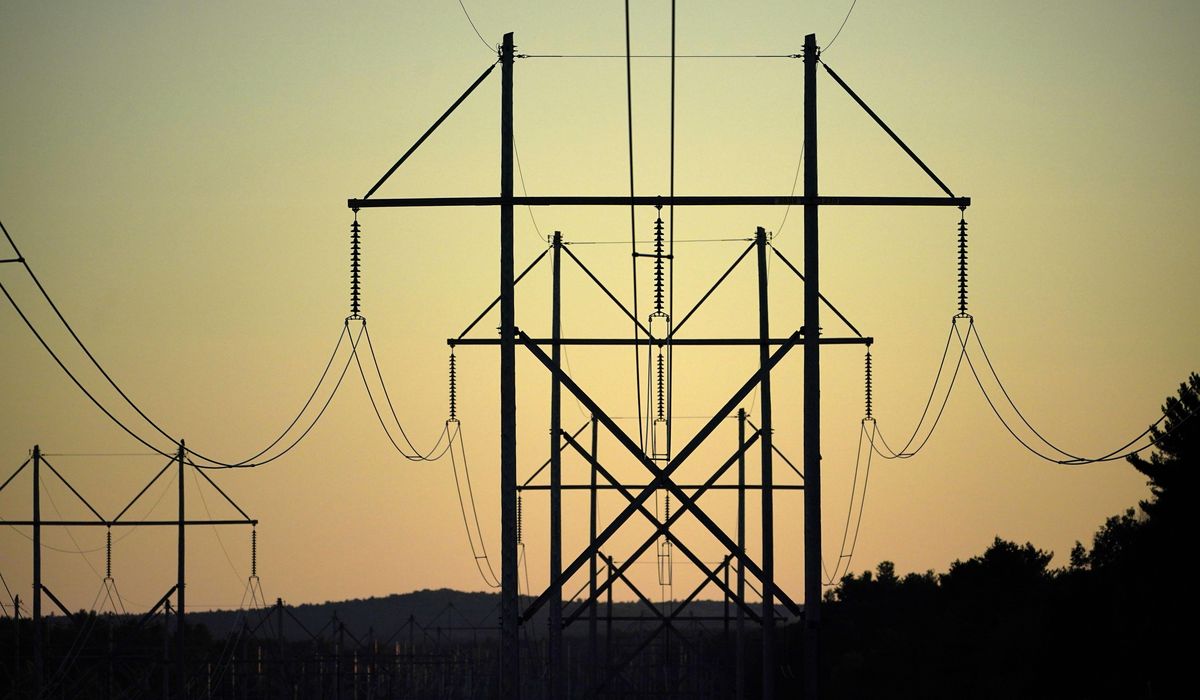
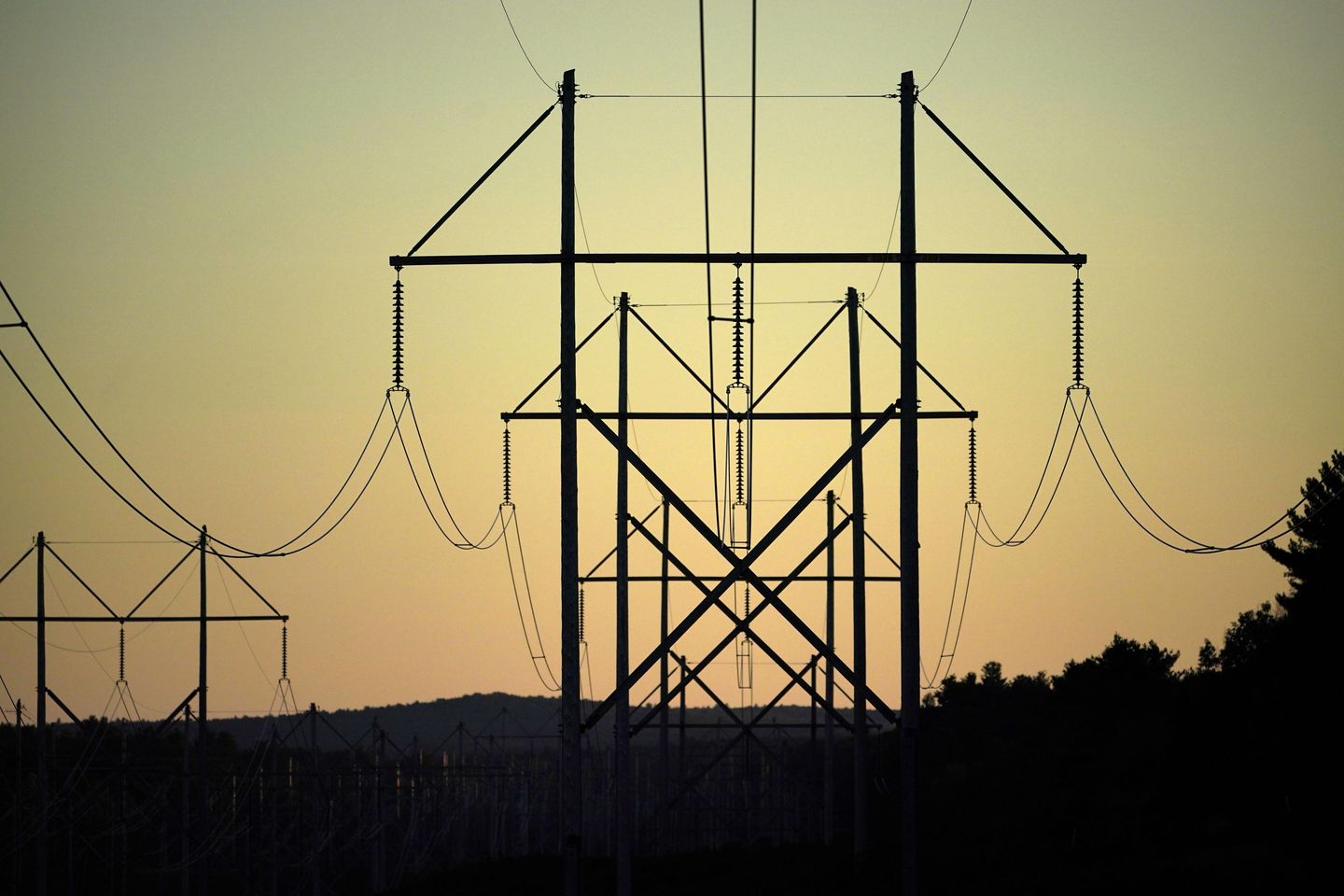
China’s government has penetrated networks used to control the U.S. electric grid and could use the covert access to shut down the flow of electricity to Americans in a crisis or conflict, grid experts warned Congress this week.
Zachary Tudor, associate director at the Energy Department’s Idaho National Laboratory, told a House subcommittee hearing that the nation is facing “an unprecedented wave of cyber threats directed at our critical infrastructure.”
In addition to conducting cyber espionage to steal vital technology and information, China’s government-linked hackers are “pre-positioned” to conduct cyberattacks on the electric grid and other critical infrastructure, Mr. Tudor told the House Energy and Commerce energy subcommittee on Tuesday.
The Chinese cyber group dubbed Volt Typhoon in 2023 was found to have infiltrated U.S. utility networks with the goal of “long‑term positioning for disruption,” he said.
The operations target both information technology systems and operational control networks under Beijing’s strategy of using asymmetrical warfare. The strategy calls for “winning without fighting or achieving strategic objectives by undermining an adversary’s confidence and capabilities without engaging in direct conflict,” Mr. Tudor said.
“America’s adversaries are not waiting. They are already embedded in our systems, mapping our infrastructure, and preparing to disrupt critical operations at a time of their choosing. The threat is no longer hypothetical,” Mr. Tudor said.
“Cyberattacks on energy infrastructure are a daily reality and a growing strategic weapon,” he said.
Two other Chinese groups, Salt Typhoon and Flax Typhoon, are part of the wide-ranging activities, he said.
Russia, Iran and North Korea also are conducting similar cyber operations and also pose threats, he and other experts testified.
Sharla B. Artz, vice president for security and resilience policy at Xcel Energy, a utility operating in eight states, also testified to the growing threats to the electric grid from China.
The goal of the cyberattacks is to disrupt operational controls, she said, noting that the danger is increasing.
“We have seen an uptick in threats to critical infrastructure organizations across all sectors,” Ms. Artz said. “The threat is real, it is advanced and it is persistent.”
Michael Ball, chief executive for the Electricity Information Sharing and Analysis Center, said no loss of electricity has been linked to a cyberattack to date but threats are mounting.
China, he testified, poses some of “the largest and most dynamic threats, focusing on persistent access and espionage with the potential for future disruption,” Mr. Ball said.
“The sheer scale and persistence of Chinese cyber activities demonstrated in the various Typhoon campaigns lends credence to their ambition to hold North American critical infrastructure at risk,” Mr. Ball said.
“The technologies targeted by Salt Typhoon are prolific across critical infrastructure sectors, including the electric sector, which makes repurposing tactics, techniques and procedures learned targeting one sector easier when targeting the next.”
Mr. Ball is also senior vice president of the North American Electric Reliability Corp., an umbrella organization of utilities that critics have said in the past opposed strengthening grid security over cost concerns.
Harry Krejsa, director of studies at the Carnegie Mellon Institute for Strategy & Technology, testified that the artificial intelligence boom is creating unprecedented demand for electricity. That is leading to an expansion of the vulnerable electric grid, he said.
“With only 10-20% of our electricity system under federal cybersecurity oversight, a rapidly diversifying industry ecosystem, and an outdated governance apparatus too fragmented to address systemic vulnerabilities, the status quo is dangerously untenable for both the AI race and our critical services,” Mr. Krejsa said.
“Left unguided, this build out risks entrenching our dependence on adversary-controlled supply chains and expanding our attack surface at the very moment Beijing is positioning to exploit it,” he said.
Rubio defends UFO film remarks
Secretary of State Marco Rubio is standing by statements he made several years ago, questioning whether unidentified flying objects (UFOs) may be otherworldly visitors.
Mr. Rubio said on Fox News Channel that his comments in the new documentary “Age of Disclosure” appear to have been selectively edited.
The documentary quotes some 30 mainly former officials in alleging a decades-long cover-up by the U.S. government regarding UFO crashes, technology and even alien bodies. The CIA and the Pentagon supposedly directed the cover-up.
Mr. Rubio is the most prominent of those interviewed and stated in the film that there have been “repeated instances of something operating in the airspace over restricted nuclear facilities … is not ours and we don’t know whose it is.”
Asked about the remarks on Tuesday, Mr. Rubio said, “I’m not disavowing that. It was an interview that was done almost, like, maybe three or four years ago when I was in the Senate.”
The film, however, identifies Mr. Rubio as secretary of state.
Mr. Rubio said he was describing allegations made by people who had come forward, including military pilots and senior military officers who stated that government UFO programs existed that “not even presidents were made aware of.”
“So I was describing what people had said to me, not things that I had firsthand knowledge of in that regard,” Mr. Rubio said. “A little bit of selective editing, but it’s OK because you’re trying to sell a show there.”
The secretary said he has not seen the documentary but said, “There have been things that fly over the airspace, restricted airspace, be it where we’re conducting military exercises or the like, and everyone in the government says they’re not ours.
“And so what I worry most about, just me personally, is that some adversary — another country, for example — has developed some asymmetric capability for surveillance or the like that we just are not prepared for,” he said.
“We’re looking for missiles and fighter jets, and they’re coming at us with drones and balloons.”
Mr. Rubio noted that the North American Aerospace Defense Command began searching for high-altitude balloons in 2023 after China sent a spy balloon that went largely undetected across the U.S.
“All of a sudden they spotted a bunch of balloons flying overhead, and 90% of them were innocent things; a couple of them were Chinese,” he said.
“But we never looked for balloons because our radars aren’t trained for that,” he said.
Mr. Rubio said some of the claims made by naval aviators and people with high-level security clearances were “pretty spectacular,” although he said he is not calling them liars.
“So we have people with very high jobs in the U.S. government that are either (a) liars; (b) crazy; or (c) telling the truth, and two of those three options are not good. I don’t know the answer,” he said.
The Pentagon’s All-Domain Anomaly Resolution Office, which investigates what it calls unidentified anomalous phenomena, has stated it found no evidence of extraterrestrial origins for the phenomena.
Book: China stole Tesla auto driving tech
A Chinese electric vehicle company obtained one of Tesla’s “crown jewels” — the source code for its auto driving technology — through a former company employee, according to a new book by two former Defense Intelligence Agency officials.
Tesla founder Elon Musk in 2018 reached a deal with China to open a major factory in Shanghai, which was the first foreign automaker that did not require a Chinese partner.
“While Tesla was breaking ground in Shanghai, China was preparing to dig into the IP that gave Tesla the competitive edge over its global rivals,” the new book, “The Great Heist,” states.
The book published this week is by former Acting DIA Director David Shedd and former DIA case officer Andrew Badger. It details China’s massive economic and technology espionage and acquisition strategy that the authors say has cost the U.S. between $250 billion and $600 billion annually in lost intellectual property.
The Tesla employee in the stolen technology case, Cao Guanzhi, walked out of the Tesla headquarters in Silicon Valley with technology for the electric vehicle’s artificial intelligence-powered driver assistance software, the book states.
Mr. Cao then resigned and went to work for the Chinese electric vehicle startup called XMotors, a major Tesla competitor.
Tesla security officials later found out that Mr. Cao uploaded complete copies of Autopilot, Tesla’s software, to his personal iCloud account. The company called in the FBI, the book said.
One Tesla official is quoted in the book as saying that the FBI warned the company, “If you don’t want your intellectual property stolen, don’t open a factory in China.”
Tom Zhu, head of Tesla China, is also quoted as saying that if “we’re putting stuff in China, we have to be essentially OK with the Chinese getting it.”
Mr. Musk responded that greater speed would mitigate the loss of proprietary secrets.
“We’re more innovative,” Mr. Musk said. “We’ll move faster than them. By the time they catch up, we’ll be 10 steps ahead.”
Mr. Musk was said to be worried most of all about losing “$1 billion thumb drive” with Tesla secrets — which is basically what took place with the loss of Autopilot.
A Tesla spokesman did not immediately return an email request for comment.
Tesla sued Mr. Cao in 2019 over the stolen technology and settled for an undisclosed monetary payment in 2021.
XMotors electric cars come with an advanced driver assistance system known as XNGP that can handle tasks such as highway driving, parking, lane changes and navigating city roads — capabilities similar to those in Teslas.
Lawyers for Mr. Cao told Reuters at the time of the settlement that he had never accessed any Tesla data after leaving Tesla, and did not provide Tesla information to XMotors, a company he later left.
• Contact Bill Gertz on X @BillGertz.