Over the years, when clearing stones, a farmer doesn’t see the daily progress. It’s only when the first straight trench appears that the labor reveals its purpose.
That’s how Samuel Morse rolled.
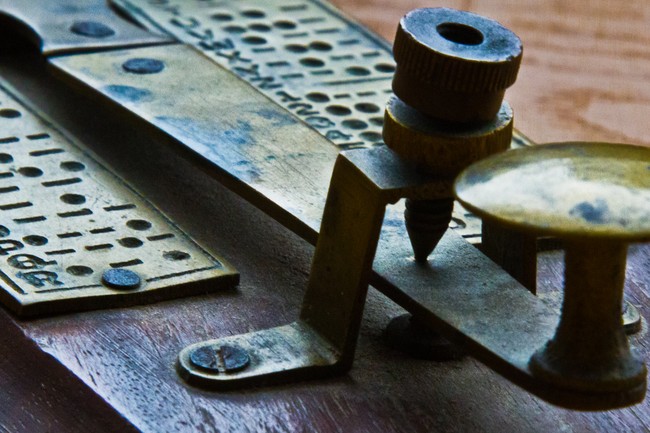
Today marks the anniversary of the unveiling of the telegraph, which proved its worth a few years later.
An Idea Born From Loss and Curiosity
Samuel Morse started his career as a painter, not an engineer. As much as art paid the bills, a strong sense of curiosity pulled him towards science.
A personal tragedy, the death of his wife, whom he wasn’t aware had died days after her burial because of how slow news traveled, ended up accelerating his scientific pull.
That distance carried costs.
It was more of a human problem than a technical one; people waited, lost time, and missed opportunities.
Learning Without a Blueprint
Where Morse’s knowledge of electricity was lacking, experimentation filled the gap. He held conversations with scientists and tinkerers that shaped his progress.
Joseph Henry, a physicist, demonstrated that electrical signals could travel long distances through wire. Alfred Vail, a machinist and inventor, helped refine the mechanics of signaling.
The best teacher for anybody is failure. Equipment overheated, signals faded, and funding disappeared. Yet, Morse persisted.
Progress arrived through patience rather than in moments of genius.
Turning Sparks Into Language
Current alone couldn’t communicate meaning, a problem solved by Morse’s creation of a simple code using dots and dashes.
Short signals represented letters, long signals filled gaps, and patterns replaced words.
It was designed to favor reliability over elegance, and its simplicity ensured consistency. Anybody willing to learn could operate the system.
Precision replaced the act of communication that relied on handwriting and memory.
A Line Between Cities
Morse completed a telegraph line between Washington, D.C., and Baltimore in 1844. The first message, “What hath God wrought?” sent from the Capitol, marked a turning point. For the first time in history, words instantly traveled across miles.
Things changed: distance lost authority, time lost dominance, and information gained speed.
It shouldn’t be a surprise that commerce changed first; markets adjusted more quickly, while railroads coordinated schedules.
Governments shared intelligence so that news traveled faster than rumor.
It made the world feel a little smaller.
Resistance and Acceptance
Like all revolutionary inventions shared by those outside elite circles, skepticism followed success: doubts were raised about reliability, while others feared disruption to the line. Postal services became worried when couriers resisted.
Despite all this, adaptation arrived anyway.
Winning the argument was efficiency, when speed created demand. Once people experienced instant communication, they felt it was unnecessary to wait any longer.
Technology reshaped expectations.
A World Permanently Altered
Morse’s telegraph laid the groundwork for modern communications: telephones, radio, and digital networks. It accelerated global trade, compressed diplomacy, changed how warfare was coordinated, and then there’s the internet.
His work didn’t create modern communication alone, but he opened the gate, creating circumstances in which human interaction moved faster because he refused to abandon an idea shaped by personal loss and intellectual curiosity.
That cleared field? It finally grew crops.
Final Thoughts
The farmer clearing stones from fields by hand never forgets the weight. Each time you remove a rock, you learn patience.
Samuel Morse worked through resistance and delay until straight lines replaced scattered efforts.
When that furrow finally held, the harvest’s reach touched the world.
History reminds people that progress favors persistence. PJ Media keeps that spirit alive by supporting voices that value clarity over noise. Become a PJ Media VIP member and help sustain independent commentary grounded in experience.