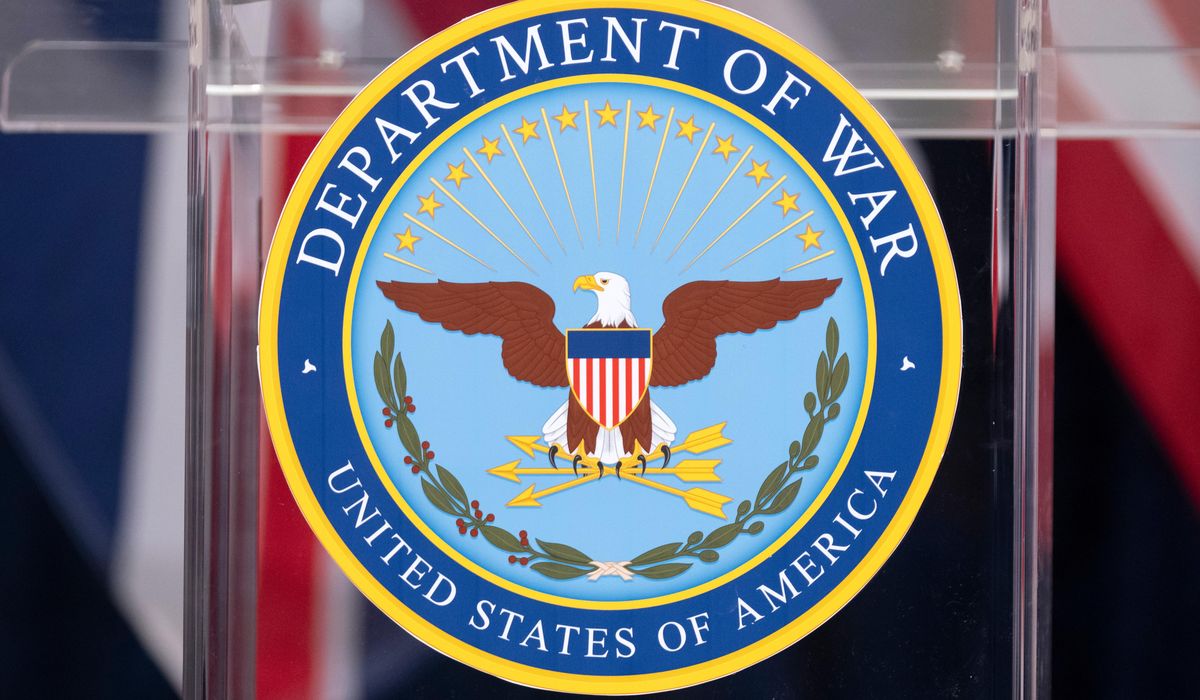

The House voted to pass a sweeping defense policy bill Wednesday that authorizes $900 billion in military programs, including a pay raise for troops and an overhaul of how the Department of Defense buys weapons.
The bill’s passage on a 312-112 vote comes at a time of increasing friction between the Republican-controlled Congress and President Trump’s administration over the management of the military.
The annual National Defense Authorization Act typically gains bipartisan backing, and the White House has signaled “strong support” for the must-pass legislation, saying it is in line with Mr. Trump’s national security agenda. Yet tucked into the over-3,000-page bill are several measures that push back against the Department of Defense, including a demand for more information on alleged drug boat strikes in the Caribbean and support for allies in Europe, such as Ukraine.
Overall, the sweeping bill calls for a 3.8% pay raise for many military members as well as housing and facility improvements on military bases. It also strikes a compromise between the political parties — cutting climate and diversity efforts in line with Mr. Trump’s agenda, while also boosting congressional oversight of the Pentagon and repealing several old war authorizations. Still, hard-line conservatives said they were frustrated that the bill does not do more to cut U.S. commitments overseas.
“We need a ready, capable and lethal fighting force because the threats to our nation, especially those from China, are more complex and challenging than at any point in the last 40 years,” said Rep. Mike Rogers of Alabama, the Republican chair of the House Armed Services Committee.
Lawmakers overseeing the military said the bill would change how the Pentagon buys weapons, with an emphasis on speed after years of delay by the defense industry. It’s also a key priority for Defense Secretary Pete Hegseth. Rep. Adam Smith of Washington, the top Democrat on the armed services panel, called the bill “the most ambitious swing at acquisition reform that we’ve taken.”
Still, Mr. Smith lamented that the bill does not do as much as Democrats would like to rein in the Trump administration but called it “a step in the right direction towards reasserting the authority of Congress.”
“The biggest concern I have is that the Pentagon, being run by Secretary Hegseth and by President Trump, is simply not accountable to Congress or accountable to the law,” he said.
The legislation next heads to the Senate, where leaders are working to pass the bill before lawmakers depart Washington for a holiday break.
Several senators on both sides of the aisle have criticized the bill for not doing enough to restrict military flights over Washington. They had pushed for changes after a midair collision in January between an Army helicopter and a jetliner killed all 67 people aboard the two aircraft near Ronald Reagan Washington National Airport. The National Transportation Safety Board and families of the victims also have voiced opposition to that section of the bill, raising concerns that it would make the airspace more dangerous.
Lawmakers included a provision that would cut Mr. Hegseth’s travel budget by a quarter until the Pentagon provides Congress with unedited video of the strikes against alleged drug boats near Venezuela. Lawmakers are asserting their oversight role after a Sept. 2 strike where the U.S. military fired on two survivors who were holding on to a boat that had partially been destroyed.
The bill also demands that Mr. Hegseth allow Congress to review the orders for the strikes.
Mr. Trump’s ongoing support for Ukraine and other allies in Eastern Europe has been under doubt over the last year, but lawmakers included several positions meant to keep up U.S. support for countering Russian aggression in the region.
The defense bill requires the Pentagon to keep at least 76,000 troops and major equipment stationed in Europe unless NATO allies are consulted and there is a determination that such a withdrawal is in U.S. interests. About 80,000 to 100,000 U.S. troops are usually present on European soil. It also authorizes $400 million for each of the next two years to manufacture weapons to be sent to Ukraine.