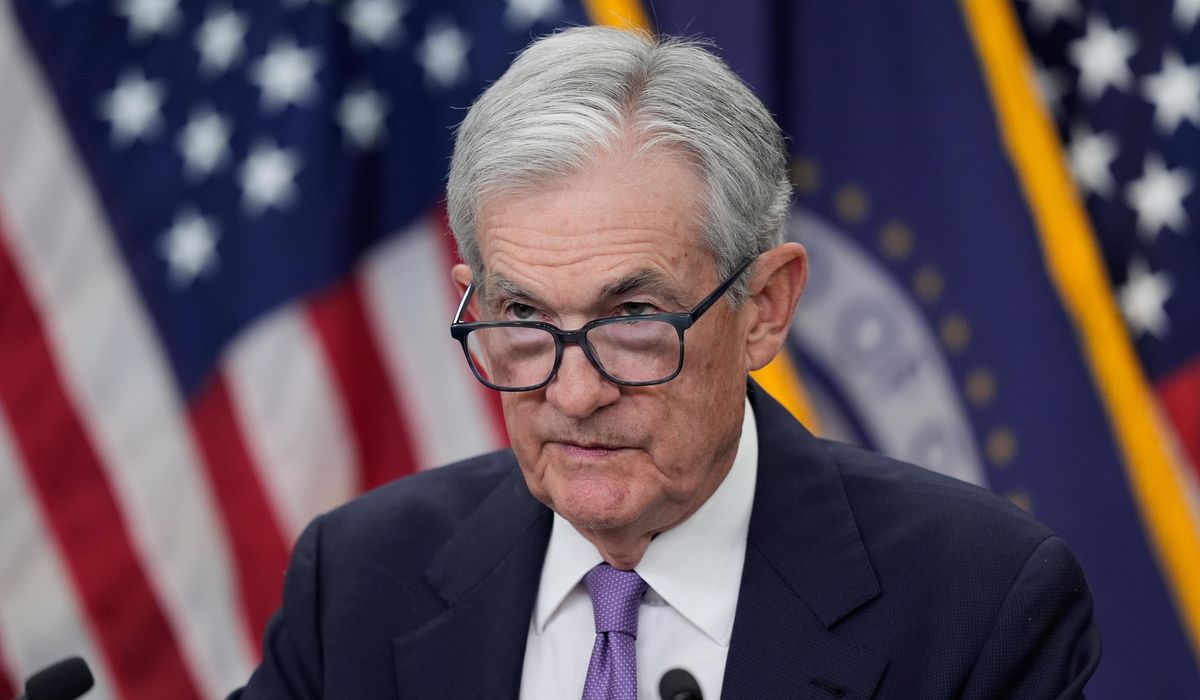
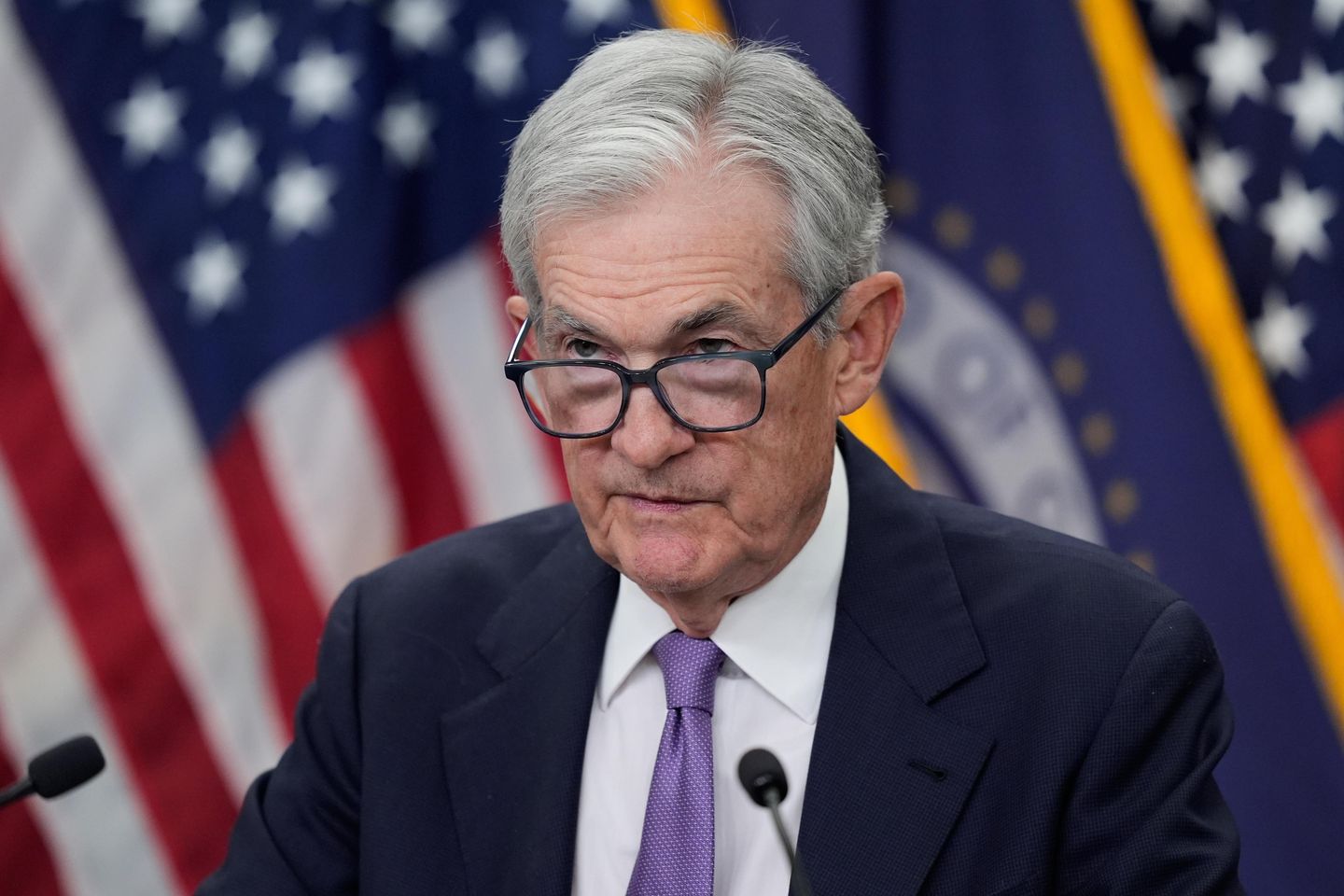
The Federal Reserve faces a tough decision when it convenes Tuesday for a two-day meeting to determine whether to cut interest rates for a third consecutive time or hold off due to concerns about inflation.
Economists say a cut of 0.25% is all but assured, though their confidence masks a rift within the Fed.
Central bankers are divided over whether to cut rates again to stimulate hiring, or to take a wait-and-see approach to find out whether prices rise because of President Trump’s tariffs or other factors.
“It is among the hardest rate decisions in recent memory,” said Jai Kedia, a research fellow at the libertarian Cato Institute’s Center for Monetary and Financial Alternatives. “We’ve said for many months now that supply shocks such as tariffs cause employment and inflation to go in opposite directions, sending the Fed contrary signals. That seems to be coming to a head at this December meeting.”
Complicating matters, the Fed has not received reliable employment reports from the Bureau of Labor Statistics. The agency was unable to survey firms during the government shutdown from Oct. 1 to Nov. 12.
Fed rates impact interest rates for savings, loans and investments and can affect consumer spending and business activity.
Mr. Trump desperately wants the Fed to continue cutting rates, saying borrowers deserve better terms as he reshapes the economy. However, he’s unlikely to be satisfied even if the Federal Open Market Committee, or FOMC, blesses a small cut.
He says Fed Chair Jerome Powell erred by refusing to cut rates earlier, and that he’s lined up a successor when Mr. Powell’s term ends in May.
“He’s got some real mental problems. There’s something wrong with him. It’s just ridiculous,” Mr. Trump recently said of Mr. Powell in front of Saudi guests. “I’ll be honest, I’d love to fire his ass.”
Mr. Trump also hinted that Treasury Secretary Scott Bessent, who interviewed Fed candidates, would be in hot water if the new Fed chair did not meet his expectations.
The president recently trashed his first-term Treasury secretary, Steven Mnuchin, in a social media post for pushing Mr. Powell.
White House National Economic Council Director Kevin Hassett is considered the front-runner to take over the job in spring 2026, though several others were seriously considered.
Already, the president is reshaping the Fed. He appointed a White House official, Stephen Miran, to the Fed board of governors earlier this year, and Mr. Miran quickly advocated for steeper rate cuts.
Mr. Trump’s lobbying efforts will loom in the background of the Fed’s meeting, which extends through Wednesday. Still, the president’s hectoring probably will not impact the outcome.
“I don’t think that it will have any impact on the December meeting. President Trump is already twisting arms with the FOMC members as hard as he can,” said Steve Hanke, a professor of applied economics at Johns Hopkins University.
“The Fed is data dependent,” he said, “and will be focused on the recent softness in the job market.”
Companies have cut more than 1 million jobs so far this year, a consulting firm said Thursday, citing restructuring, artificial intelligence and economic factors such as tariffs as the key drivers of layoffs.
The Challenger, Gray and Christmas firm said it is only the sixth time since 1993 that layoffs have exceeded 1.1 million, and the first time since 2020, when job cuts skyrocketed due to the COVID-19 pandemic.
Private payroll reports from ADP showed job losses in recent months, and the shutdown delayed federal reports from the BLS. Earlier BLS reports showed sluggish hiring this year.
New York Fed President John Williams said in November that he sees room “in the near term” for another rate cut, raising the prospects for action.
Conversely, Federal Reserve Bank of Kansas City President Jeff Schmid has said further rate cuts wouldn’t solve the employment issue while making it harder to bring inflation down to the bank’s 2% target.
“Cuts could have longer-lasting effects on inflation as our commitment to our 2% objective increasingly comes into question,” he said during a recent speech in Denver.
Mr. Schmid said concerns about inflation extend beyond Mr. Trump’s tariffs, which are duties imposed on foreign goods when they are brought to U.S. markets. He has also heard concerns about rising costs for health care and electricity.
The Commerce Department said Friday the core personal consumption expenditures price index, which does not include food and energy prices, rose 0.2% in September, or 2.8% on a year-over-year basis.
The index is a key piece of data for the Fed, and the yearly figure was slightly lower than anticipated.
CME Fedwatch on Friday put the probability of another cut at 87%.
Wall Street investors are reacting to every bit of news ahead of the Fed decision, sometimes leading to odd dynamics.
Negative job reports put downward pressure on Wall Street stocks. And yet, shares tend to rebound once investors realize a hiring slowdown makes a rate cut more likely.