China’s initial investments in Syria’s post-war reconstruction could pose serious security risks for the region, advocates say, even as Damascus increasingly turns to the U.S. and Saudi Arabia for its most expensive projects.
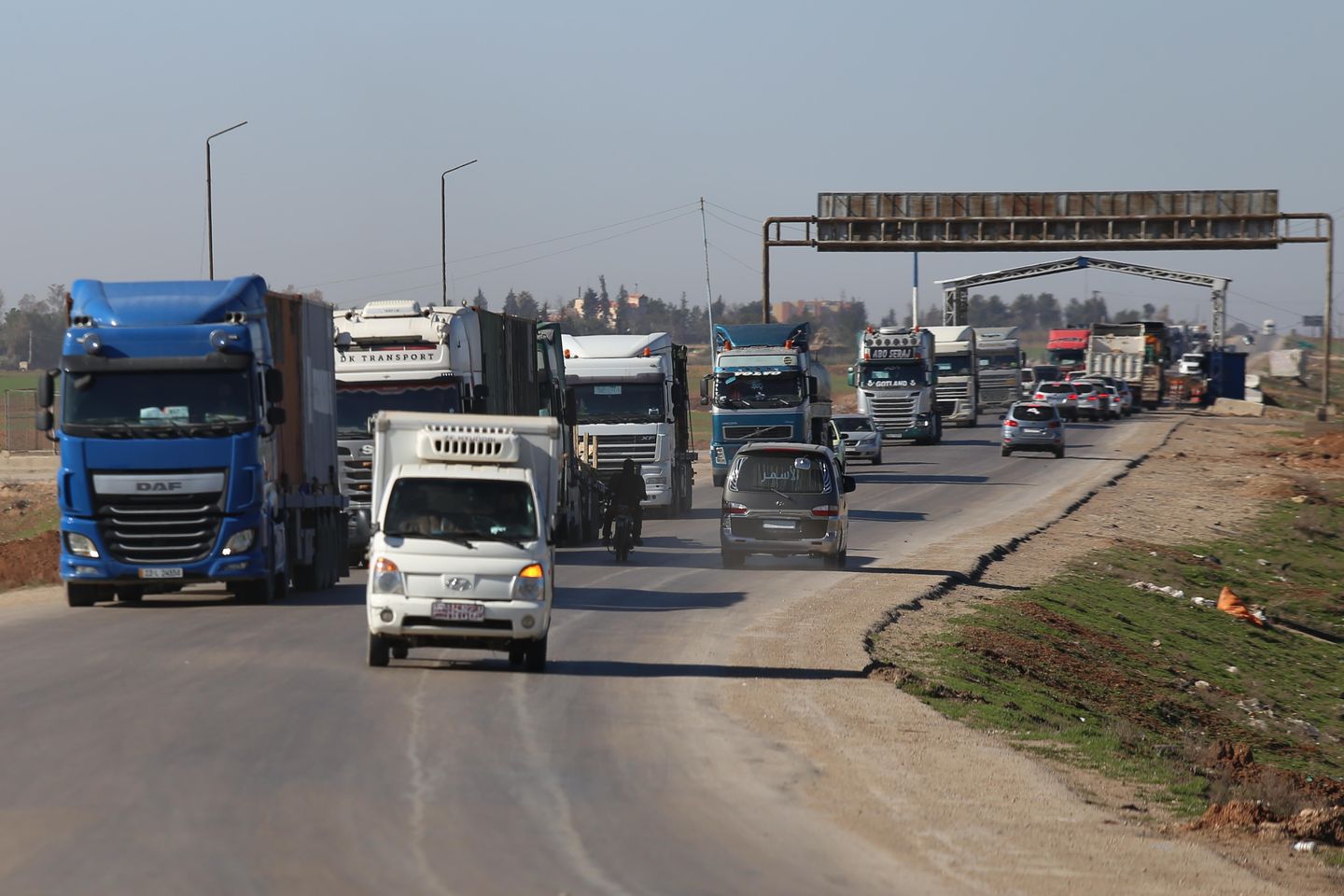
China has remained a small-scale economic player in Syria since the fall of the Bashar Assad government, with which it had a long-standing relationship. But it has made small steps recently to get in on the ground floor of Syria’s reconstruction efforts.
The Chinese-based GCI Group, which represents 25 firms across various industries, opened a new economic office in Chtoura, Lebanon, this month. The office, which sits less than 50 miles from Damascus, will serve as an important diplomatic and logistical hub for Beijing’s operations in Syria, the company’s CEO told reporters earlier this month, and reflects Beijing’s growing, “pragmatic” interest in protecting its existing interests in Syria and expanding its economic influence.
In addition to securing lucrative construction contracts via Damascus, the office is hoping to facilitate deals that would bring in Chinese tech companies to build critical infrastructure in Syria.
Notably, analysts say Chinese tech firms like Huawei, which have operated semi-covertly for years in the region, are looking to play a leading role in Damascus’s national ID initiative and server development.
Both projects could give Beijing significant influence over the country’s digital infrastructure and potentially pose serious cybersecurity risks for Syria.
“Syria doesn’t want this information and these databases to be under the control of other people. We want to have access for future analysis and understanding of the demographic and situation in Syria,” Wael Demyati, director of the Syrian Emergency Task Force, an advocacy organization in Damascus, said. “Our Syrian future should be based on transparency, on correct data, correct information, which happens only with the correct partner.”
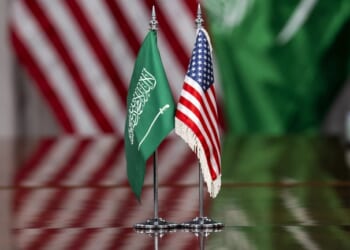
Syria has mostly looked to other regional partners for much of its early reconstruction funding. Earlier this month, Syria signed a multibillion-dollar investment deal with Saudi Arabia that covers nearly 50 projects, from real estate development to international telecommunications networks.
Syria also signed a $7 billion investment deal with Turkey last year aimed at developing the country’s energy infrastructure.
But the deals are still in the early phases, and Damascus could be vulnerable to Chinese economic influence if the projects are not realized.
“As long as Damascus is able to realize the financial commitments and reconstruction pledges made by Gulf states, it is unlikely to turn to Chinese firms for large-scale infrastructure projects in the short term,” Ahmad Sharawi, a senior research analyst at the Foundation for Defense of Democracies, said. “If Gulf commitments stall or fail to materialize at scale, Beijing may see an opportunity to enter the market and compete particularly in infrastructure, energy, or port development, where Chinese state-backed firms have comparative advantages.”
Syria faces huge rebuilding challenges after a brutal 15-year-long civil war that has left enduring scars and crumbling infrastructure. Estimates from the World Bank and other international organizations suggest that development projects in the country could cost at least $216 billion, necessitating massive foreign investment.
Damascus’s funding needs partially explain President Ahmad al-Sharaa’s extensive diplomatic tours. The Syrian leader visited and established relations with numerous nations over the past year, including those that supported the Assad regime, such as Russia, which took in the deposed leader when he fled Syria.
Mr. al-Sharaa has also strengthened ties with Washington. He became the first Syrian president in decades to visit the United States in November and has maintained a close relationship with President Trump and his representatives in Syria, including Syrian Envoy Tom Barrack.
But U.S. lawmakers and some security experts remain skeptical of Syria’s stability and the intentions of Mr. al-Sharaa’s government.
U.S. investment in Syria was stymied for nearly a year following the fall of the Assad regime as lawmakers debated the repeal of the Caesar Act sanctions that placed heavy economic restrictions on anyone doing business with Syria.
The sanctions were eventually repealed as part of the National Defense Authorization Act in December, but Syria is required to deliver regular reports on its progress on respecting minority rights and fighting terrorism, reflecting the fears held by many in Congress.
Other Western investors see Syria’s recent clashes with the Kurdish-led Syrian Democratic Forces as evidence of the country’s general instability.
The skepticism in the West has given Chinese firms an opening to expand Beijing’s “Digital Silk Road,” an aspect of China’s Belt and Road project that involves exporting artificial intelligence, 5G networks and fiber-optic cables to developing nations.
Syria officially joined the Belt and Road Initiative in 2022, under the Assad government, but China has yet to launch wide-scale infrastructure investments in the country as it has done in other parts of the world.
Experts say China’s overall investment strategy in the developing world has been exploitative.
“The way China does business is really a kind of economic occupation or economic colonization of countries. It’ll give like unmatched deals, but overall they end up owning the port or owning the town or owning whatever it is that they’re seeking,” said Mouaz Moustafa, executive director of the Syrian Emergency Task Force.
China’s investment initiatives in South America have, according to many security experts, created a dangerous atmosphere of dependence for developing nations. Beijing’s heavy investment in telecommunications, energy and transportation infrastructure gives China not only immense leverage over developing nations but also provides massive surveillance and data-collection opportunities.
“Governments dependent on such infrastructure to support their populations may face coercive threats. The intersection of various critical infrastructure types and the documented coercive tendencies of the PRC’s authoritarian government poses inherent risks,” Maj. Gen. Evan L. Pettus wrote in a 2023 report.
Those risks are especially dangerous as Damascus looks to cement its post-war control over Syria and establish stability. Increased investment from China could bring further skepticism from international firms and further weaken relations with Israel, Syria’s southern neighbor.
The two countries are currently engaged in ongoing negotiations to finalize a disengagement agreement that would reestablish the borders set out in the original 1974 deal.
“If America gets involved in Syria, you will see very soon technology developed in Israel made in a factory by the workers and the people of Syria, funded by capital investment from Saudi Arabia, exported all over the world. And this is really game changer for everybody,” Mr. Demyati said.