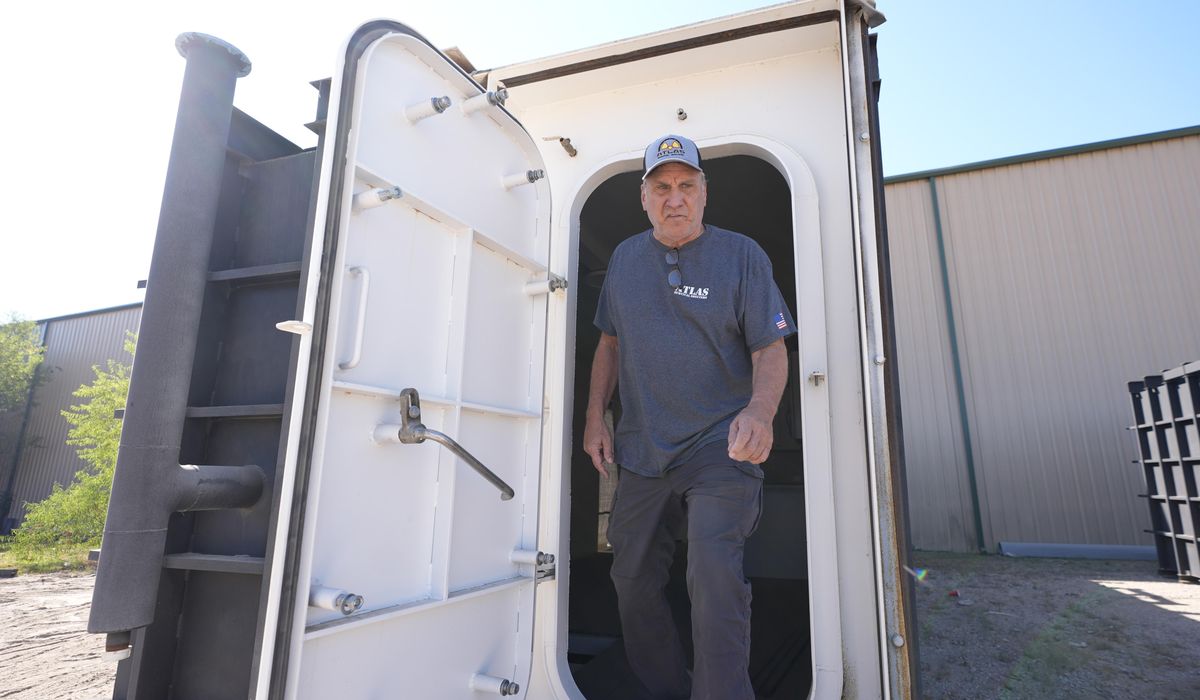
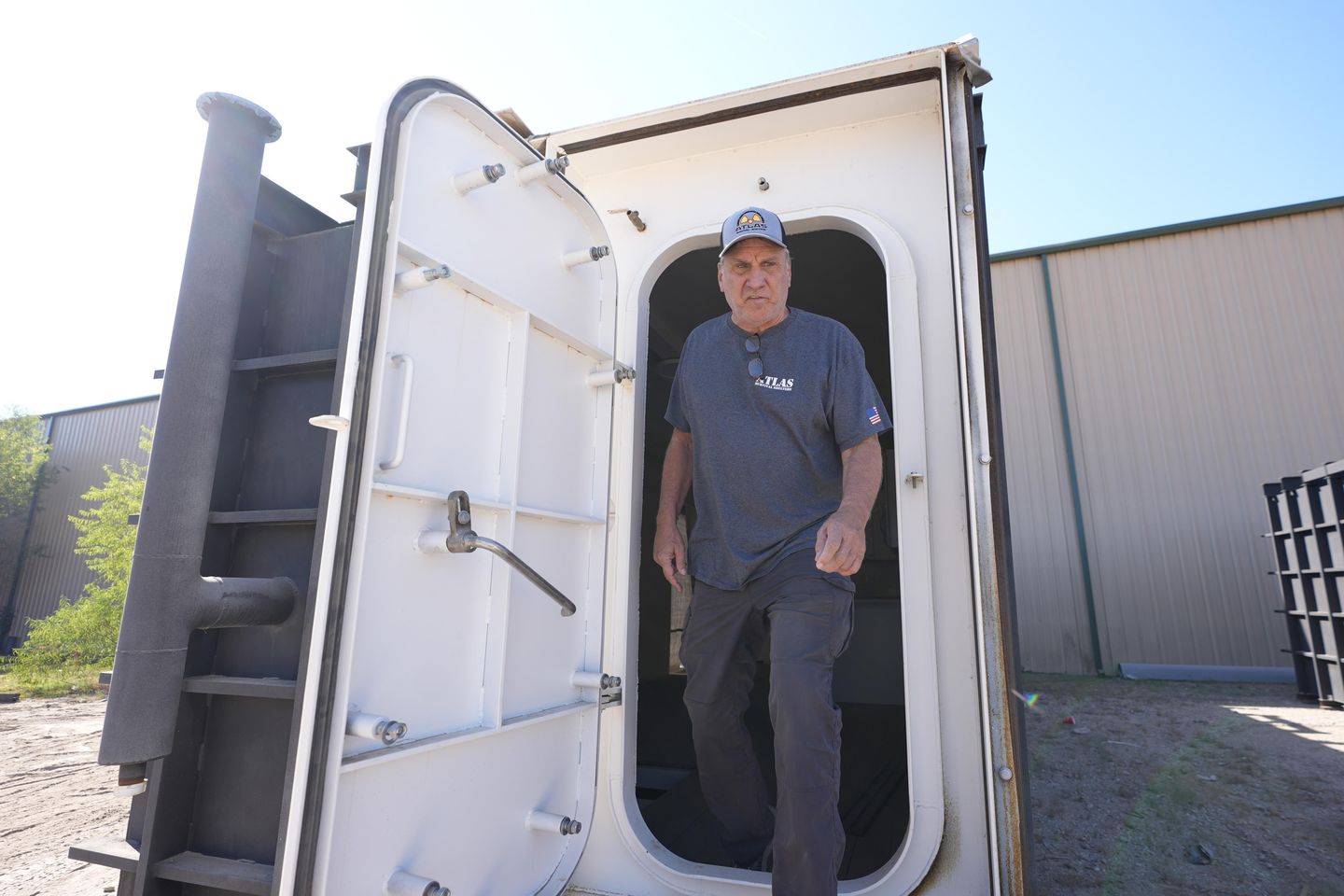
The underground shelter industry is booming in the wake of the U.S.-Israel strikes on Iran, with at least two senior members of President Trump’s Cabinet among the customers rushing to secure doomsday bunkers, even as some of the country’s wealthiest tech leaders have been quietly making such preparations for years.
Ron Hubbard, founder and CEO of Atlas Survival Shelters, said orders at his company have increased “tenfold” since the U.S. and Israel launched joint airstrikes on Iran on Feb. 28. Two of his customers, he told The Telegraph, are senior members of Mr. Trump’s Cabinet.
“I’ve been inundated with calls,” Mr. Hubbard told The Telegraph. One of those Cabinet members, he said, recently texted him asking when his bunker would be ready.
Mr. Hubbard’s Atlas operation constructs hundreds of galvanized steel shelters annually out of a factory in Sulphur Springs, Texas. Its catalog ranges from basic underground tornado bunkers to multi-million-dollar compounds outfitted with swimming pools, cinemas, and armories, with prices running from $200,000 to $5 million. The company has averaged $2 million a month in sales so far in 2026, though Mr. Hubbard told The Telegraph that figure could reach as high as $50 million next month.
Mr. Hubbard, who recently opened offices in Dubai, said he expects demand to grow further still. “Now that they’ve been bombed, they’re all going to want shelters,” he told Latin Times. “It’s just a fact of life.”
The surge in interest comes amid an expanding conflict that has already claimed the lives of seven U.S. soldiers and more than 1,200 Iranian civilians in less than two weeks of fighting. Mr. Trump, when asked by Time magazine last week whether Americans should fear an Iranian attack on U.S. soil, responded, “I guess.” The FBI has separately warned California law enforcement agencies that Iran aspired to strike unspecified targets in the state using attack drones launched from an unidentified vessel off the U.S. coast.
Tech moguls had a head start
While recent buyers may be motivated by current events, some of the country’s most powerful tech executives have been investing in doomsday preparations for years.
LinkedIn co-founder Reid Hoffman told The New Yorker as far back as 2017 that he estimated more than half of his Silicon Valley billionaire peers had purchased some form of end-of-world hideout. Mr. Hubbard told Business Insider that it is safe to assume most billionaires have at least some kind of shelter in place.
Meta CEO Mark Zuckerberg has not confirmed reports that he built a survival bunker on his private ranch in Kauai, Hawaii, though he acknowledged the existence of an “underground tunnel” on the property in a 2025 podcast appearance. In 2023, Wired reported that he was constructing a roughly 5,000-square-foot underground shelter there; local planning documents later referenced a “storm shelter” of nearly 4,500 square feet. Mr. Zuckerberg downplayed the reports in a December interview with Bloomberg, describing the space as storage and a hurricane shelter and saying the bunker framing was overblown.
OpenAI CEO Sam Altman has similarly denied owning a bunker, though he told the same podcaster, Theo Von, that he does have reinforced underground concrete structures. Mr. Altman told The New Yorker in 2016 that he also owns a plot of land in Big Sur, California, as a potential refuge. He previously said his concern stemmed not from artificial intelligence risks but from broader global instability: “People are dropping bombs in the world again.”
Mr. Altman has also previously told The New Yorker that his personal preparations include firearms, gold, potassium iodide, antibiotics, water, batteries, and gas masks sourced from the Israeli Defense Force.
Reddit CEO Steve Huffman told The New Yorker he has acquired firearms, ammunition, and motorcycles for similar reasons. He also underwent laser eye surgery in 2015, which he said was intended to improve his odds of survival in a crisis.
PayPal co-founder Peter Thiel attempted to build a 10-bedroom compound in New Zealand, a location that luxury shelter builder Larry Hall, owner of Survival Condo, told Business Insider was among the worst possible choices, given the area’s proximity to active tectonic plates. New Zealand authorities ultimately rejected Mr. Thiel’s plans after complaints from environmentalists.
Palmer Luckey, the founder of Oculus and defense technology company Anduril, has taken a different approach. Mr. Luckey owns a collection of military-grade vehicles and several decommissioned missile silos, one of which he told Bloomberg he uses to store what he describes as the world’s largest video game collection, 200 feet underground.
A status symbol for anxious elites
Mr. Hall, whose Survival Condo business offers luxury underground complexes complete with pools, shooting ranges, and bowling alleys, told Business Insider that bunkers have evolved into a “new status symbol of the elite” in the post-pandemic era, shedding much of the social stigma they once carried.
Mr. Hubbard, for his part, described the vast majority of his customer base as “Christian, conservative CEOs,” a demographic he courted directly last year at Mar-a-Lago. He declined to name his wealthiest clients but told The Telegraph that he has built shelters for some of the richest people on the planet, with more tech moguls recently inquiring about similar products.
As the Iran conflict enters its 12th day with no clear diplomatic off-ramp in sight, Mr. Hubbard offered a blunt assessment of his current business climate: “Bunker building is like being a farmer. When it’s time for harvest, you have to reap all you can.”
This article was constructed with the assistance of artificial intelligence and published by a member of The Washington Times’ AI News Desk team. The contents of this report are based solely on The Washington Times’ original reporting, wire services, and/or other sources cited within the report. For more information, please read our AI policy AI policy or contact Steve Fink, Director of Artificial Intelligence, at sfink@washingtontimes.com
The Washington Times AI Ethics Newsroom Committee can be reached at aispotlight@washingtontimes.com.