Along with the momentous change being crowned by the election of a conservative Republican as president in Chile this weekend, events in the Eastern European country of Bulgaria have been moving rapidly.
Since the first of the month, the GenZers of the country have been taking to the streets in ever-widening protests, with the latest estimates of the participation numbers totalling upwards of eight million Bulgarians.
The young contingent has been angered by corruption, arrogance, a controversial budget, perceived Russian coziness, and deteriorating conditions in the country that have left them feeling that there is no future for them in Bulgaria.
A contentious budget, endemic corruption and political arrogance caught on camera all combined to trigger mass protests.
On December 1, Bulgaria’s Gen Z took to the streets in the largest nationwide demonstrations in decades, demanding that next year’s budget be revoked and that the government resign.
Although the government responded to the protests by introducing a new draft budget that postpones tax and social contribution increases for two years, it is unlikely to be enough to quell Gen Z’s frustration as thousands prepare to return to the streets again on Wednesday.
Indeed, the events of the past 10 days have revealed a widening rift between the ruling parties and young people.
“The budget was the reason to protest, but the root cause is that we see no prospects for staying in Bulgaria, starting a business or building a family,” said 18-year-old high school student Martin Atanassov, who joined the demonstrations.
Last Wednesday night, somewhere in the neighborhood of 100,000 people gathered in the streets and area surrounding Sophia’s Independence Square once again to protest the government of Prime Minister Rosen Zhelyazkov. The protests have been encouraged by Bulgarian President Rumen Radev, who has added his voice to those calling for the Prime Minister and his cabinet to step down.
🇧🇬🪧 A fresh wave of fury in Bulgaria, as tens of thousands protested against the government, blaming it for corruption and its proposed 2026 budget 👇 pic.twitter.com/rovwnp7l1p
— FRANCE 24 English (@France24_en) December 11, 2025
The protests are centered around two controversial figures whom adversaries believe are embroiled in government business and are responsible for the current fiscal state of affairs – oligarch Delyan Peevski and ex-prime minister Boyko Borissov. Oligarch Peevski has been sanctioned for corruption by both the US and UK, and his party supports the minority Zhelyazkov coalition now in power, which itself has somehow held on through five no-confidence votes. A sixth was expected to be held last Thursday night.
…Peevski has been sanctioned by the US and UK for alleged corruption and his party has helped prop up the government.
Borissov is part of Zhelyazkov’s Gerb party, which came first in October 2024 elections, and he was reported to have said on Wednesday that the coalition parties had agreed to remain in power until Bulgaria joined the eurozone on 1 January.
Borissov was prime minister when anti-corruption protests brought down his government in 2020 and there have been seven elections since.
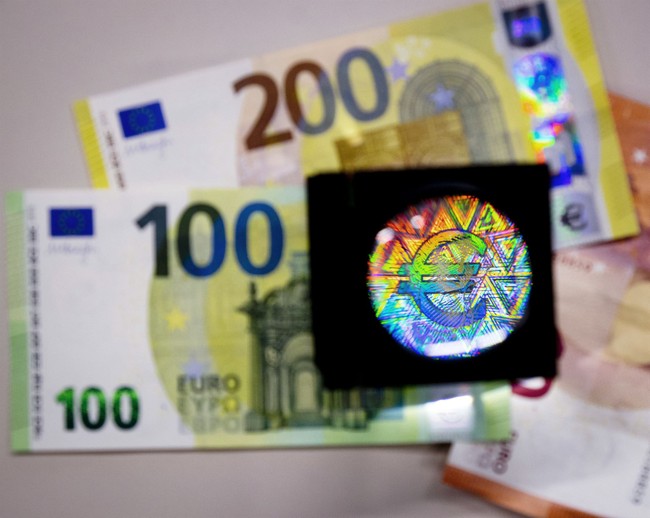
Adding to the sturm und drang is the countdown to joining the Euro as their currency – there’s less than a month before the change is scheduled.
A wave of street protests against ruling class graft is destabilizing Bulgaria just weeks before the Balkan nation is set to join the euro.
What should be a moment for celebration has exposed a growing sense of resentment, especially among younger Bulgarians, after years of European Union membership failed to deliver on a promise of improved rule of law.
The trigger for the latest unrest was a government plan to increase spending in next year’s budget that many protesters believe would only help corrupt politicians strengthen their grip over the country’s institutions.
Bringing the EU’s poorest nation into the single currency area before it has delivered on basics like the rule of law is a move opponents of enlargement will be ready to exploit.
That’s a credibility issue which, in turn, could hurt the bloc’s entire geopolitical strategy since eventual membership for Ukraine is fundamental to restoring stability on its eastern borders.
The changeover to the Euro is an unpopular move with most Bulgarians, again creating unstable conditions in a country that has seen seven elections in four years. Bulgarians were never given the chance to determine for themselves, through a referendum, whether this was what they wanted.
The threat to the adoption of the euro, despite cheery words to the contrary, is real.
…The growing discontent has created an opening for President Rumen Radev, the country’s most popular politician. The former air force general has echoed the Kremlin’s talking points by opposing military aid to Ukraine, which he said would empower “warmongers.”
Radev has voiced skepticism of the euro and pushed for a referendum on adopting the single currency.
…Zhelyazkov has touted euro adoption as one of his government’s major achievements, though a July poll showed that almost half of Bulgarians oppose the move. The premier also mentioned it while vowing to hold onto power, saying the country needs stability through the transition to the new currency.
His withdrawal of the earlier, unpopular budget bill failed to assuage public anger.
Bikarski predicted a high risk that Zhelyazkov’s government won’t survive to complete its term. That would undo some of the advantages to businesses of euro adoption — a flagship achievement of any pro-European government, he said.
In typical tone-deaf fashion, the EU wasn’t helping itself make its case.
EU propaganda seen in Bulgaria says “Unity, security and renewable energy. You are Europe,” while displaying an image of an African man, not a European.
The European Union hates Europeans. pic.twitter.com/CoVGWzvmnt
— iamyesyouareno (@iamyesyouareno) December 13, 2025
In any event, by last Thursday, Prime Minister Zhelyazkov decided he wasn’t going to deal with another no-confidence vote, and he and his entire cabinet resigned.
BULGARIA: GOVERNMENT RESIGNS after days of mass protests across the country against government corruption.pic.twitter.com/40Cy7KQdlv
— David Kurten (@davidkurten) December 11, 2025
The Parliament accepted their resignations this past Friday.
The European Commission sent a warning shot across the bow…
The European Commission issued a warning to Bulgaria, as anti-graft protests continue to erupt throughout the country and its prime minister resigns.
On Thursday (11 December), the commission told reporters in Brussels that Sofia has yet to resolve outstanding issues over its anti-corruption body.
Last month, the payment of approximately €215m was suspended for six months due to concerns over the lack of independence of Bulgaria’s anti-corruption agency.
“Bulgaria has now one month to send their observations regarding this temporary suspension,” said Maciej Berestecki, a European Commission spokesperson.
The comment comes as tens of thousands have taken to the streets in Sofia in protest over widespread corruption and the proposed annual budget for next year.
…even as Bulgarian GenZers were asking themselves, ‘Did we do that?’
…In sheer numbers and through savvy social media campaigns, including on TikTok and Instagram, the generation of Bulgarians who were born around the turn of the century has been credited as a driving force behind the mass protests that prompted Prime Minister Rosen Zhelyazkov to step down. Parliament officially accepted his resignation on Friday.
“I was very excited to see that a lot of Gen Z-ers took to the streets in big numbers,” Konstantin Tuzharov, a 24-year-old marketing specialist based in the capital of Sofia, said Friday. The movement marked the first time he had joined anti-government protests, which provided a sort of political baptism for him and others around the country.
Mr. Tuzharov said he was surprised by how quickly the protests pushed the government’s leaders to resign mere weeks after younger Bulgarians galvanized, in part through social media campaigns abuzz with unusually high engagement on political issues.
“I talked to my friends in disbelief: ‘Did we do that?’” he said.
They certainly did, but removing old entrenched European power brokers is never an easy task, particularly when trust in the government itself is at such a low ebb, no one even bothers to vote anymore, because nothing changes.
…Whether Bulgaria’s Gen Z will harness that energy into electing a steadier government remains to be seen.
Bulgarians have long been frustrated by enduring government corruption as well as years of democratic dysfunction. The problem is shared across much of Eastern Europe, particularly the former communist nations grappling with historical ties to Russia while turning toward the West.
While Bulgarians have staged waves of anti-corruption and anti-government rallies over the past decade, the most recent demonstrations appeared to be unparalleled in their size and level of emotion, said Dimitar Bechev, the head of the Dahrendorf Program at the European Studies Center at Oxford University in England.
But the next election — which President Rumen Radev has yet to set a date for — will be “the ultimate litmus test,” Mr. Bechev said. “If we see that turnout being at decent levels, then that will be a welcome sign that things are improving.”
If the TikTok bunch can galvanize a Get-Out-the-Vote movement the way they did a ‘get the Prime Minister out,’ then they might have a chance to start cleaning house.
Bulgarian government resigned after huge protests across the country. Bulgaria enters the Euro on 1st January. pic.twitter.com/bKBgwsHzvF
— Julian Popov (@julianpopov) December 11, 2025
Being ‘fed up’ is only the start of the work they have to do to fix this.
At HotAir, we’ve been dealing with real government suppression of free speech for YEARS. Despite the threats and consequences, we refuse to go silent and remain committed to delivering the truth.
But we can’t do it without your support.
Please help Ed, David, John, and me continue fighting back against government censorship by joining our terrific HotAir VIP community today. Use promo code FIGHT to receive 60% off your membership.
And thank you so much again for being here with us at HotAir.