Growing up in the 1980s, I can still remember being taught in school about the dangers of global warming and the hole in the ozone layer. The narrative was that chlorofluorocarbons (CFCs), widely used in refrigeration, air conditioning, foam insulation, solvents, and aerosol propellants, were depleting the ozone layer, and that this depletion might be irreversible. We were told it would be unsafe to go outside without being covered up, even in the summer, if this came to pass. People were shamed into believing their modern lifestyles were killing the ozone layer.
And when you looked at women’s hairstyles back then, you could easily believe it.
Fast forward to today, and the reality looks quite different. Global warming has been rebranded as “climate change,” so that any weather pattern can be blamed on man-made factors. And, of course, you don’t really hear about the hole in the ozone layer anymore. There’s a reason for that.
ICYMI: Trump Bump: Black Friday Spending Breaks Records, Democrats Most Hurt
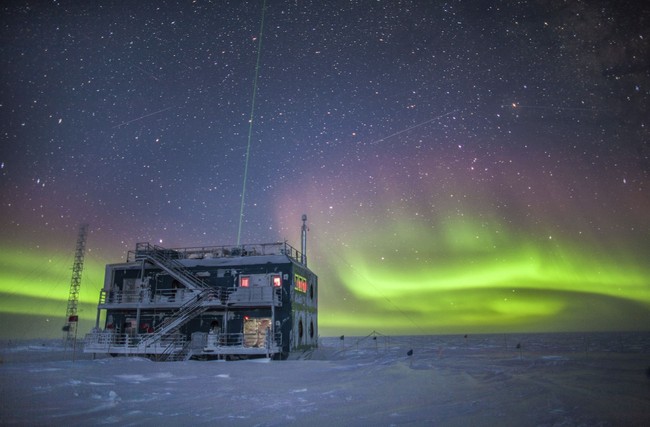
“The ozone hole over the Antarctic is significantly smaller in 2025 than in previous years, ranking as the fifth-smallest it’s been since 1992, according to a new report by NOAA and NASA scientists,” reports ABC News. “The ozone hole reached its greatest one-day extent for 2025 in early September, measuring 8.83 million square miles, about 30% smaller than the largest hole on record in 2006.”
The so-called “ozone hole” is not an actual hole in the planet’s ozone layer, but rather a large region of Earth’s stratosphere with extremely low ozone concentrations.
NOAA and NASA scientists emphasize that recent findings show efforts to limit ozone-depleting chemical compounds can have a significant impact.
The regulations are established by the Montreal Protocol, which went into effect in 1992. Subsequent amendments are driving the gradual recovery of the ozone layer, which remains on track to fully recover later this century as countries worldwide replace harmful substances with safer alternatives.
Paul Newman, a senior scientist with the University of Maryland system and a longtime leader on NASA’s ozone research team—not the actor and salad dressing guy—put the scale in stark terms. As he explained it, “This year’s hole would have been more than one million square miles larger if there was still as much chlorine in the stratosphere as there was 25 years ago.”
For decades, chlorofluorocarbons (CFCs) and other ozone-depleting compounds were widely used in aerosol sprays, foams, air conditioners and refrigerators, causing significant reductions in ozone levels.
Natural factors, such as temperature and atmospheric circulation, also influence ozone concentrations and are likely to have contributed to a smaller ozone hole this year, according to researchers.
Earth’s ozone layer acts as a planetary sunscreen, shielding humans, animals and plants from harmful ultraviolet radiation. When ozone levels drop, more UV rays reach the surface, increasing the risk of adverse health and environmental impacts such as crop damage, skin cancer, and cataracts.
The ozone story gets more interesting the more you look at it. We were raised on warnings that the sky was about to peel open and leave everyone exposed to deadly radiation. The same experts who pushed that panic insisted the damage was irreversible. This narrative of pending catastrophe wasn’t limited to the hole in the ozone layer either. We’ve been told for years that rising temperatures would melt the polar ice caps, that sea levels would destroy our coasts, and crops would die if we didn’t do something. Decades of predictions of environmental catastrophe have failed to produce anything remotely close to an ecological apocalypse, and the wealthy leftists who promote these theories still buy waterfront property.
And speaking of Black Friday, PJ Media VIP’s Black Friday sale is back!
Now through Monday night, receive 60% OFF an annual VIP, VIP Gold, or VIP Platinum membership with promo code FIGHT. And if you join PJ Media VIP Platinum during this promotion, you will be entered for a chance to win one of five Lifetime Platinum memberships. That’s right – five lucky winners will receive VIP Platinum access FOR LIFE. Join us!
Already have a VIP membership? Spread the joy and gift one! No one wants more clutter around the house — give them something they really want and get your holiday shopping done in a jiffy!