SEOUL, South Korea — The American decapitation strikes on Iranian and Venezuelan leadership should raise alarms for Taiwan, the island democracy claimed by China.
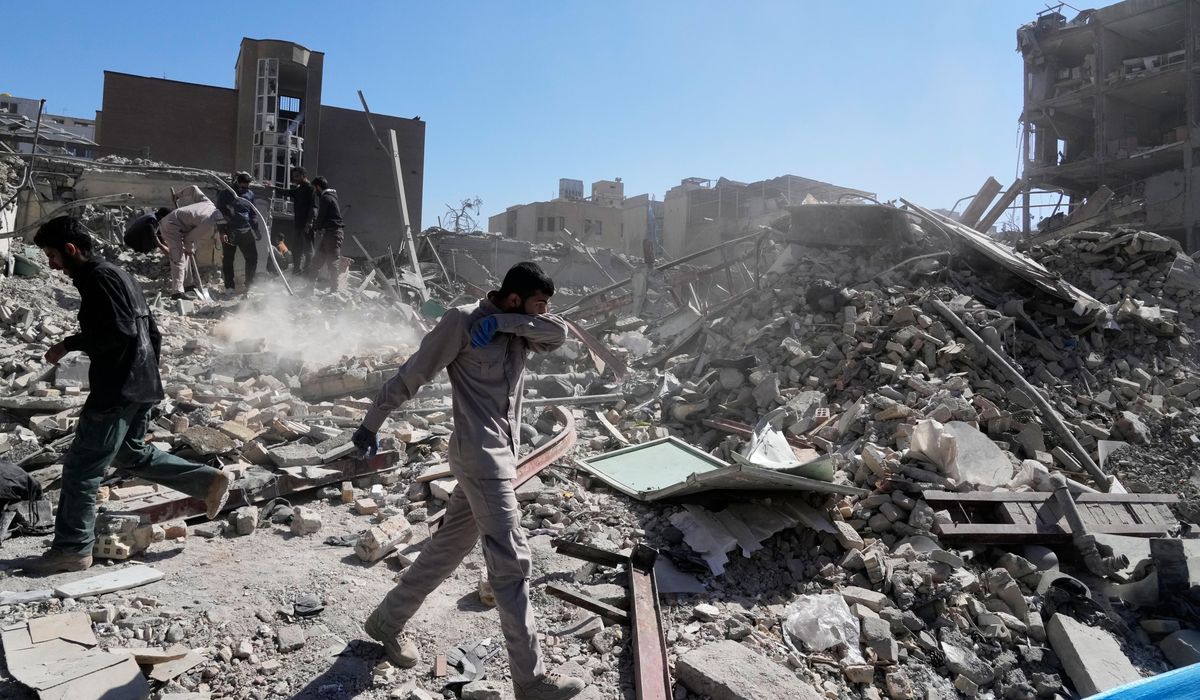
The killing in a joint Israel-U.S. operation of Iranian Ayatollah Ali Khamenei, following swiftly on the U.S. capture of Venezuelan President Nicolas Maduro in March, has military experts rethinking the long-held expectation that any Chinese move on Taiwan would be predicated on a large-scale invasion.
But as reports appear detailing how the strike on Mr. Khamenei was enabled and conducted, alarm bells are ringing for a Taiwan government vulnerable to the same internal security and intelligence weaknesses that have cost Iran.
An alternative to a long war?
In this photo released by the …
more >
U.S. defense and intelligence sources believe China’s People’s Liberation Army has been ordered to be capable of invading Taiwan by 2027, the centennial anniversary of the PLA. Experts are divided over how Beijing’s troops would fare in a military operation to capture the democratically governed island.
PLA forces are positioned just 100 miles from their target. They deploy sophisticated arms and, increasingly, modern amphibious assets.
SEE ALSO: Trump boasts U.S. has ‘unlimited’ weapons after strikes on Iran
But their top leadership has been decimated by repeated purges, troops lack combat experience, and President Xi Jinping has consistently avoided kinetic combat in favor of sub-threshold operations.
Questions hover over the sustainability of the Taiwanese armed forces in high-intensity combat, and the resistance capacity of the populace.
Analyses reach different conclusions. The most recent, conducted by the German Marshal Institute of the U.S. in December, wargamed economic, political and military costs to Beijing. In the latter domain, it estimated that the PLA would lose, suffering as many as 100,000 dead and many more wounded.
The analysis considered blockade, long-range fire and landing operations, but not a decapitation strike.
Such an operation could provide the PLA with a ruthless, but potentially economical, solution.
Decapitation: How to
Two recent precedents have put the tactic center-stage: The January U.S. commando raid that snatched Mr. Maduro, the Venezuelan president from central Caracas, and the recent Israeli air strike that killed the Iranian ayatollah.
Experts are taking note.
On Feb. 11, Shirley Kan, an independent specialist in Indo-Pacific security, urged the House Select Committee on China to consider “the threat of decapitation in Taiwan,” warning that “the president and vice president should never appear in the same place.”
The death of Mr. Khamenei is adding urgency.
“Taiwan needs to ready itself for the scenario now unfolding in Iran — and fast,” wrote analyst Charles Lyon Jones of Australian think tank the Lowy Institute today. “Counter-espionage and intelligence, continuity of government processes and the hardening of leadership compounds need to be top priorities for Taiwan’s leadership.”
A prerequisite for any decapitation operation is time-on-target intelligence.
According to Britain’s Financial Times on March 2, the strike on Mr. Khamenei and other Iranian leaders was enabled by Israeli-U.S. spycraft.
Israeli cyber intelligence hacked into Tehran’s traffic camera network and monitored leadership motorcades, the FT reported. A U.S. mole in the leadership confirmed the presence of Mr. Khamenei at the target site, greenlighting an Israeli air strike, using multiple precision munitions.
“U.S. and Israeli forces were able to glean exquisite, time-sensitive and operationally relevant intelligence, which likely required a deft integration of signals intelligence, geospatial capabilities and well-placed human sources inside the orbit of Iran’s most senior leadership,” wrote Mr. Jones.
China is infiltrating Taiwanese infrastructure and recruiting top-level human intelligence.
According to a report by Taiwan’s National Security Bureau, in 2025, China’s cyber assets launched 2.63 million attacks — per day — against Taiwan’s infrastructure, including its administration.
That “indicates a deliberate attempt by China to compromise Taiwan’s [critical infrastructure] comprehensively and to disrupt or paralyze Taiwanese government and social functions,” the bureau warned. “China’s moves align with its strategic need to employ hybrid threats against Taiwan during both peacetime and wartime.”
Recent legal cases indicate expansions in Chinese humint recruitment.
The Lowy Institute noted that in 2021, just 16 people were charged in Taiwan with spying for Beijing. In 2025, that number was 64. In the same year, four senior officials, formerly tasked to the presidential office and foreign ministry, were convicted of spying.
Evidence also indicates that Chinese troops are training the sharp end of a decapitation operation.
In 2015, CCTV footage showed PLA troops assaulting a mockup of the Taiwanese presidential office, the Global Taiwan Institute stated. The institute noted that in 2017, Taipei set up a special unit tasked with countering decapitation operations.
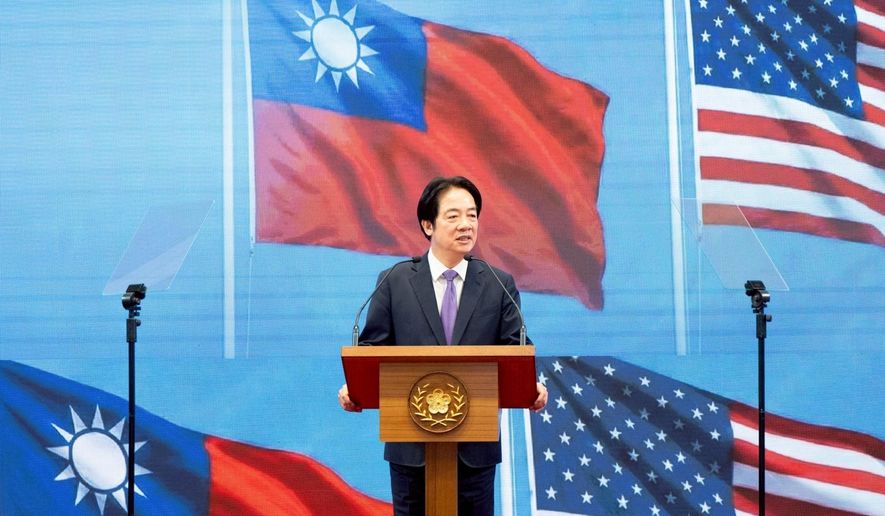
It is unclear whether PLA commandos would aim to seize or eliminate Taiwanese President Lai Ching-te.
One successful precedent that Chinese forces are likely aware of was the bloody assassination operation, “Storm 333,” conducted by Soviet commandos on Tajbeg Palace in Kabul in the opening phase of their invasion of Afghanistan in 1979.
Afghan leader Hafizullah Amin was killed in the raid, as were his two sons and 300 troops. Soviet forces subsequently lost a 10-year war.
Likewise, a Maduro-less Venezuela continues to operate, as does a Khamenei-less Iran.
Reported assassination attempts on Ukrainian President Volodymyr Zelenskyy by Russian and Chechen special operatives failed in 2022. It is unclear if those failures were due to intelligence snafus in pinpointing target locations, or bungled infiltrations of Kyiv.
Lessons are twofold
“For China, the U.S.-led campaign may prove a valuable lesson in how to disrupt continuity of government and the military chain-of-command during an invasion of Taiwan,” wrote Mr. Jones. “But it may yet become a cautionary tale of what can go wrong after a successful decapitation strike.”
Mr. Khamenei and senior officials including the head of the Republic Guard Corps, were killed, and it is unclear who is leading the country. Still, Iran continues to fight on under decentralized command.
A related dynamic has been pre-positioned in Taiwan.
In December 2025, Taipei revealed that a devolved structure enabling resistance even if communications, commanders or the commander-in-chief are taken out, was being implemented.
“If the enemy suddenly launches an attack, all units are to implement ’distributed control’ without waiting for orders and, under a ’decentralized’ mode of command, carry out their combat missions,” the Defense Ministry stated.
Mr. Lai is widely considered the most hard-line anti-Beijing president to hold power in Taiwan’s democratic history. The wider resilience of the island in the event of a crisis is unknowable.
One observer, however, placed his faith in democracy.
“Assassinating a democratically elected leader and installing a Beijing proxy may not coerce Taiwanese into submission, but steel their resolve to fight the new occupiers,” Mr. Jones wrote. “Xi will be watching Iran like a hawk for the next few months. If the U.S. and Israel cannot succeed in changing the Iranian regime and gaining the support of the Iranian people, he will have little prospect of doing so in Taiwan.”