The nation’s largest professional organization for plastic surgeons recommended that transgender surgeries be delayed until patients turn 19, changing the group’s stance on the politically charged issue and diverging from several other major medical organizations’ guidance.
The American Society of Plastic Surgeons said Tuesday that it found “insufficient evidence” that the benefits of chest, genital and facial surgeries on minors experiencing gender dysphoria outweigh the risks. It leaned on two recent and heavily debated publications on the topic, the Cass Review by a senior doctor in England and a 2025 report issued by the U.S. Department of Health and Human Services.
“This position statement doesn’t seek to deny or minimize the reality of any patient’s distress, and it does not question the authenticity of any patient’s experience,” the position statement reads. “Instead, ASPS affirms that truly humane, ethical, and just care, particularly for children and adolescents, must balance compassion with scientific rigor, developmental considerations and concern for long-term welfare.”
The statement is not a clinical guideline, the document notes. The society also did not do an independent evidence assessment or take other steps that would be involved in setting new care guidelines.
Other medical groups stand by their guidance
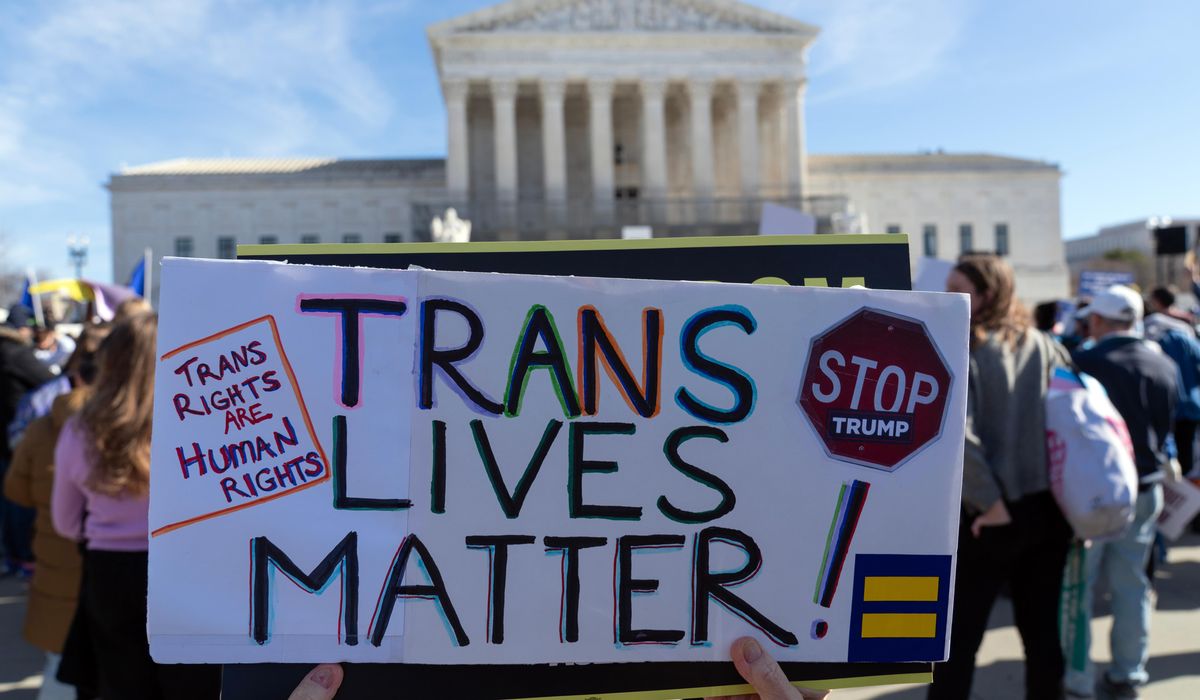
The shift comes as President Trump’s administration pressures health care providers to limit or stop care for transgender people, particularly children.
“Today marks another victory for biological truth in the Trump administration,” Deputy Health and Human Services Secretary Jim O’Neill said in a statement. “The American Society of Plastic Surgeons has set the scientific and medical standard for all provider groups to follow.”
Other major medical associations stood their ground, noting current guidelines already call for caution around surgery for minors.
Transgender surgery is rare among U.S. children, research shows. And fewer than 1 in 1,000 U.S. adolescents receive gender-altering medications.
The American Academy of Pediatrics “does not include a blanket recommendation for surgery for minors” with gender dysphoria, said its president, Dr. Andrew Racine. “The AAP continues to hold to the principle that patients, their families, and their physicians – not politicians – should be the ones to make decisions together about what care is best for them.”
The World Professional Association for Transgender Health, which develops standards of care for transgender patients globally, reiterated its support for access to surgical care for minors under “cautious guidelines and criteria.”
The group’s guidelines oppose a “definitive age or ‘one-size-fits-all’ approach for every patient.” Decisions should be case-by-case, based on the evaluations of multiple types of health experts and experts in adolescent development.
“WPATH stands firm in its commitment to advancing evidence-informed clinical guidelines to help improve the lives and well-being of transgender people around the world,” the group said in a statement.
Hospitals halt transgender care for kids
Transgender care for youth under standards widely used in the U.S. entails developing a plan with medical experts and family members that includes supportive talk therapy and can – but does not always – involve puberty blockers or hormone treatment. Many U.S. adolescents with gender dysphoria may decide not to proceed with medications or surgeries.
Still, the Trump administration moved in December to cut off transgender care for minors, prompting a third of states to sue. It was the latest in a series of clashes between an administration that says transgender health care can be harmful to children and advocates who say it’s medically necessary.
Under pressure from the administration, hospitals across the country have suspended transgender care for minors, most recently Children’s Minnesota, which paused prescribing puberty-suppressing medications and hormones for patients under age 18 citing federal “threats.”
“This is not the decision we wanted to make,” the health system said in a statement. “This is the decision we had to make to protect our hospital and our providers. We stand firmly behind the fact that gender-affirming care is evidence-based, safe and lifesaving.”
The plastic surgeons group also acknowledged that “variability in regulatory and legal environments” played a role in the decision to issue a statement, saying the lack of evidence on the benefits of transgender care means “surgical decision-making carries heightened ethical, clinical and legal risk.”
Dr. Scot Glasberg, who helped develop the statement, said deliberations over the language started in 2024 and were not politically influenced, despite the issue being highly charged.
“This was an iterative process that took time, with no outside pressure,” said Glasberg, a past president of the surgeons group. “We understand there will be different opinions about it and we respect those opinions.”