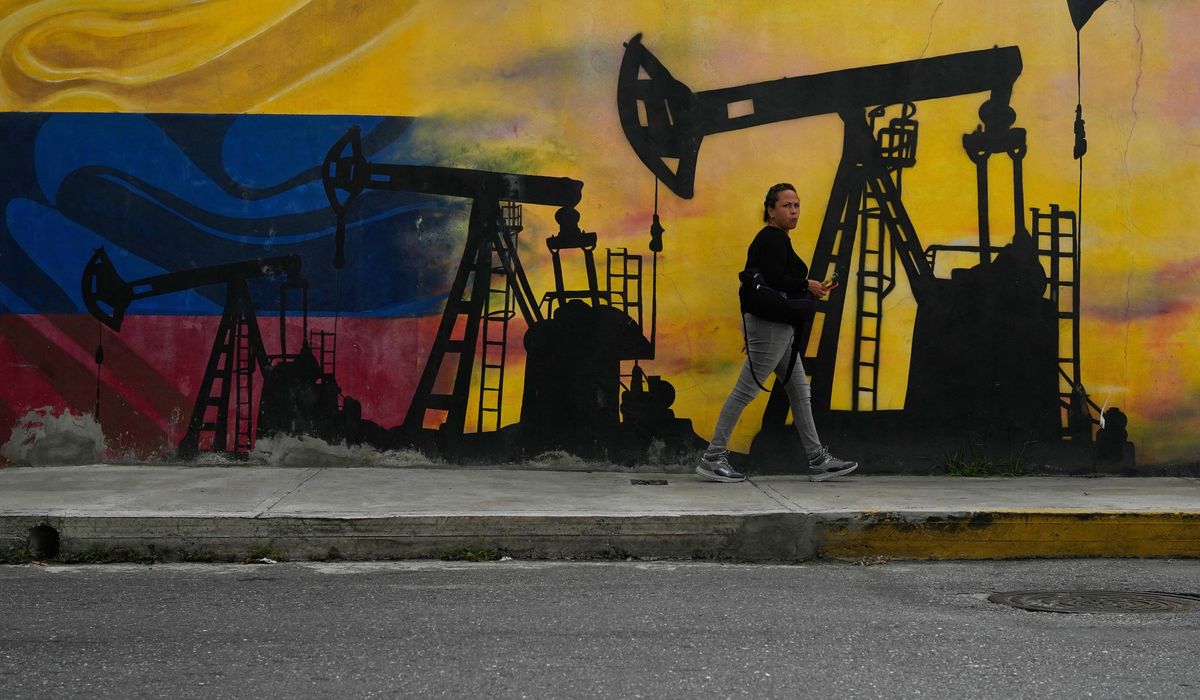
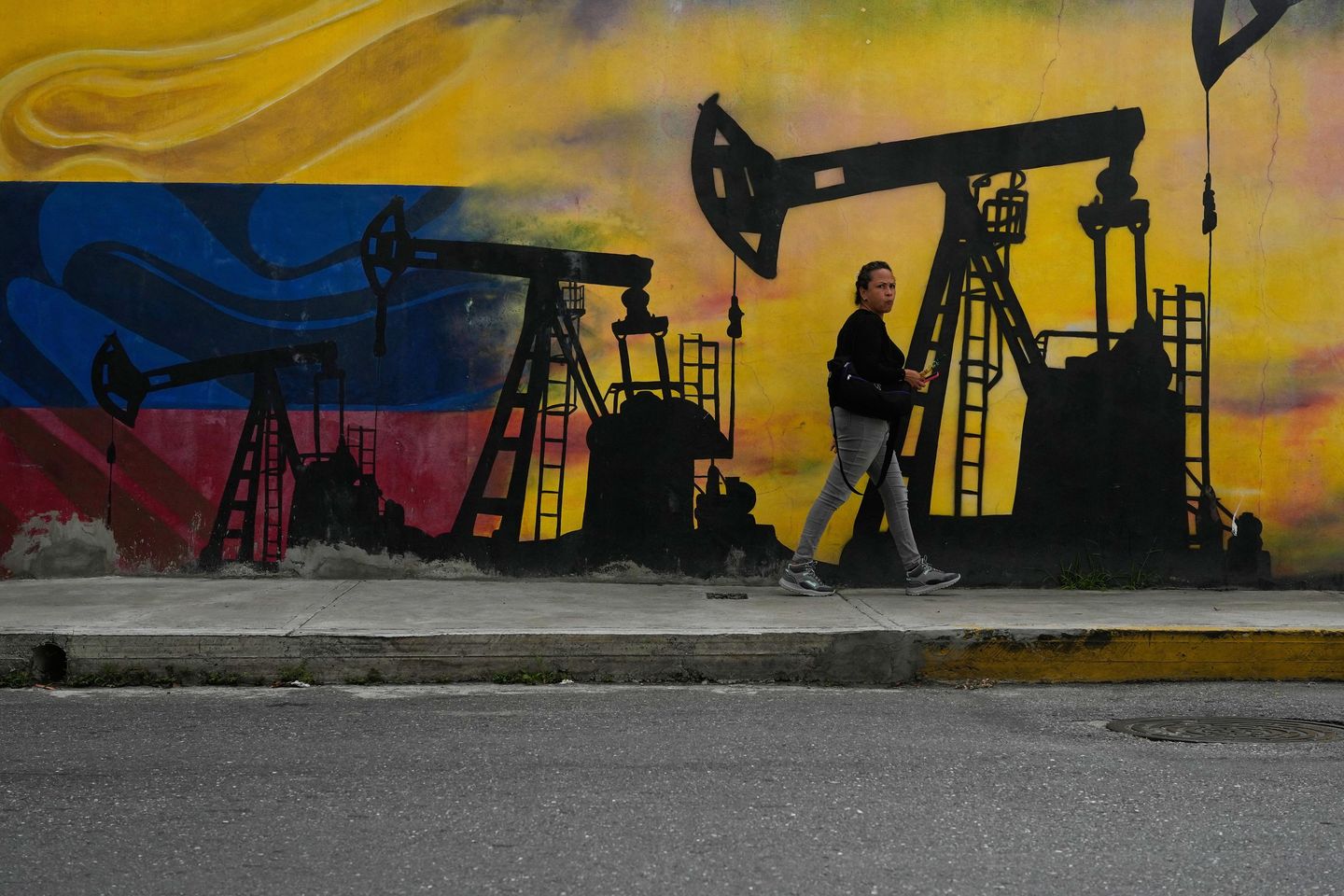
LONDON — Reverberations from the most consequential U.S. intervention since the 1989 invasion of Panama — the stunning Jan. 3 capture and removal of Venezuelan President Nicolas Maduro — are reshaping energy calculations around the globe, from pipeline politics in Canada to investment strategies in China.
Countries like China that had significant investments in Venezuela are on standby, waiting to see the next move from the Trump administration and the American oil companies the president has called on to revamp an ailing Venezuelan oil industry.
By some estimates, China has spent at least $100 billion in Venezuela since the country nationalized its oil industry under socialist leader Hugo Chavez in 2007 and is owed as much as $20 billion by Venezuela, though Beijing is unlikely to be compensated for that debt with the White House calling the shots for Caracas.
Two Chinese companies, China National Petroleum Corp. and Sinopec, have invested heavily in Venezuela’s oil industry. On the day before his capture, Mr. Maduro had actually met with a delegation of Chinese diplomats. The raid, in effect, has thrown a Trump-approved wrench into the gears of China’s Belt and Road initiatives, not just in Venezuela but across the whole of South America.
“Venezuela has been a money pit for China,” said Tim Samples, a professor at the University of Georgia and a Latin American energy expert, “and to a lesser extent for Russia as well. China has overspent on Venezuela: the oil and influence China obtained probably could have been secured with less capital.”
Neither China nor the United States could resist the lure of Venezuela’s untapped resources.
The U.S. Energy Information Administration says Venezuela sits atop 303 billion barrels, or roughly 17% of global reserves. However, Venezuela’s heavy oil is a tar-like substance and expensive to produce.
“It will take two to three years of steady investment, say $80 billion, and we might be able to produce 1.6 million per day,” said Jose Chaloub, a former analyst for Petroleos de Venezuela, S.A., Venezuela’s state-owned oil and gas company.
“When I joined PDVSA in 2004, I saw internal documents which said we were producing 3.4 million barrels per day,” Mr. Chaloub told The Washington Times. “When I left over a decade later, production had fallen to less than a third.”
Venezuela’s boast of holding the world’s largest oil reserves obscures a harsher reality. Venezuela’s Orinoco Belt is rich in heavy oil and far from the coastline, making it difficult to extract, said the veteran Caracas-based analyst, who is now with Jose Parejo and Associates, a European firm that advises governments and Fortune 500 firms on global oil markets.
“Currently you need to spend $35 to $40 to produce a barrel in the Orinoco Belt,” Mr. Chaloub said,” With oil prices currently forecast to be low, the totality of those resources is simply not recoverable.”
Those dynamics favor Western Canadian, at least for now, as U.S. refiners continue to rely on stable pipeline supplies from the north. The threat of tariffs on imports from Canada or other incentives could make Venezuelan oil more attractive to U.S. refiners in the future. National polls show a solid majority of Canadians want to build a new oil pipeline to the Pacific Coast.
“Change in oil-rich Venezuela means Canada must race to approve a pipeline to the Pacific Coast and move millions of barrels of Canadian oil per day overseas to break our dependence on one customer,” said Pierre Poilievre, the leader of Canada’s Conservative Party, in a social media post this month that responded to the impact of the U.S. intervention on Canada.
Mr. Chaloub fled his own Caracas home on Jan. 3 as U.S. ordnance pounded nearby Fort Tiuna, home to the country’s Ministry of Defense, as part of Operation Absolute Resolve. During the course of that operation, U.S. Special Forces engaged and killed 32 elite Cuban soldiers acting as Mr. Maduro’s bodyguards.
Cuban forces are present in Venezuela as part of the barrio adentro agreement between Cuba and Venezuela. Under the terms of that agreement, Cuba supplied 15,000 soldiers, spies and a large number of medical personnel who provided services in low-income communities.
“Cuba was getting those barrels practically for free, and much of it was later resold by Cuba. While Mexico and Russia have provided some oil to Cuba in the past, the future of this seems unlikely,” Mr. Chaloub said.
Much of Venezuela’s oil aid was later sold, providing much-needed cash to a regime the Trump administration has accused of running a corrupt narco-state.
The U.S. action in Venezuela also likely means Mexico’s left-leaning government will reconsider its role in Cuba. China has stepped up its role in Cuba’s energy sector in recent years and is currently helping Havana develop a series of solar power plants across the island.
One Caribbean nation would likely benefit tremendously from a more investment-friendly regime in Caracas — Trinidad and Tobago.
The country’s prime minister has been a key cheerleader for the U.S. intervention in Venezuela. The island nation allowed a U.S. Marine Corps’ AN/TPS-80 Ground/Air Task Oriented Radar, known as G/ATOR to be deployed to the island in November and has hosted other U.S. military equipment.
After accusing Trinidad and Tobago Prime Minister Kamla Persad-Bissessar of helping the U.S. isolate Venezuela, Mr. Maduro in December broke off all energy and commercial ties between the two countries, which are separated by just seven miles of water.
But with a new geopolitical reality in the region, Shell may reconsider plans to develop the Dragon gas field on the maritime border between Venezuela and Trinidad and Tobago. The United Kingdom-based energy company shelved earlier plans for fear of provoking Venezuela.
A stable regime in Venezuela also significantly reduces the political risk associated with Guayana’s oil industry. In March 2024, Venezuela passed a law claiming that most of Guyana belonged to Venezuela as part of a long-standing border dispute. Guyana is the world’s third-largest per capita petroleum producer and is keen to attract more investment.
Markets move slower than missiles, and the medium to long-term energy picture in the Western hemisphere is unclear.
“Right now, the people of Venezuela are in shock,” Mr. Chaloub. “Our country has never been bombed from the air by a foreign power; The future political situation will need to be made clear before any substantial new policies or investments in the energy sector can take place from any party.”