The Pentagon will be authorized to resume underground nuclear tests under a provision of the pending defense authorization bill.
The 3,086-page national defense authorization legislation for fiscal 2026, nearing a final vote in the Senate, has a section on Energy Department national nuclear security activities that would end the self-imposed U.S. moratorium on underground tests in place since 1996.
The section states that the testing ban will remain in effect “unless a foreign state conducts a nuclear test after this date, at which time the prohibition on United States nuclear testing is lifted.”
The language means that North Korea’s six underground nuclear tests carried out between 2006 and 2017 will allow for a resumption of underground nuclear tests by the Pentagon and Energy’s National Nuclear Security Administration.
The pending bill, which passed the House this week and is expected to clear the Senate soon, also maintains a ban on atmospheric testing of nuclear weapons.
The bill will authorize $890.6 billion in spending in fiscal 2026, including $855.7 billion for Pentagon programs, $34.3 billion for national security programs at the Energy Department, and $512.4 million for defense-related activities.
The new policy on underground nuclear tests follows a declaration by President Trump last month that the United States will resume nuclear tests in response to tests by Russia, China and North Korea.
“We’re the only country that doesn’t test, and I don’t want to be the only country that doesn’t test,” Mr. Trump said in an interview with CBS’ “60 Minutes.”
Asked about resuming underground detonations, the president said: “I’m saying that we’re going to test nuclear weapons like other countries do, yes.”
Mr. Trump first raised the issue of nuclear testing in a post on Truth Social Oct. 29, noting that the United States has more nuclear arms than any other nation.
“Russia is second, and China is a distant third, but will be even within 5 years. Because of other countries’ testing programs, I have instructed the Department of War to start testing our Nuclear Weapons on an equal basis,” he said. “That process will begin immediately.”
Mr. Trump said he favors nuclear arms reduction talks and has raised the issue with Russian President Vladimir Putin and Chinese President Xi Jinping.
Russia, China and North Korea have also been testing nuclear weapons, he said.
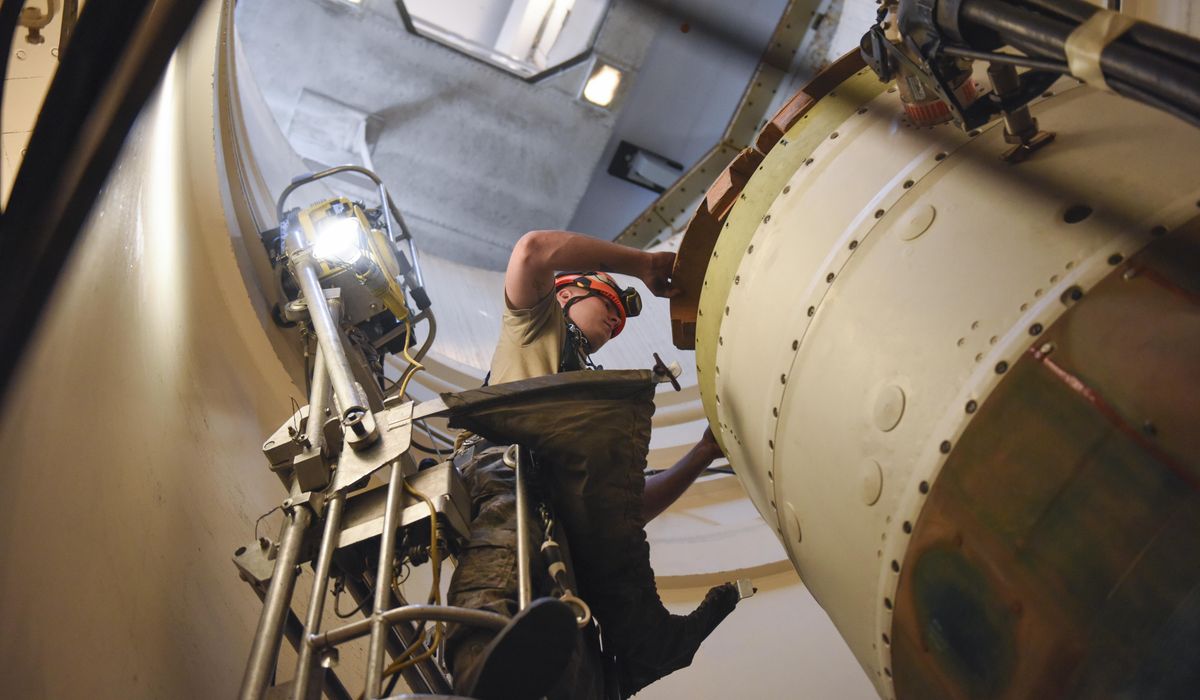
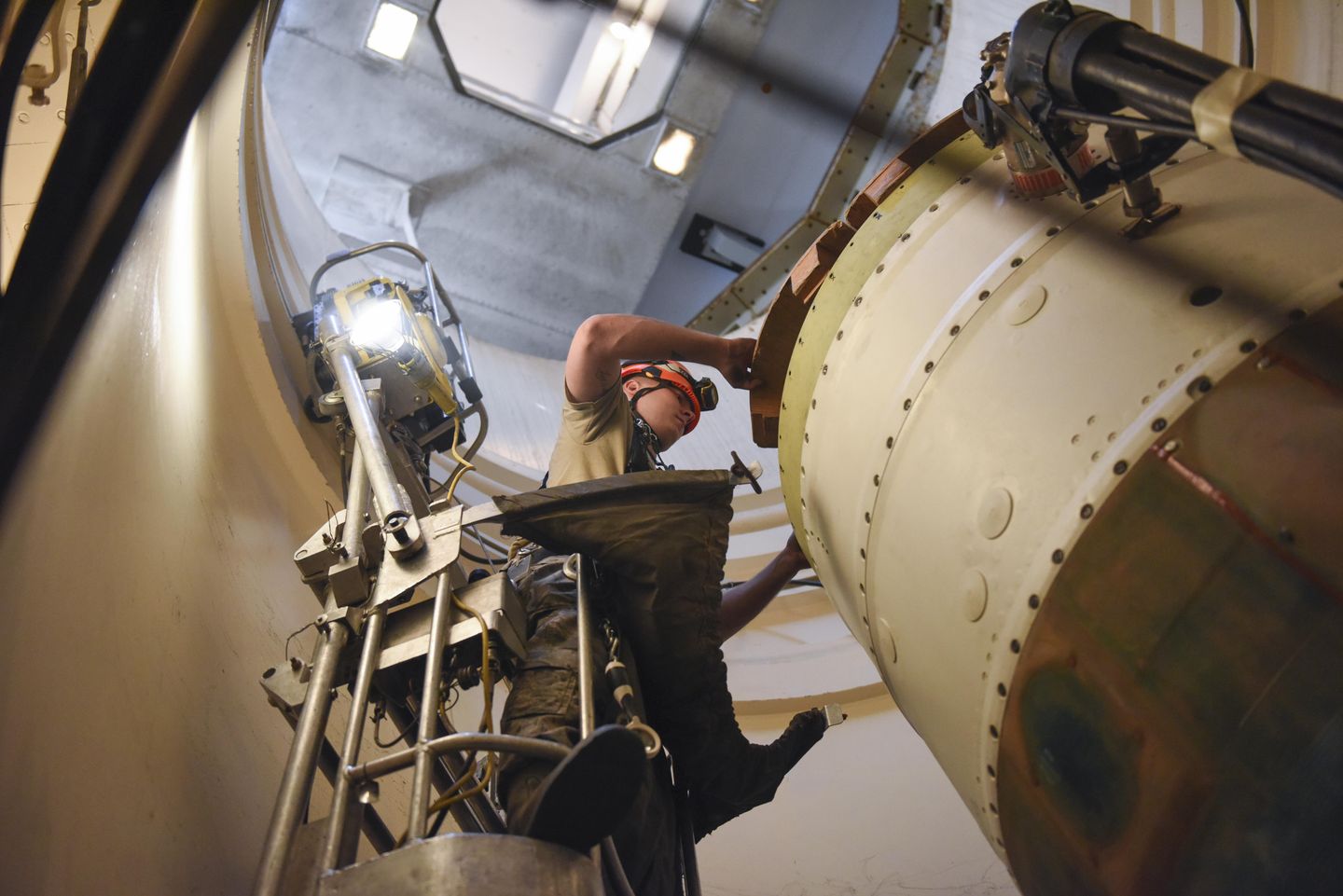
Nuclear testing is needed to gauge what the military calls “assurance” — the reliability of the arms.
Nuclear warheads in the U.S. arsenal are decades old and have been continuously upgraded and maintained without testing so far and monitored by what is called the “Stockpile Stewardship Program.”
After the president’s comments, CIA Director John Ratcliffe stated on X that both Russia and China have tested nuclear weapons.
Mr. Ratcliffe noted 2019 congressional testimony by then-Defense Intelligence Agency Director Lt. Gen. Robert Ashley, who said Russia has failed to abide by a zero-testing nuclear moratorium. For China, Mr. Ratcliffe posted a headline to a new report from 2020 on a possible Chinese nuclear test.
Sen. Tom Cotton, chairman of the Senate Select Committee on Intelligence, also said on X that the CIA assesses that both Russia and China have carried out “super-critical nuclear weapons tests in excess of the U.S. zero-yield standard.”
“These tests are not historic and are part of their nuclear modernization programs,” the Arkansas Republican stated.
Vice Adm. Richard A. Correll, who took over as commander of the Strategic Command on Dec. 5, told a Senate nomination hearing that neither Russia nor China had conducted a nuclear “explosive” test.
The National Nuclear Security Administration also conducts subcritical nuclear experiments at the Nevada National Nuclear Security Site’s Principal Underground Laboratory for Subcritical Experimentation.
A report accompanying the defense bill states that scientists at PULSE, formerly called the U1a Complex, conduct subcritical and physics experiments that are used to gather technical information on U.S. nuclear weapons.
“In particular, PULSE is undergoing a major construction project that will enable it to conduct Enhanced Capabilities for Subcritical Experiments (ECSE), which will host two of the most capable weapons radiographic systems in the world, the ZEUS and Scorpius test beds,” the report said.
Both test programs are needed for designing nuclear warhead pits at Los Alamos National Laboratory and the Savannah River Site.
The NNSA is using artificial intelligence to design nuclear weapons based on data from above- and below-ground tests.
House and Senate Armed Services Committees have asked NNSA to brief the panels no later than March 1 on how AI is being used in weapons designs, pit production and for improving warhead performance.
The panel also will be briefed on “estimated costs and length of preparation time required to conduct a full-scale nuclear explosive test should a determination be made that such a test is required to ensure the safety, reliability, performance, or military effectiveness of a weapon in the U.S. nuclear weapons stockpile.”
Both Russia and China responded to Mr. Trump’s plans for nuclear tests.
Mr. Putin announced Dec. 5 during a meeting of the Kremlin Security Council that he has directed military and political leaders to “submit coordinated proposals on the possible first steps focusing on preparations for nuclear weapons tests,” state media reported.
China’s Foreign Ministry denied conducting secret nuclear weapons tests.
Foreign Ministry spokeswoman Mao Ning told reporters Nov. 3 Monday that Beijing has not violated an informal testing moratorium on nuclear tests.
“As a responsible nuclear-weapon state, China is committed to peaceful development, follows a policy of ‘no first use’ of nuclear weapons and a nuclear strategy that focuses on self-defense, and adheres to its nuclear testing moratorium,” Ms. Mao said, also calling on the U.S. to uphold the testing moratorium.
U.S. officials say North Korea has not conducted an underground nuclear test since its last test in September 2017.
However, activities identified by U.S. intelligence agencies at the Punggye-ri Test Site in North Korea indicate that Pyongyang could conduct a nuclear test in the near future, U.S. officials have said.