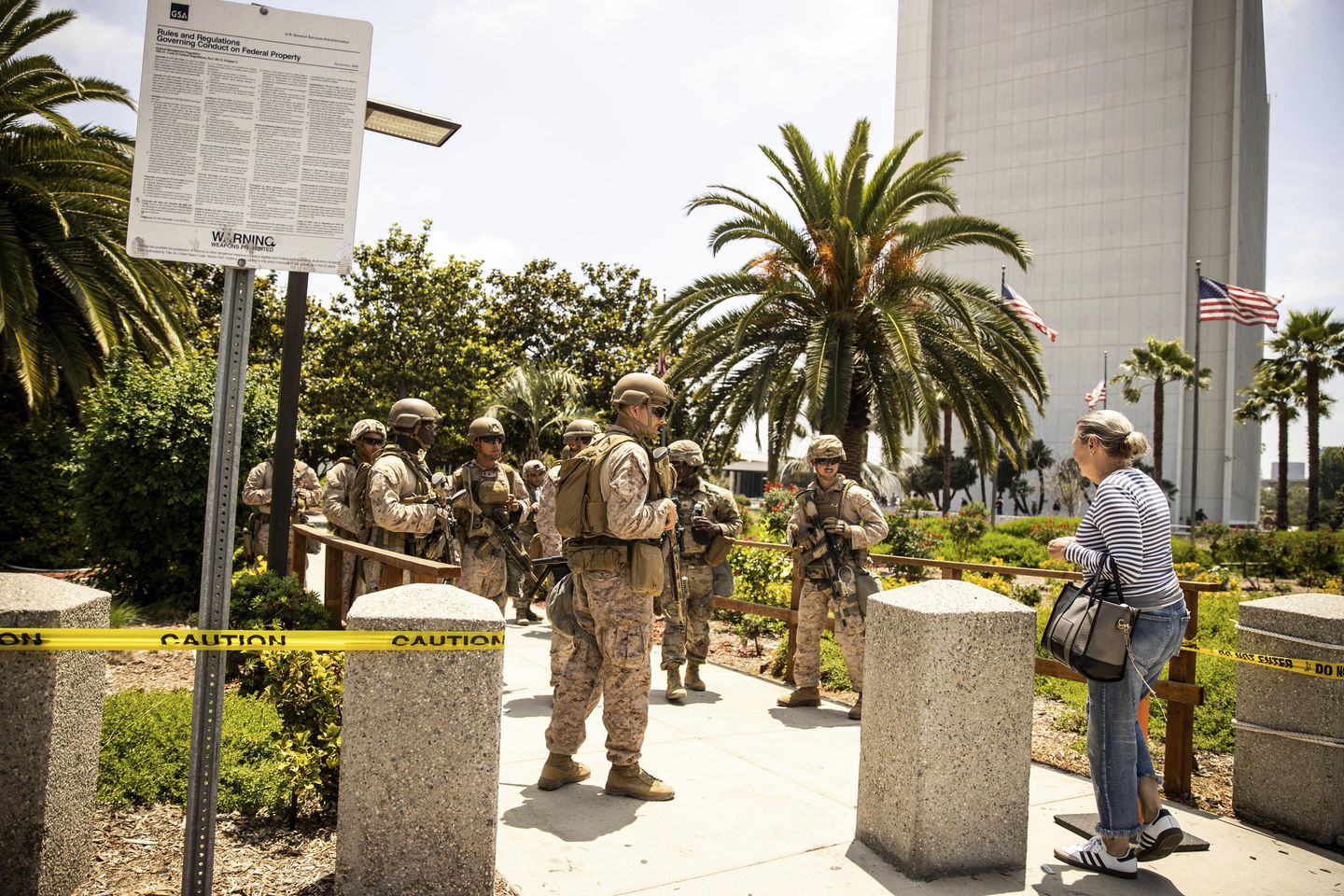
A federal judge accused President Trump on Wednesday of using National Guard troops to create a “national police force” and ordered him to relinquish control of the California troops he’s commandeered.
Judge Charles Breyer, a Clinton appointee to the court in California, said that means ending Mr. Trump’s ongoing troop deployment to Los Angeles, and it means returning control of the guard back to Gov. Gavin Newsom — ending the president’s ability to send the state’s troops to Chicago or Portland, Oregon.
He delayed his ruling for five days to give the administration a chance to appeal but delivered a fierce rebuke to Mr. Trump along the way.
“The founders designed our government to be a system of checks and balances. Defendants, however, make clear that the only check they want is a blank one,” he wrote.
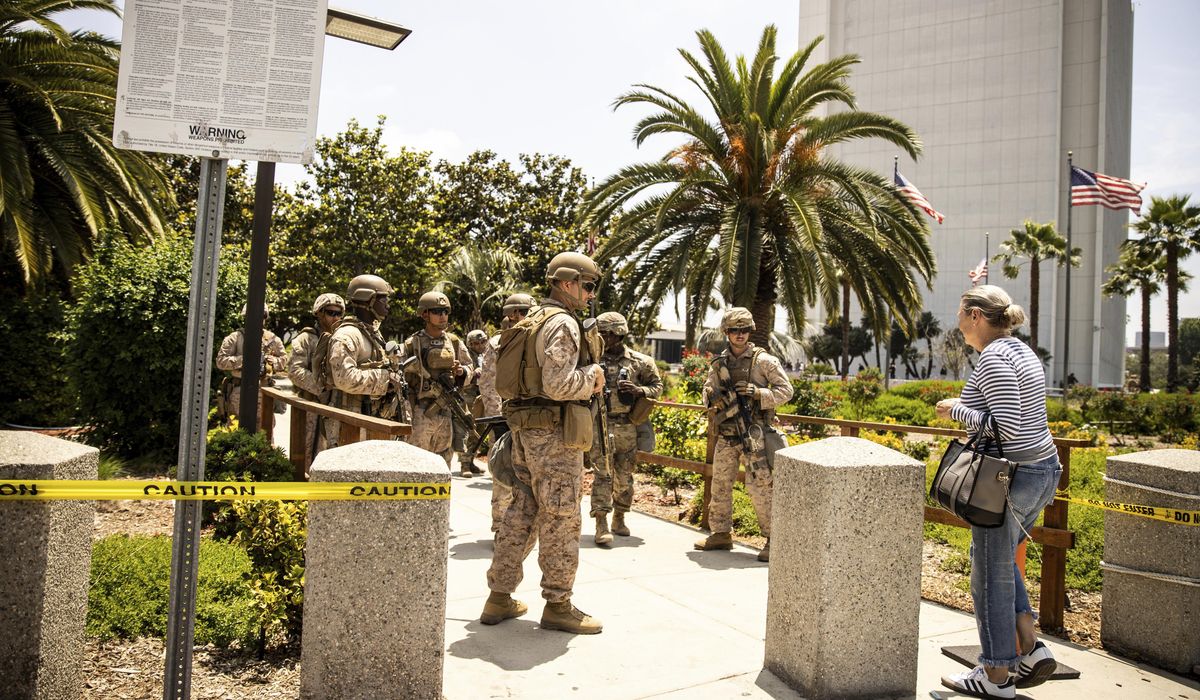
The judge said the reasons why Mr. Trump federalized National Guard troops in the first place — to quell eruptions of violence in Los Angeles — is long over, yet the president has still maintained control over 300 of the state’s troops, keeping them in the city to protect federal buildings.
“What’s more, defendants have sent California guardsmen into other states, effectively creating a national police force made up of state troops,” wrote Judge Breyer, brother of retired Supreme Court Justice Stephen G. Breyer.
The ruling is a significant victory for Mr. Newsom, a Democrat, who had challenged the deployment.
“Today’s ruling is abundantly clear — the federalization of the National Guard in California is illegal and must end,” the governor said. “The president deployed these brave men and women against their own communities, removing them from essential public safety operations.”
Judge Breyer’s ruling Wednesday is a preliminary injunction.
He had previously issued an injunction against the deployment of troops to Los Angeles, but an appeals court blocked that ruling.
Mr. Trump’s deployments of troops to Portland and Chicago have also been put on hold by lower courts. In those cases, appeals courts allowed him to call up troops from Texas and California and bring them into the regions, but forbade him from actually deploying them while the legal issues get sorted.
The Chicago case is now pending before the Supreme Court, where the justices have been pondering the matter since last month.
Mr. Trump had justified each of the deployments by pointing to anti-ICE demonstrations that have grown unruly in each of the cities at issue.
The law governing the president’s ability to call up guard members applies in cases of rebellion or where the “regular forces” of the federal government are unable to execute their mission. Mr. Trump says the fact that he had to send in immigration and building security reinforcements from other states justified calling on the Guard.
At its peak, he had 4,000 guard members and 700 active-duty Marines deployed. The Marines have been restored to regular duty, and the Guard deployment is down to 300. The Pentagon has said that deployment would last at least into February.
Judge Breyer said that’s happening despite “ongoing calm” in the city.
A federal judge has also ruled Mr. Trump’s move to take control of the National Guard in the District of Columbia was illegal.
As a federal district, the city is governed by special rules that give Mr. Trump some powers, but the judge said those don’t extend to using the Guard as a police force.
That decision has also been put on hold by an appeals court.