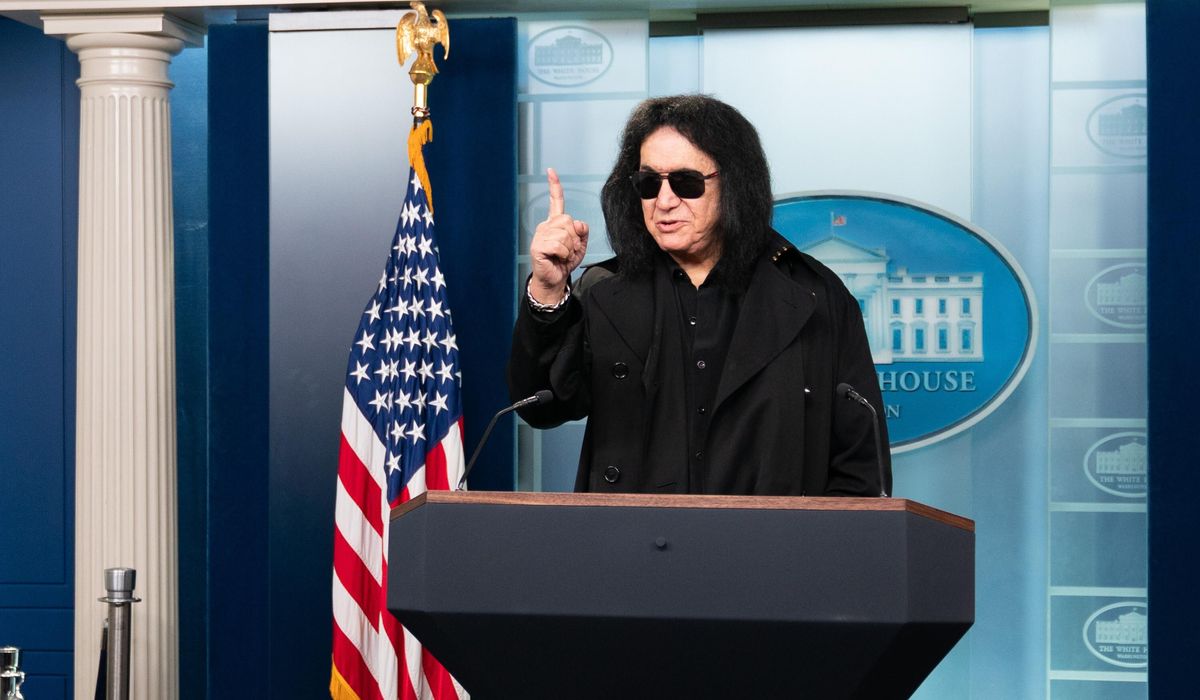
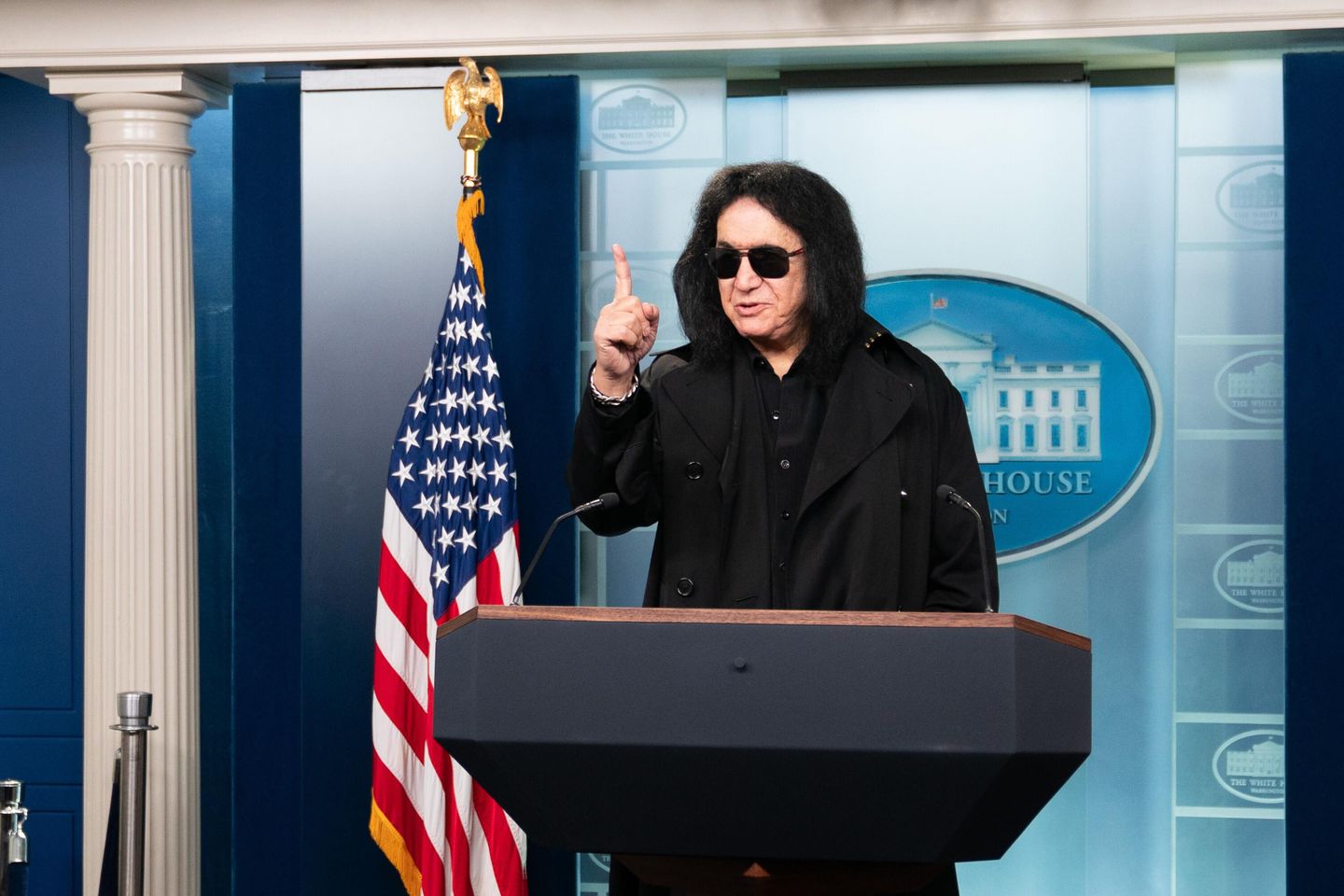
Rock icon Gene Simmons of KISS called on senators Tuesday to make radio stations pay artists fairly for playing their songs.
“I’m here to kindly ask all of you, both Republicans and Democrats, to help us remedy a situation — an injustice. Let’s call it for what it is — an injustice that’s been ongoing for many, many decades,” the Rock & Roll Hall of Fame artist said.
The crowded Senate Judiciary subcommittee hearing focused on the American Music Fairness Act, which would ensure that the copyright holder of a song has the exclusive right to perform it on a radio station.
Currently, radio stations generally do not need a license to play a copyright-protected song. The bill would require radio stations to obtain a license and pay royalties, with protections for small broadcasters.
The bill would not just benefit artists and record labels, but studio producers, background musicians, background vocalists and engineers, said Michael Huppe, president and CEO of SoundExchange, a government-designated organization to administer recording licenses.
Mr. Simmons, who received the Kennedy Center Honors on Sunday, said radio stations “use my trademark without my permission. Otherwise, I’m going to take your house, and your firstborn. Are you kidding me?”
Digital services like Spotify and SiriusXM pay artists and labels, but traditional AM and FM stations do not.
The legislation would close a loophole in copyright law, said Sen. Marsha Blackburn, a co-sponsor of the bill.
“AMFA would bring corporate radio broadcasters in line with all other — get this — all other music streaming platforms,” the Tennessee Republican said. “Terrestrial radio is the outlier. They’re the ones that want special treatment, and we need to end that by passing this bill.”
Ms. Blackburn called it an issue of fairness and a constitutional prerogative to compensate creators.
“You wouldn’t be in business if you didn’t have access to spectrum. You wouldn’t be missed in business if the FCC didn’t give your license. You wouldn’t be in business if there was not music to play,” she said, referring to radio stations.
The Radio Advertising Bureau estimates that radio corporations made nearly $14 billion in advertising revenue in 2024.
“I think all radio stations must pay something, somewhere, between something and $14 billion,” Mr. Simmons said.
Henry Hinton, president and CEO of Inner Banks Media, a radio broadcaster, said local radio stations are free to the public, pay numerous fees and compete against tech giants and global streaming services. He said the imposition of new performance royalty under the bill is “economically untenable” for local radio broadcasters.
Ms. Blackburn said his argument is lopsided because artists are making nothing while he pockets millions.
Under the bill, small stations would pay $500 or less for music per year, which works out to $1.37 a day for unlimited music.
When asked about the carve-out for smaller stations, Mr. Hinton said that the exemption would only apply to a small number of stations. Thousands of stations, including some of his, would not fall under that exemption, he said.
Mr. Huppe countered that four of Mr. Hinton’s five stations would be eligible.
“I’ll tell you, anybody that thinks $500 is a small chunk of change has never had to run a small market radio station,” Mr. Hinton said.
Virtually every democratic country has systems in place to ensure that artists and rights holders receive royalties for AM and FM radio plays.
“This anomaly places the United States in troubling company,” said Sen. Adam Schiff of California, ranking Democrat on the subcommittee, saying the U.S. stands alongside Iran, North Korea and Cuba on this issue.
Variations of the bill have been introduced in Congress multiple times over the past decade. This bill is sponsored by Republicans, including Ms. Blackburn and Rep. Darrell Issa of California, but also has bipartisan support.
More than 300 artists — from Canadian singer Celine Dion to boy band Big Time Rush — sent a letter to congressional leaders in February asserting that corporate broadcasters have “unjustly exploited an antiquated loophole in the law to profit from advertising generated from unlimited use of free music.”
The bill has support from the Recording Academy, which manages the GRAMMY Awards, to SAG-AFTRA, a labor union for actors and artists.
Mr. Simmons said the bill must be passed now “because AI is right around the corner.”
“This is an archaic injustice that’s been around for a long time, and there’s no reason why we shouldn’t get in the middle of it,” he said.