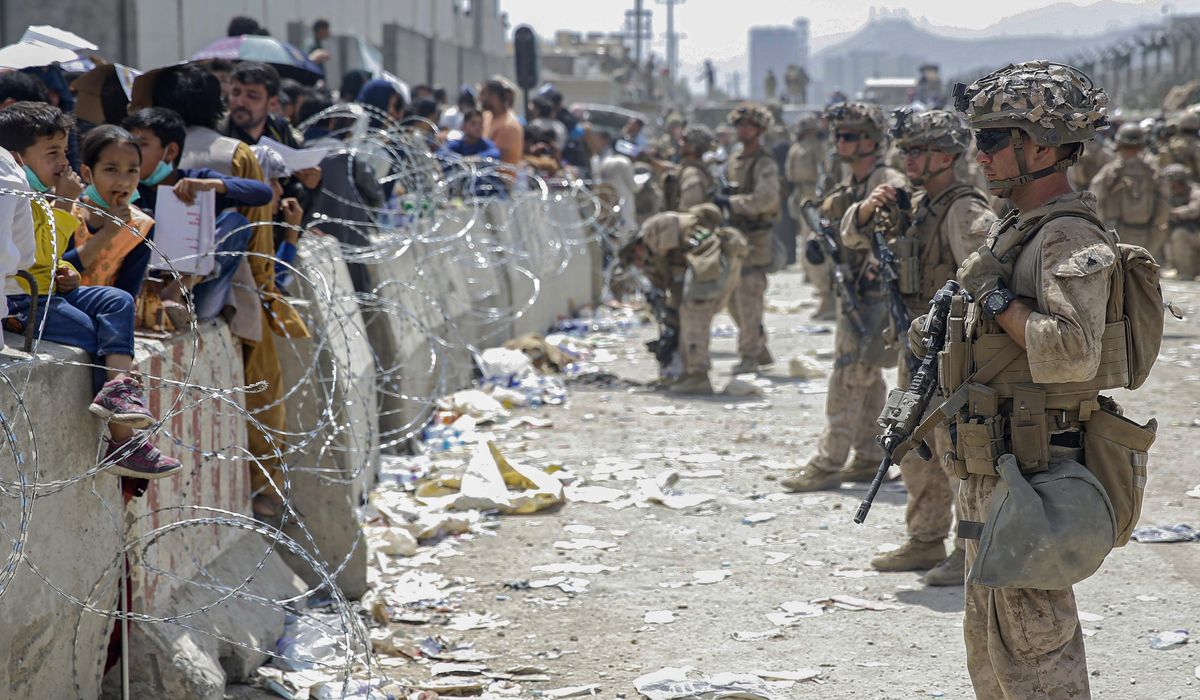
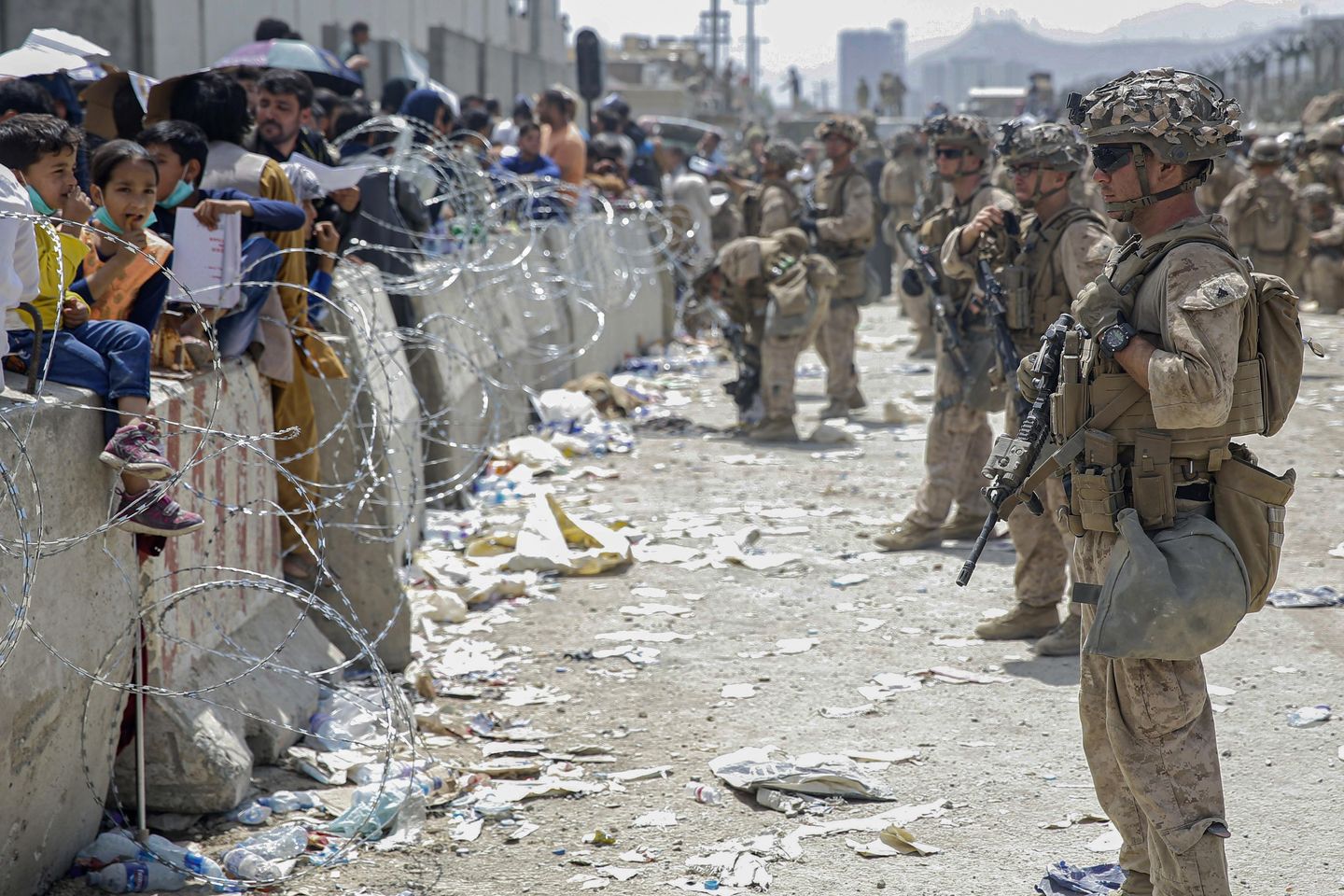
Tucked inside the tens of thousands of Afghans airlifted out of Kabul in 2021 were some ticking time bombs.
Suddenly, they are starting to explode.
In the span of less than a week, one evacuee was accused of carrying out the ambush near the White House that killed one National Guard soldier and grievously wounded another. A second evacuee was charged with threatening a bomb suicide attack in Texas. And a third was accused Wednesday of offering material support to a terrorist group and providing weapons to his father, a militia commander still in Afghanistan.
To Afghan evacuees, it’s a worrying moment. They complain of unfair scrutiny and an “inexcusable” crackdown because of a few bad apples.
But to congressional Republicans and security experts, the spate of incidents is a troubling vindication of warnings delivered during the hurried evacuations in 2021, and repeated over the years.
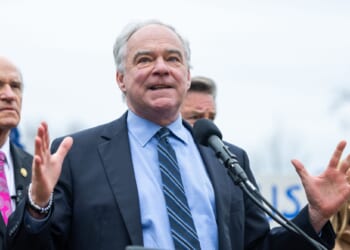
“When the Biden administration’s strategy was to load as many Afghans onto planes as possible and ’sort out the visa stuff later,’ problems were inevitable,” said Rep. Tom Tiffany, Wisconsin Republican. “From heinous sex crimes at Fort McCoy, to terror plotting, to the shooting of two National Guard members, we are seeing the consequences of this ticking time bomb play out in real time. Every individual brought in must be reexamined.”
Mr. Tiffany was one of the earliest voices warning about the evacuees after the sex crime allegations emerged at Fort McCoy, in Wisconsin, where more than 10,000 evacuees were first brought.
In the months that followed the initial arrivals, the criminal cases began to pile up.
There were molestations, sexual assaults and domestic violence — and a disturbing trend of the migrants and their lawyers blaming a culture clash between the country they left and their new home here.
More incidents burst into public view as the Afghans left the camps and settled into communities.
Then, late last year, things went from criminal to terrorist, after authorities accused an Afghan evacuee of plotting an ISIS-inspired Election Day shooting massacre. Nasir Tawhedi has since pleaded guilty to a charge of assisting a terrorist organization by attempting to buy weapons and ammunition.
And then came the three most recent incidents.
The administration has responded with a host of decisions. It has halted all processing of Afghan immigration applications, announced stricter reviews of applications for 18 other countries of special interest and said it will reexamine all green card holders.
Members of the Afghan community have recoiled in horror at the moves, decrying what they see as collective punishment for the acts of a few. In particular, they said it was Afghans who called out Mohammad Dawood Alokozay, the man charged with the bomb threat in Texas.
“Scapegoating us helps no one — not the victims, not their families, not this nation,” Mustafa Baba, co-founder of the Afghan-American Foundation, said on social media. “One man’s actions are not ours.”
But critics said problems were apparent well before the current incidents.
“The way that the evacuation was carried out led a lot of people to be concerned that there were ticking time bombs,” said Jessica Vaughan, policy studies director at the Center for Immigration Studies. “The interest was in getting them released into the communities as quickly as possible.”
That manifested early on with a host of criminal incidents at the U.S. military bases where the evacuees were first brought.
One of the Afghans charged with sex assault at Fort McCoy in 2021 was Bahrullah Noori, who was 20 at the time.
His case highlighted some of the vetting problems the U.S. encountered.
During his interview, he told the immigration officer he didn’t know his age, but figured he was 18 or 19, based on working backward from where he was in school and figuring that he’d started school at age 6.
“He said, ‘Okay. Today is your birthday.’ He wrote 1-1 something else and said, ’This is how old you are,’” Noori recalled for the court later.
A House investigation found a startling number of Afghan evacuees assigned birth dates of Jan. 1 because they didn’t know their own birth dates. The investigation also found an unusual number gave their birth dates as Sept. 11 — the date of the 2001 terrorist attacks that killed nearly 3,000 Americans and sparked the 20-year war.
Then there was Shah Mahmood Selab, convicted of coercion of a minor after authorities said he approached a 12-year-old boy at a park, began fondling him, showed him pornography on his phone, then followed him into a bathroom, locked the door, kissed the boy and tried to force the juvenile to touch his penis.
Prosecutors told the judge they had discovered Selab had an arrest in Afghanistan in 2013 but were unable to learn any more. It’s not clear whether they knew of the arrest at the time he was evacuated to the U.S. and it was ignored, or whether they didn’t know until they went looking later.
In many of the criminal cases, the Afghans and their lawyers pointed to a clash of cultures that led to the incidents.
Noori’s lawyer, for example, told the judge of “clear cultural barriers.”
Then there was Alif Jan Adil, convicted of molesting a 14-year-old girl at the camp at Quantico, Virginia. Prosecutors said he threatened her, groped her and coerced her into making a video of touching herself.
His lawyer defended the contact as another normal interaction in Afghan culture, saying Adil, 21 at the time, likely saw the relationship with the girl “through the lens of his own upbringing,” where teenagers get married.
“This is not to diminish the rationale for the laws that protect minors in this country, but it provides context for Mr. Adil’s actions given his origin in a culture so distinctive and remote from our own,” the lawyer said.
In another case out of Virginia, Mohammed Tariq, convicted of groping a child, was overheard by authorities defending his actions as “just really normal” behavior in his home country.
“We pick up the kids and love them and just kiss them,” he said.
But Abdul Wahid Gulrani, an Afghan migrant who’s a visiting scholar at several Washington area universities, said it was an inaccurate framing to blame culture.
“In Afghanistan — just like in any other society — sexual abuse or harm to children has never been normal, justified, or socially acceptable. Such claims reflect legal strategy, not anthropological reality,” he told The Times.
He said it was also wrong to consider Afghanistan as homogeneous. He said it includes a wide range of norms on gender, children, families and social expectations.
Mr. Gulrani said the initial evacuation was a problem, conducted under extreme pressure during the U.S. troop withdrawal. Those brought out included allies who assisted the war effort, but it also included anyone who managed to get through Taliban checkpoints and reach the airport in Kabul.
Meanwhile, tens of thousands who should have been rescued were left behind.
After arriving here, he said the U.S. had no plan for the evacuees’ social integration, mental health support or long-term legal status.
The result, Mr. Gulrani said, is not a security threat but rather a humanitarian one: a population facing social abandonment, psychological strain, struggling assimilation and legal limbo.
“This is not a warning about public safety; it is a warning about human suffering and institutional failure. The risk comes not from migrants themselves but from a lack of adequate support around them,” he said.
Ms. Vaughan said some in the Afghan community have reached a tipping point.
“Some of these people who have been resettled have confirmed in their hearts that they really think America is a bad place, after living here. Whether they’re snapping or just getting tired of it, to the point now of carrying out an attack, this radicalization is something we should have known was coming,” she said.
“It’s not just a vetting issue,” she said. “There are plenty of vetting problems with these evacuees. But to brush it off and say they’re going to be fine because they’re all going to want to be in America and become Americans is delusional.”
For now, the spate of incidents appears to have dented efforts to pass legislation that would grant Afghan evacuees more permanent legal status.