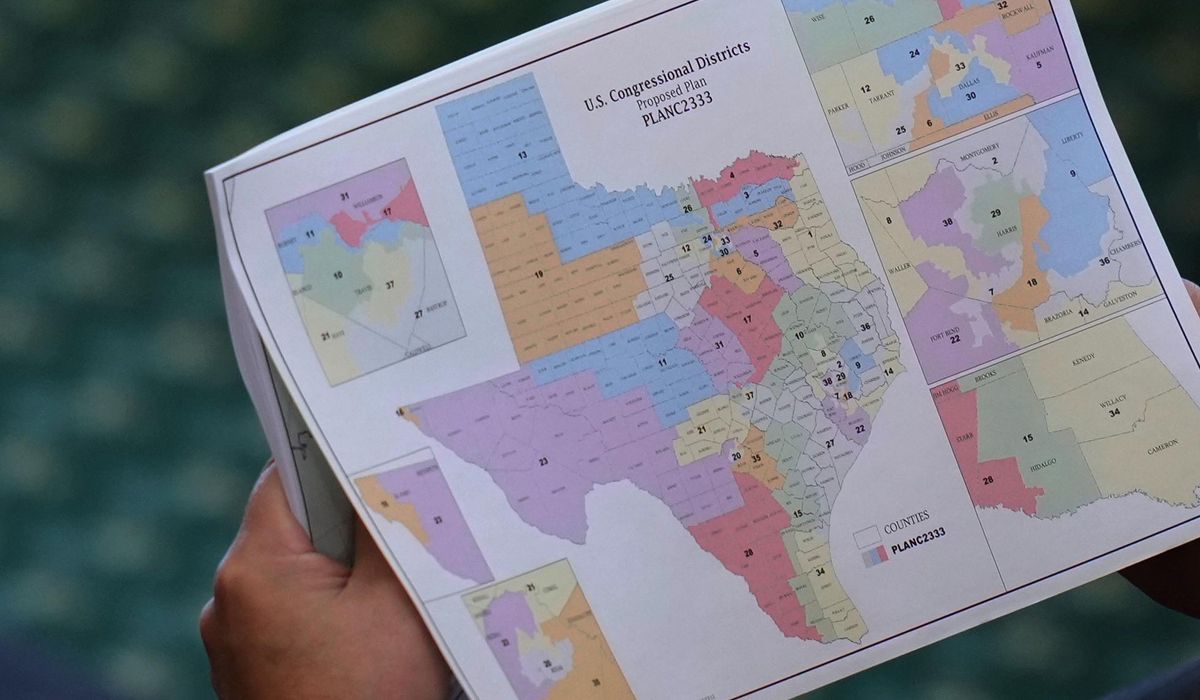
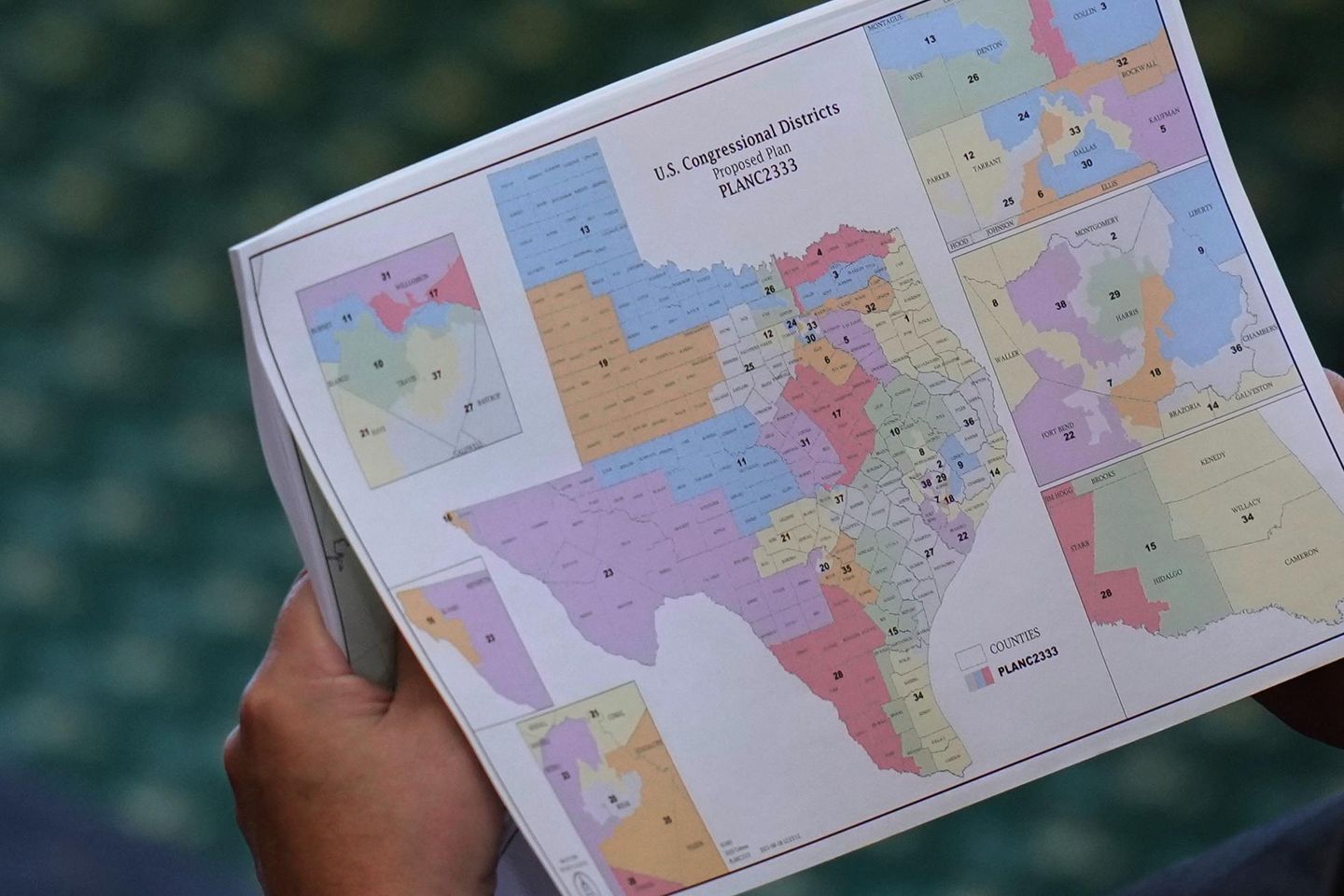
The Supreme Court said Thursday that Texas can go back to using its new, Republican-friendly congressional map for the 2026 midterm elections, putting on hold a lower court ruling that had found the map to be an illegal attempt to strip minorities of voting power.
In an unsigned opinion, the court said not only did the lower court err in its legal reasoning by assuming the legislature had racial motives, but it was also wrong in moving to erase Texas’ map even though the period for filing to run in primaries had already begun.
“The district court improperly inserted itself into an active primary campaign, causing much confusion and upsetting the delicate federal-state balance in elections,” the justices said.
They said the new map will remain in effect as the case proceeds. That means it likely will be the map voters see when they cast ballots next year since, even if the justices were to rule against the map before November 2026, it would be too close to the election to shift gears.
Republicans hope Texas’ map can net them as many as five additional seats.
The state’s decision to redraw its map in the middle of the decade set off a chain reaction. California has countered with a map of its own that could net Democrats five seats.
SEE ALSO: Trump endorses Trever Nehls, identical twin of retiring Rep. Troy Nehls, for Texas seat
Missouri and North Carolina then adopted more GOP-friendly boundaries, while Virginia is rushing to create its own more Democrat-friendly map.
The court’s Democrat-appointed justices dissented from Thursday’s ruling, saying the lower court invested too much time in its ruling for it to be set aside by the justices with only a few briefs filed.
“Today’s order disrespects the work of a district court that did everything one could ask to carry out its charge — that put aside every consideration except getting the issue before it right. And today’s order disserves the millions of Texans whom the district court found were assigned to their new districts based on their race,” wrote Justice Elena Kagan.
The map Texas drew after the 2020 census included several seats where Black and Hispanic voters combined to be a majority, which the state believed to be required by the Voting Rights Act. The Justice Department this year told the state those districts may no longer be necessary — and may even be unconstitutional.
With President Trump cheering them on, state Republicans pushed ahead with the maps, overcoming Democrats who initially fled the state to try to deny the legislature a quorum.
Under the old map, Democrats won 13 of 38 seats, or 34%, in a state where Vice President Kamala Harris collected 42% of the vote last year. Republicans hope the new map will cut that to just eight seats.
The lower court, in a 2-1 ruling, said maximizing political power is acceptable, but erasing the “coalition districts” made the new map an illegal racial gerrymander.
“By all current appearances, there was no past discrimination in favor of minority coalitions for the state to remedy — and, therefore, no ‘strong basis in evidence’ to support the state’s purposeful and predominant consideration of race in the 2025 redistricting process,” District Judge Vincent Brown, a Trump appointee, wrote in a 160-page opinion.
Circuit Judge Jerry Smith dissented, delivering a vicious takedown of Judge Brown’s opinion. He called it “the most blatant exercise of judicial activism that I have ever witnessed.”
He said Texas’ goal was politics, not race, and it was Judge Brown who read race into the affair.
Judge Samuel A. Alito Jr., who was part of the court majority Thursday that restored Texas’ map, wrote a separate opinion agreeing with Judge Smith’s, writing that “the impetus for the adoption of the Texas map … was partisan advantage pure and simple.”
He also said the lower court erred by not requiring the challengers to produce their own maps that would have achieved the same partisan gain without erasing the coalition districts.
“Neither the duration of the district court’s hearing nor the length of its majority opinion provides an excuse for failing to apply the correct legal standards as set out clearly in our case law,” he wrote in an opinion joined by Justices Clarence Thomas and Neil M. Gorsuch.
Gov. Greg Abbott, who led the redrawing effort, hailed the decision.
“We won! Texas is officially — and legally — more red,” he said. ”The new congressional districts better align our representation in Washington, D.C., with the values of our state. This is a victory for Texas voters, for common sense and for the U.S. Constitution.”
But Eric H. Holder Jr., former U.S. attorney general in the Obama administration and now head of the National Redistricting Foundation, which pushes for Democratic Party advantage in congressional maps, said the Supreme Court had “chosen to side with those who seek to undermine our democracy and disenfranchise voters of color.”
“Texans and voters across the country deserve fair, representative congressional maps. The Supreme Court has to be constitutionally bypassed,” he said.
The justices already have another case on their docket examining the role of race and the Voting Rights Act of 1965, which has been interpreted to compel states to create districts that maximize the voting power of minorities.
Republicans hold a slim few-seat advantage in the U.S. House right now and are preparing for a rough midterm election in 2026. They had seen gaining seats in Texas as a way to build an advantage.
California’s redistricting has likely erased that.
Its gerrymander is even more extreme than Texas’s map. The new map could reduce Republicans to just 8% of the state’s delegation, in a state where Mr. Trump won 38% of the vote last year.
The California map faces its own legal challenges.